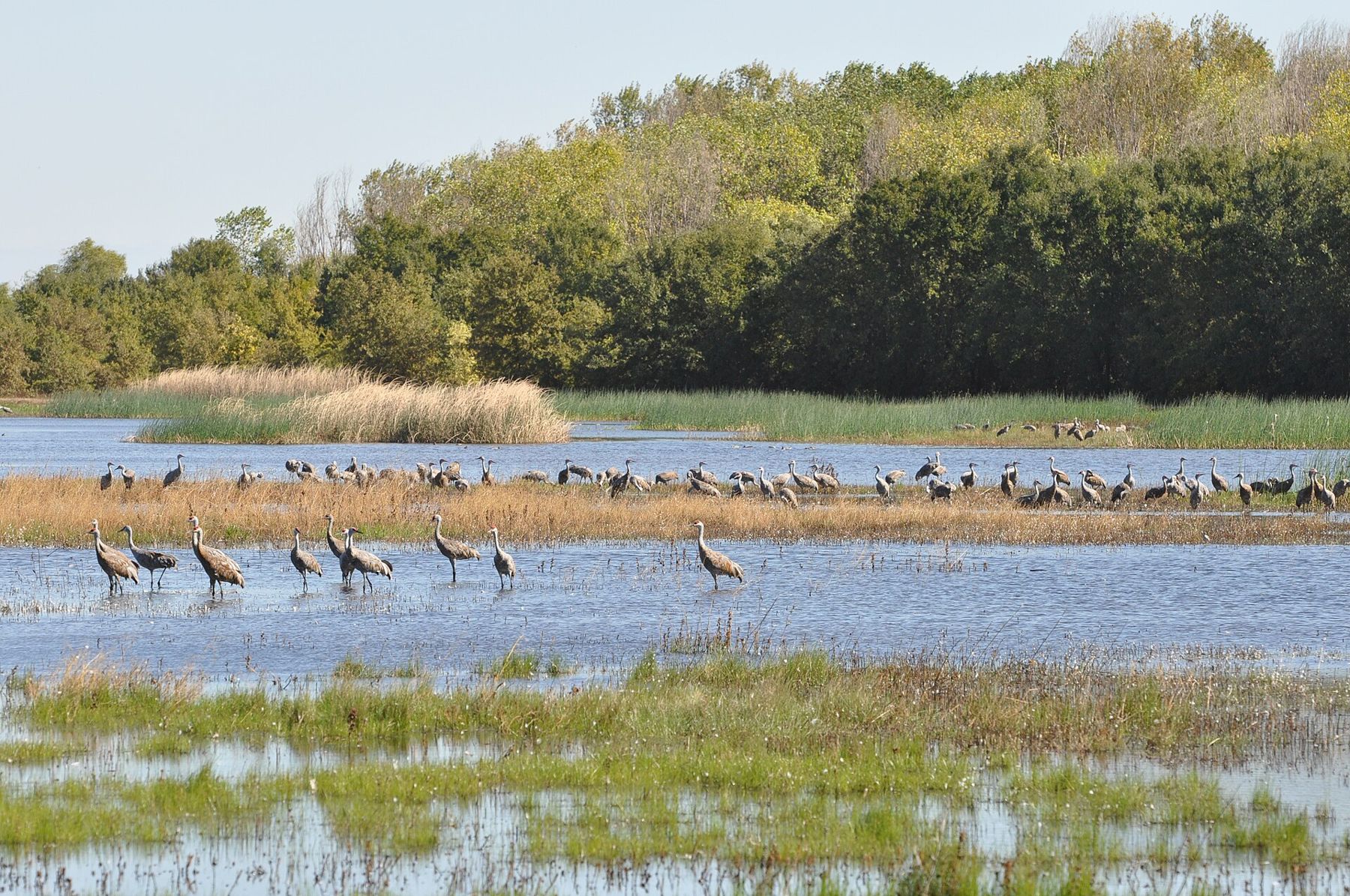
Listen before you look. In late September, the first sound of fall migration in the Kettle Moraine is often a rolling, wooden rattle coming from high overhead, long before you can find the sandhill cranes that make it. Over the next two months the skies and marshes here fill with birds heading south: hawks riding the thermals, cranes gathering at dusk, and rafts of ducks and geese on the big lakes.
September: songbirds and hawks
Songbird migration starts quietly in late August and builds through September. Warblers, vireos and thrushes move at night and spend the day feeding in the treetops and along forest edges. Their fall plumage is duller than in spring and they sing far less, so this is the harder season for them. If you enjoyed bird hikes in spring, come back to the same edges in early September and look for mixed flocks moving through the oaks.
Hawks are the bigger show. Broad-winged hawks pass through in mid- to late September, sometimes in large groups circling together on rising warm air. Later in the fall come red-tailed hawks, sharp-shinned hawks, harriers over the marshes and the occasional eagle.
To see them, get above the trees on a clear day after a cold front, when the wind swings to the northwest. The tower at Lapham Peak gives a wide view of sky, and any open ridge or hilltop field will do. The best hours are usually from mid-morning to mid-afternoon, once the sun has warmed the ground.
October: the cranes
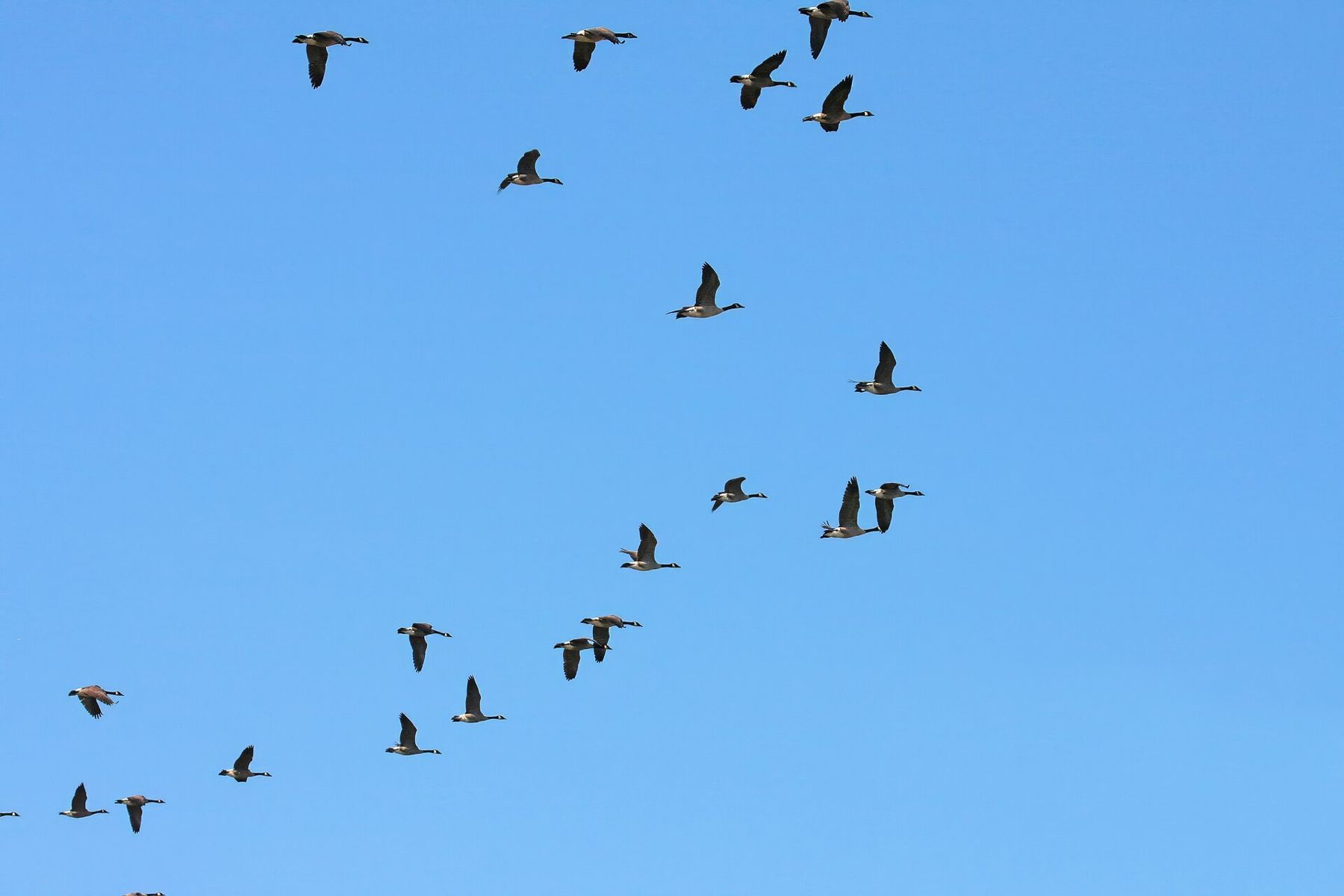
Sandhill cranes nest in Wisconsin's marshes and sedge meadows, and in fall they gather in larger and larger groups before they leave. Through October and into November, flocks feed in harvested crop fields by day and fly into wetlands to roost at night.
The evening flight is the thing to see. Find a spot overlooking a marsh at the edge of the Kettle Moraine, arrive an hour before sunset and wait. Small groups, then larger ones, come in low over the trees, calling, and drop into the shallow water. The Scuppernong area, with its broad open marsh, is a good place to start. Farther north, the large marshes of central and east-central Wisconsin draw much bigger gatherings if you want to make a day of it.
Stay on public roads, trails and pull-offs. Do not walk out into a field or marsh toward the birds; cranes flush easily and need the rest before their journey.
November: waterfowl on the lakes
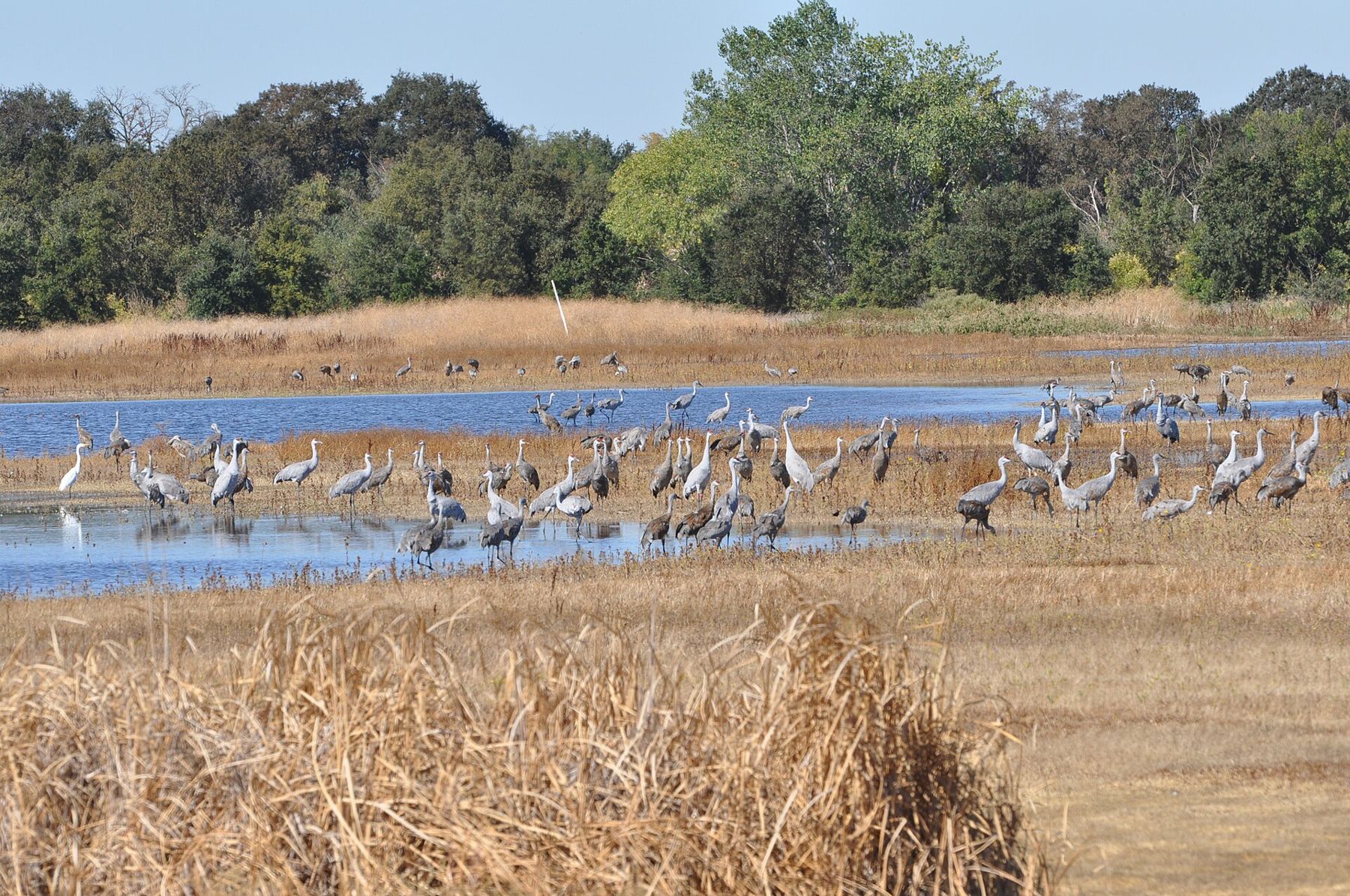
As the small ponds freeze, ducks and geese move onto the bigger lakes. Canada geese pass over in long, noisy V's all fall. Through late October and November, look for diving ducks on open water: scaup, buffleheads, goldeneyes, redheads and canvasbacks, along with coots in large dark rafts. Swans and loons sometimes stop on the larger lakes on their way through.
The big, shallow lakes to the south and west are worth scanning. Whitewater Lake and Rice Lake are close to the forest, and Lake Koshkonong, to the west near Fort Atkinson, is a large, shallow lake that draws waterfowl in fall. Watch from public launches, parks and roadside pull-offs, with the sun at your back. Calm, grey days are often better than bright ones, because the light glares less on the water.
This is waterfowl hunting season, too. Expect early-morning gunfire on many lakes and marshes, give hunters and their decoys a wide berth, and check whether any areas are closed to other uses before you walk in.
How to plan a migration day
- Watch the weather. Look for the first clear day after a cold front passes, with a steady northwest wind.
- Split the day. Walk the woods for songbirds early, climb to a high point for hawks at midday, and end at a marsh for the cranes at dusk.
- Dress for the end of the day. An October evening by a marsh turns cold quickly once the sun drops.
- Bring a field guide or app. Fall plumages, immature hawks and distant ducks are hard to identify; a guide helps more than in spring.
- Keep your distance. Use binoculars and stay on trails and roads, so the birds keep feeding and resting.
Feeders and backyards
You do not have to drive to a marsh to see migration. Backyard feeders around the moraine get busy from late September, when the summer birds thin out and the winter ones arrive. Juncos, white-throated sparrows and the first tree sparrows turn up under the feeders, and chickadees, nuthatches and woodpeckers settle in for the cold months.
Keep feeders clean and put them either very close to a window or well away from it, to cut down on window strikes. Hummingbird feeders can stay up into early October for late stragglers, then come down.
Reading the calendar
Timing shifts a little every year with the weather, but the broad pattern holds:
- Late August to late September: warblers and other songbirds; broad-winged hawks in mid- to late September.
- October: sparrows, kinglets and juncos in the woods; cranes building up in the marshes; more red-tails and harriers overhead.
- November: diving ducks, swans and the last big crane flocks; eagles along the open water.
- Late November into December: the stragglers, until the lakes freeze and push the last waterfowl south.
What else you will see
Migration overlaps with fall color in the Kettle Moraine, so you can plan a day around both. Blue jays move in loose flocks along the ridges in late September. Juncos and white-throated sparrows arrive in October and scratch through the leaf litter on every trail. By November, many oaks are bare, and you can pick out birds in the treetops that were hidden all summer.
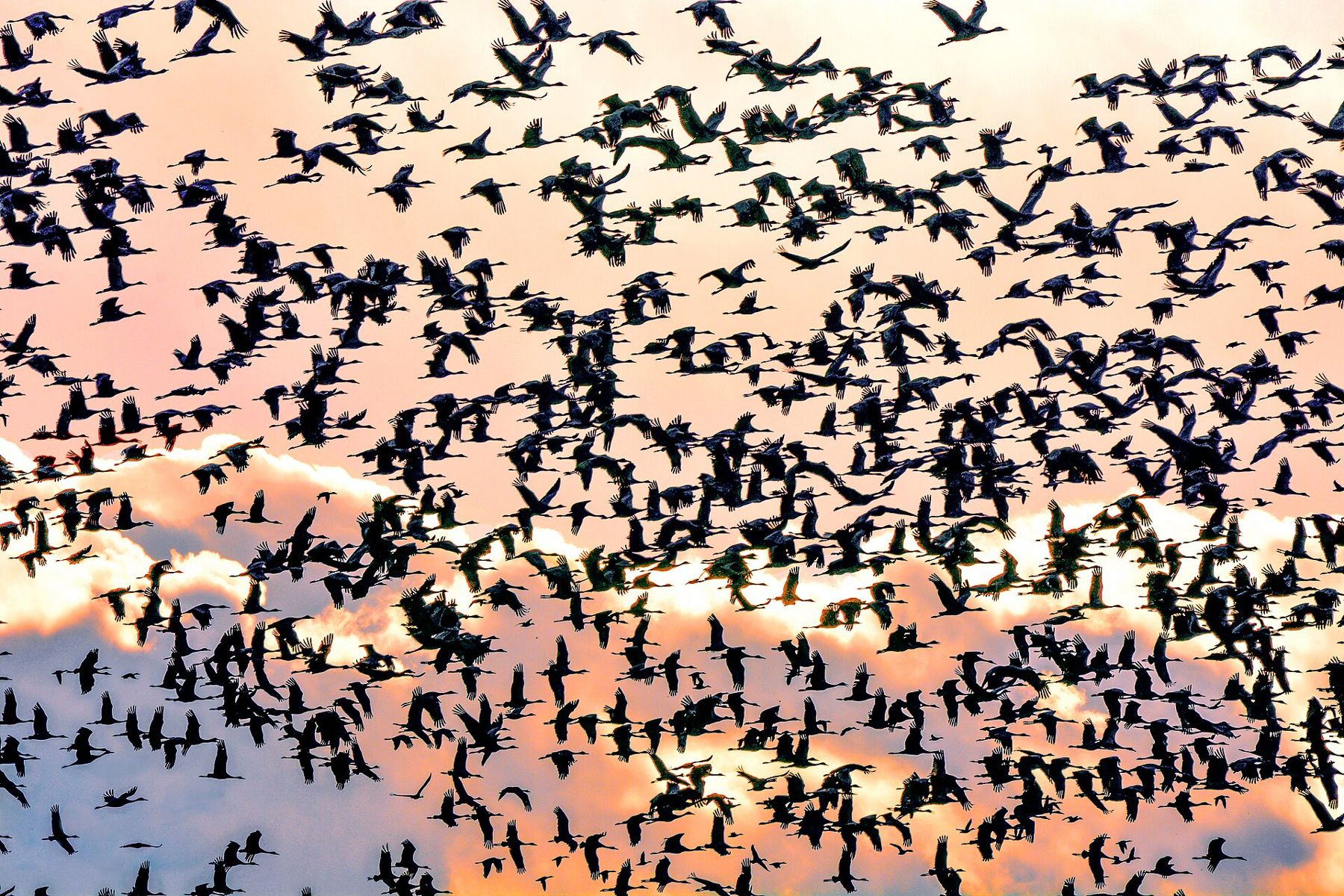
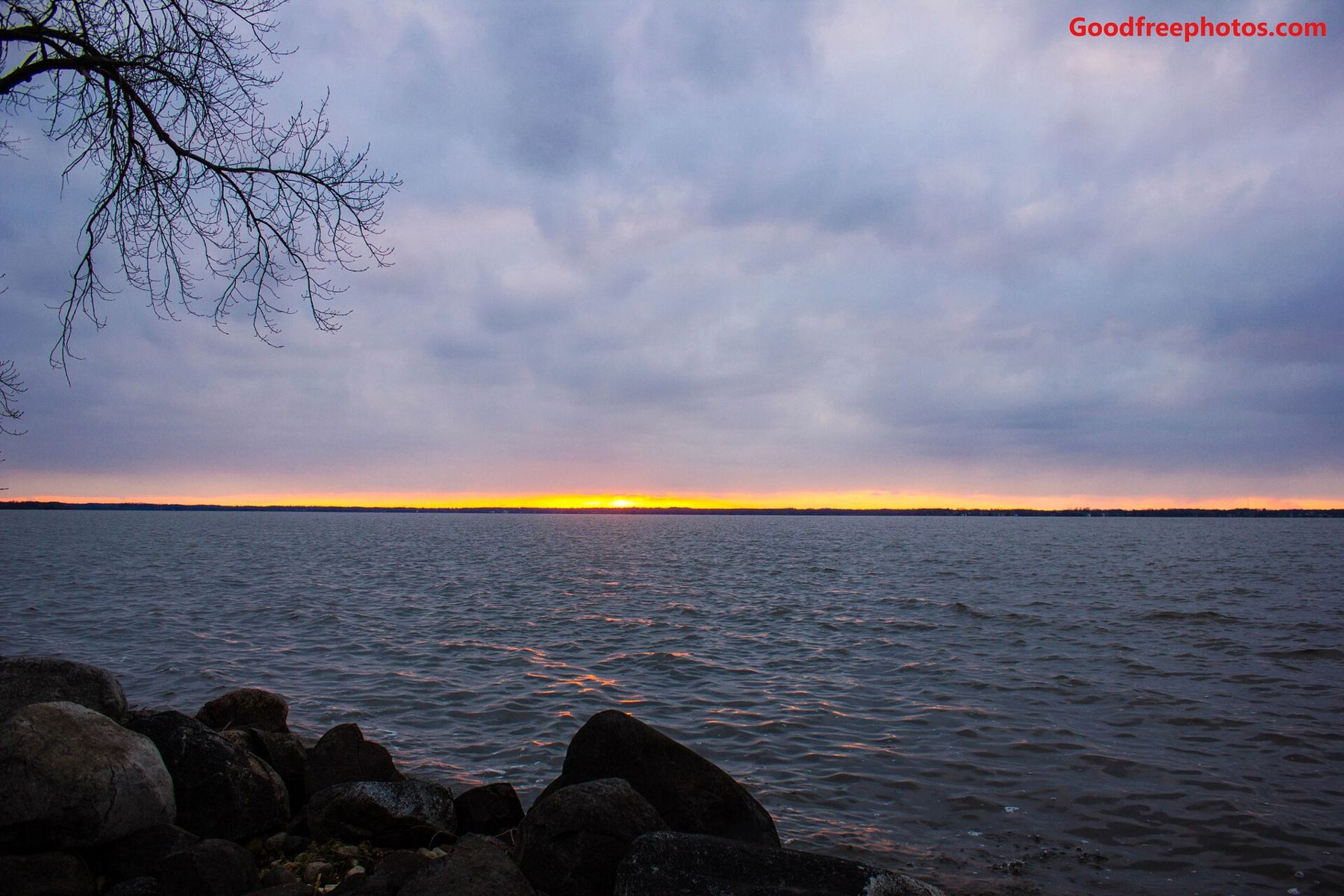
Stay until the light is almost gone on a calm November evening by a marsh. Long after you can no longer see them, you will hear the cranes still calling as they settle for the night.