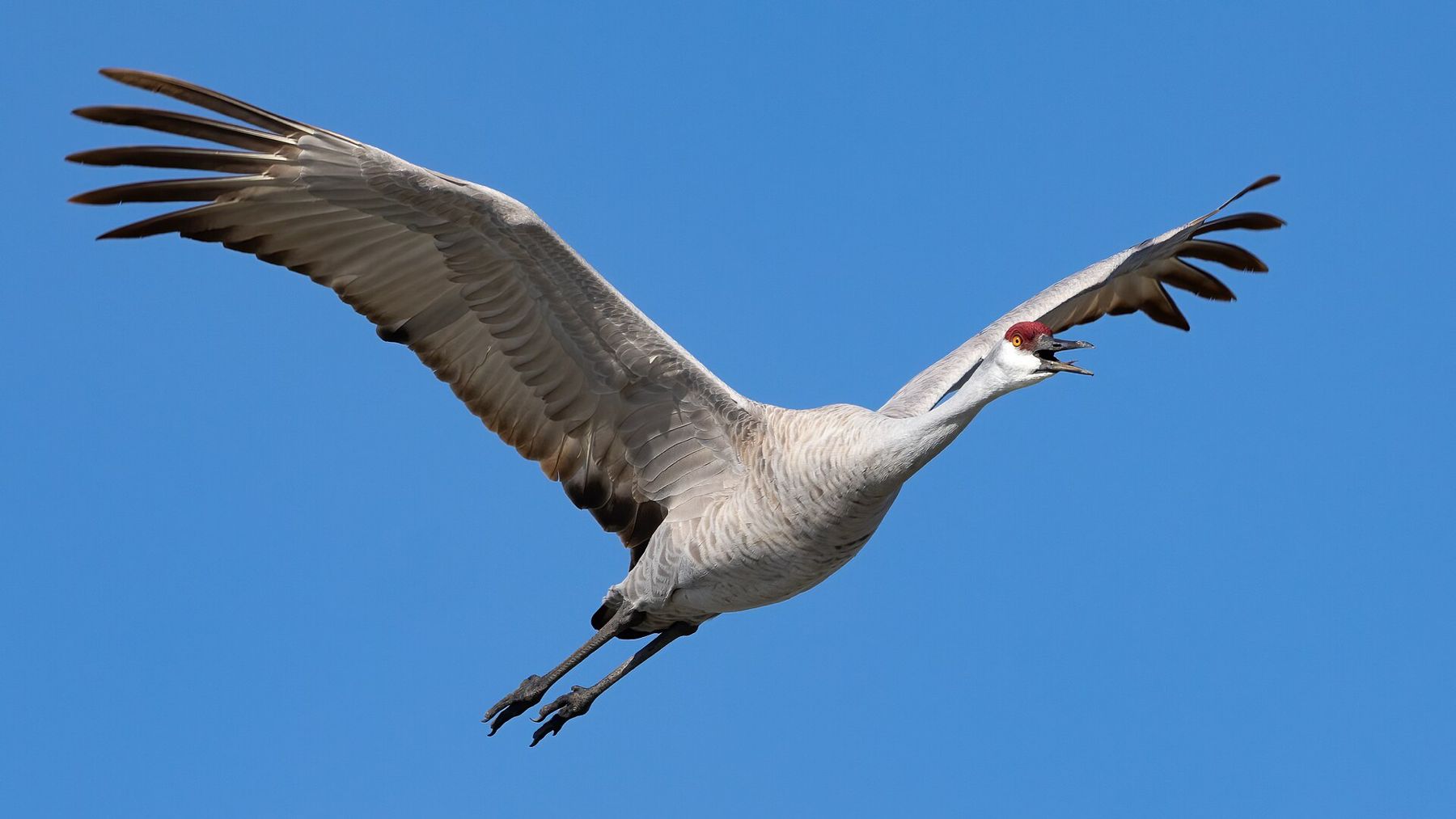
Listen for the cranes before you see them. Sometime in March, while the kettle ponds are still rimmed with ice, a rolling, rattling call drifts down from high overhead, and a line of sandhill cranes comes into view, heading north. That sound starts the spring bird season in southeastern Wisconsin, and it keeps going until the last warblers pass through in late May.
The Kettle Moraine is good birding country because it packs a lot of habitat into a small area. Oak woods, pine plantations, restored prairie, sedge meadows, marshes and small lakes sit side by side. Walk a few miles and you cross half a dozen of them, each with its own set of birds.
March: cranes and blackbirds
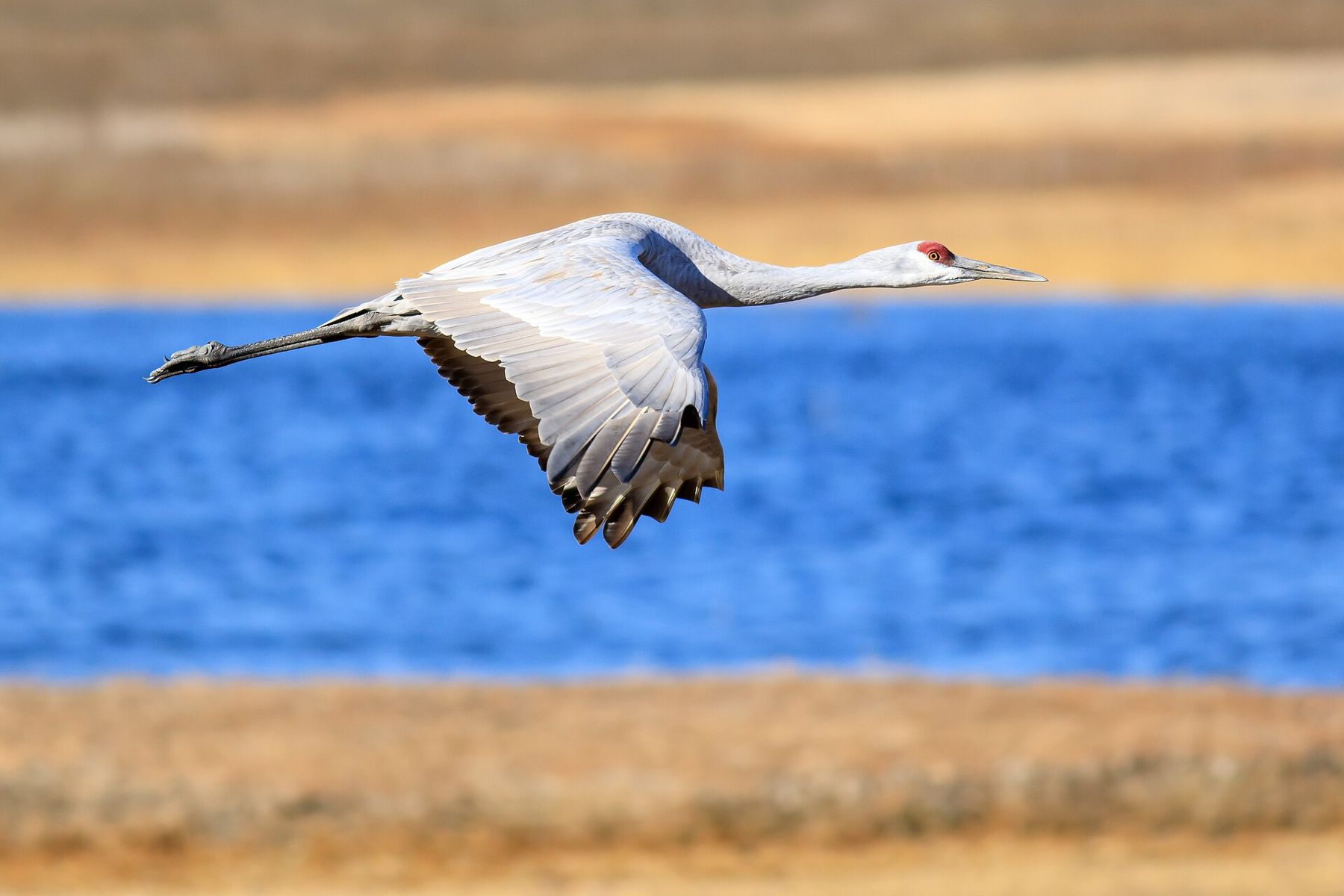
Sandhill cranes return to the region's marshes and wet meadows from early spring. Many pairs nest in southern Wisconsin, so they do not just pass through. Look for them in the open, wet ground at the edges of the forest and along the river bottoms, and listen for their calls at dawn. They are large, grey birds with a red crown, and in flight they hold their necks straight out.
Red-winged blackbirds come back to the cattails at about the same time, and the males claim territories by calling from the tallest stems. Waterfowl gather on any lake with open water: look for diving ducks, mergansers and geese on the bigger lakes before they head further north.
Dress for winter. March mornings are often below freezing, and the trails can be icy in the shade and muddy in the sun on the same walk.
April: woodcock, sparrows and the first warblers
April brings one of the odder shows of the spring. At dusk, American woodcock perform display flights over old fields and the edges of young woods. The male calls a short, buzzy note from the ground, then spirals high into the air and drops back down with a twittering sound. Stand at the edge of an open field near shrubby cover on a calm evening, face the last light, and wait.
By day, sparrows move through the brushy edges and prairies, and the first warblers arrive, usually yellow-rumped warblers in the treetops. Eastern bluebirds and tree swallows check nest boxes in the open country. The marshes get louder each week as frogs join in.
This is also the start of the spring wildflower season in the woods, so a slow morning walk gives you both.
May: the warbler weeks
The main push of songbird migration comes through in May. In most years the middle two weeks of the month are the busiest, but it varies with the weather: a run of warm south winds brings a wave of birds overnight, and a cold snap stalls them.
Warblers are the prize. Dozens of species pass through southern Wisconsin, most on their way to the northern forests and Canada. They feed high in the oaks as the leaves are coming out, so the earlier in May you go, the easier they are to see. Look for movement at the branch tips and listen for thin, high songs.
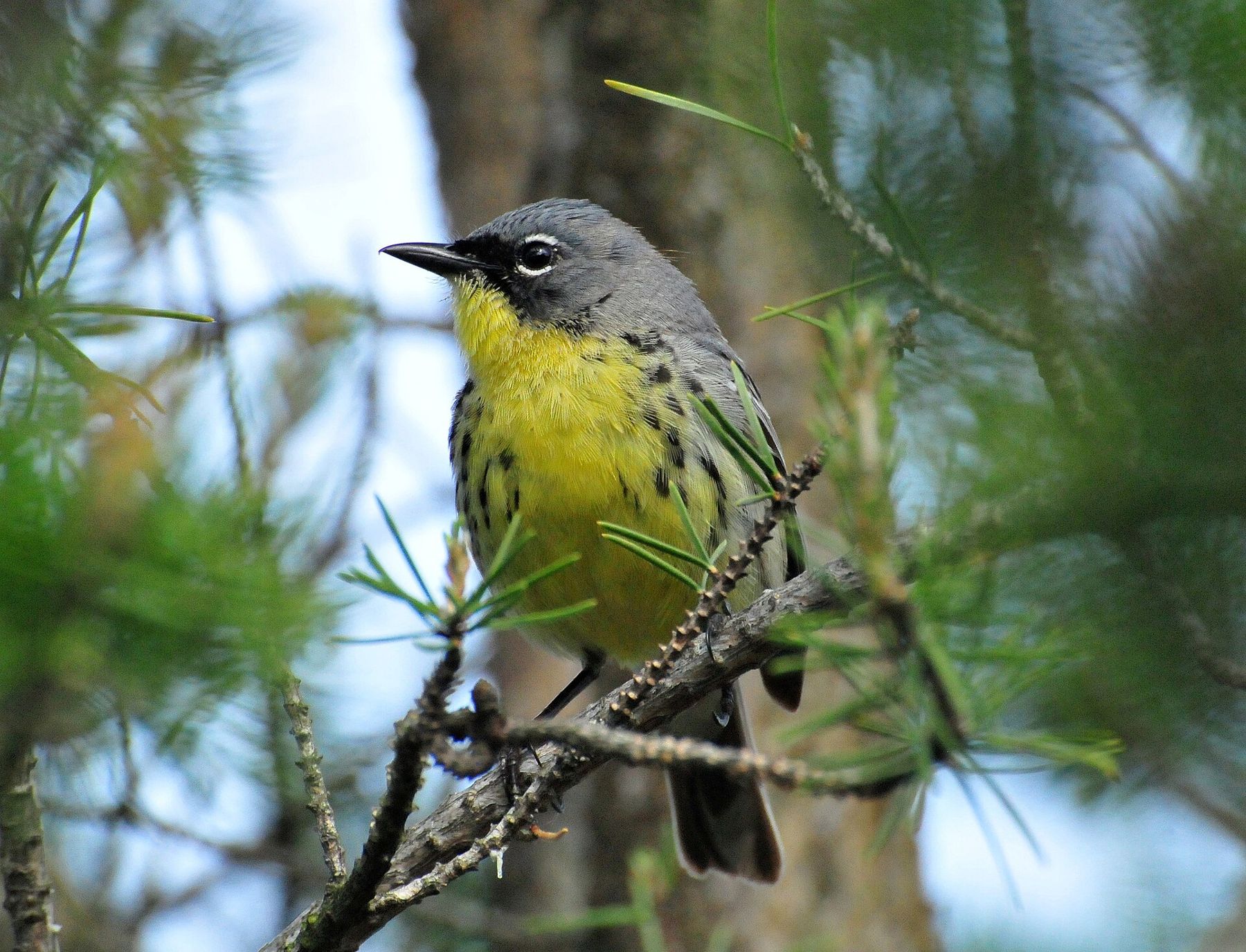
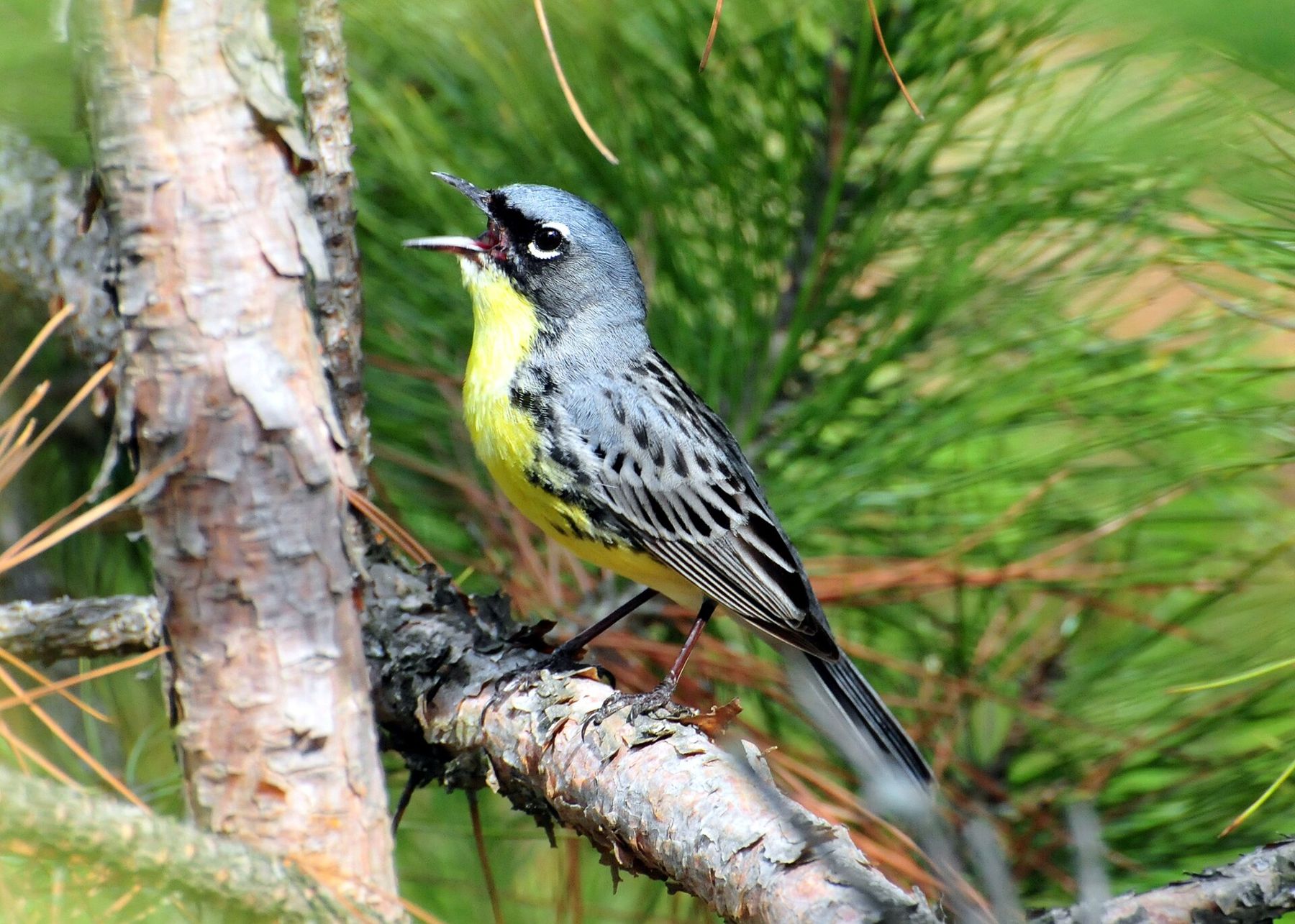
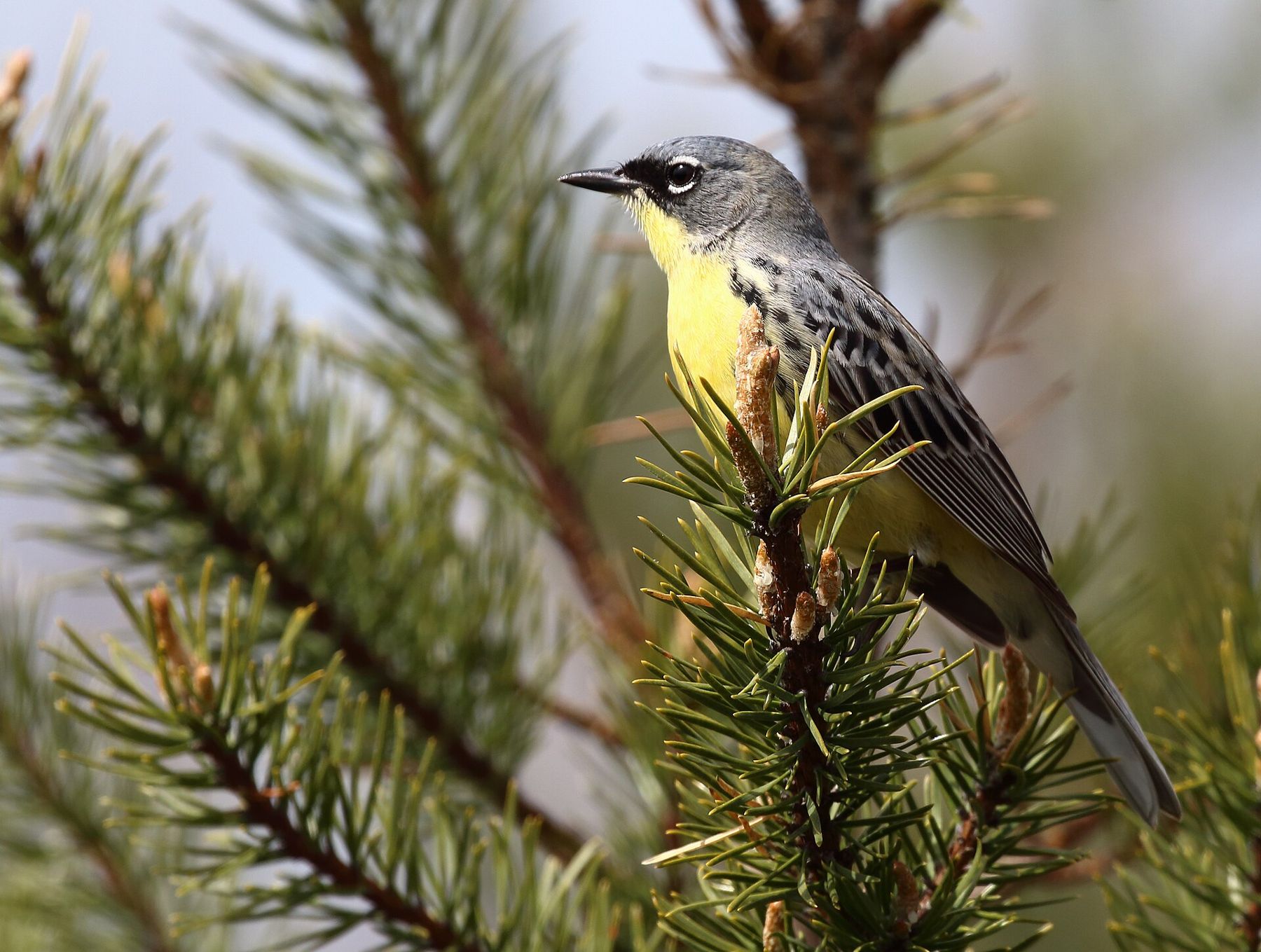
The Kirtland's warbler shown above is a special case. It nests only in young jack pine stands, and in Wisconsin that means a few sites well north of the Kettle Moraine. You are unlikely to meet one here, but it shows what to look for in a spring warbler: yellow underneath, streaks on the flanks and a habit of singing from an exposed perch.
Late May brings the grassland birds into full song. Bobolinks and meadowlarks call over the restored prairies and hayfields, and the sedge meadows fill with sparrows and wrens.
Where to walk
You do not need a famous spot. Any walk that crosses from woods to open ground to water will find birds. A few kinds of places work especially well:
- Oak woods on the moraine ridges for warblers, vireos and thrushes in May. The Eagle oak opening mixes open oaks and prairie in a small area.
- Restored prairies and grasslands for sparrows, bobolinks and meadowlarks. County parks such as Retzer Nature Center near Waukesha have large prairie restorations with mown paths.
- Marsh edges and wet meadows for cranes, rails, blackbirds and wrens. Walk any boardwalk or dike trail slowly.
- Lakeshores in March and April for ducks and early swallows.
How to walk for birds
Go at first light. Songbirds sing most in the first hours after dawn, and the trails are quiet. Walk slowly, stop often and listen for a minute before you move on. Many more birds are heard than seen, and learning a few common songs is the fastest way to improve.
Bring binoculars you can hold steady, and carry a field guide or a phone app. Wear waterproof boots: the best bird habitat in spring is usually the wettest. By late May, add insect repellent; see our note on mosquito season for what to expect.
Keep to the trail and keep dogs leashed. Many birds nest on or near the ground in spring, and a flushed bird leaves its eggs exposed. If a bird starts calling sharply and circling you, you are too close to a nest. Back away the way you came.
Keeping a list
Write down what you see and hear, with the date and the place. A notebook works; so does a phone. After one spring you will know roughly when the cranes, the woodcock and the first warblers turn up in your corner of the moraine, and the next year you can be on the trail the right week instead of guessing.
Weather is the other half of the record. Note the wind direction and the overnight temperature on your best mornings. In most springs the big days follow a warm night with a south wind, often just before rain moves in. A cold north wind and clear skies usually mean a quiet morning in the woods, though it can be a good time to look for birds feeding low along the sunny edges.
When the warblers thin out in early June, note the date. Next year, start watching a week before it.