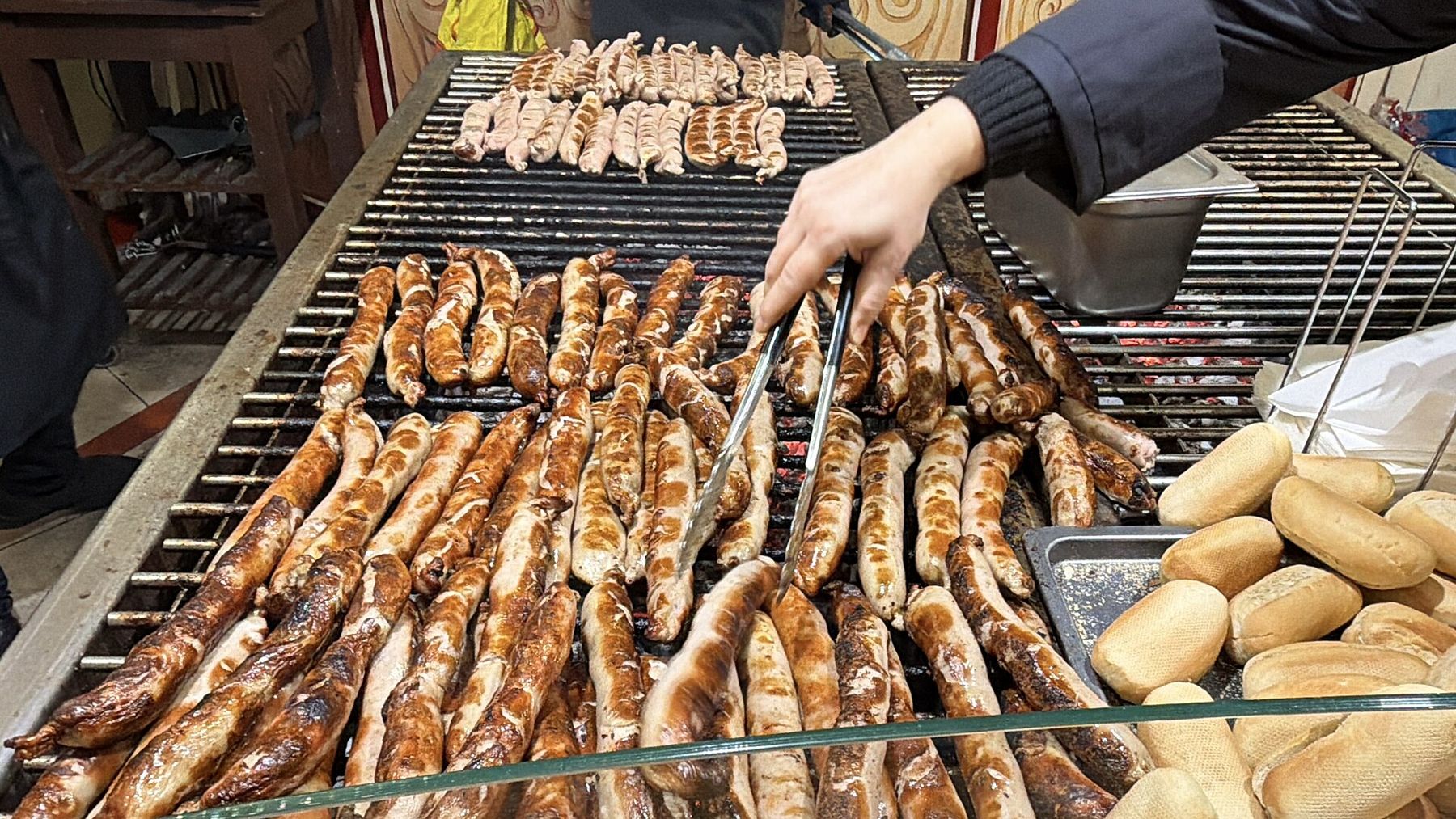
A charcoal fire, a row of pale sausages and a long fork: in Sheboygan they call that a brat fry, even though nothing is fried. The word is a leftover from an older habit, and it is one of many small signs that the bratwurst in Wisconsin has a long history of its own. It came with German immigrants, and it never left.
A German sausage
Bratwurst is a family of fresh sausages from Germany, made mainly from pork, sometimes with veal, and seasoned with salt, pepper and spices such as nutmeg, marjoram, ginger, caraway or coriander. The name comes from old German words for finely chopped meat and for sausage. Records of bratwurst in Germany go back to the late Middle Ages, and each region developed its own style: small, thin sausages in Nuremberg, longer and coarser ones in Thuringia, and many local variations in between.
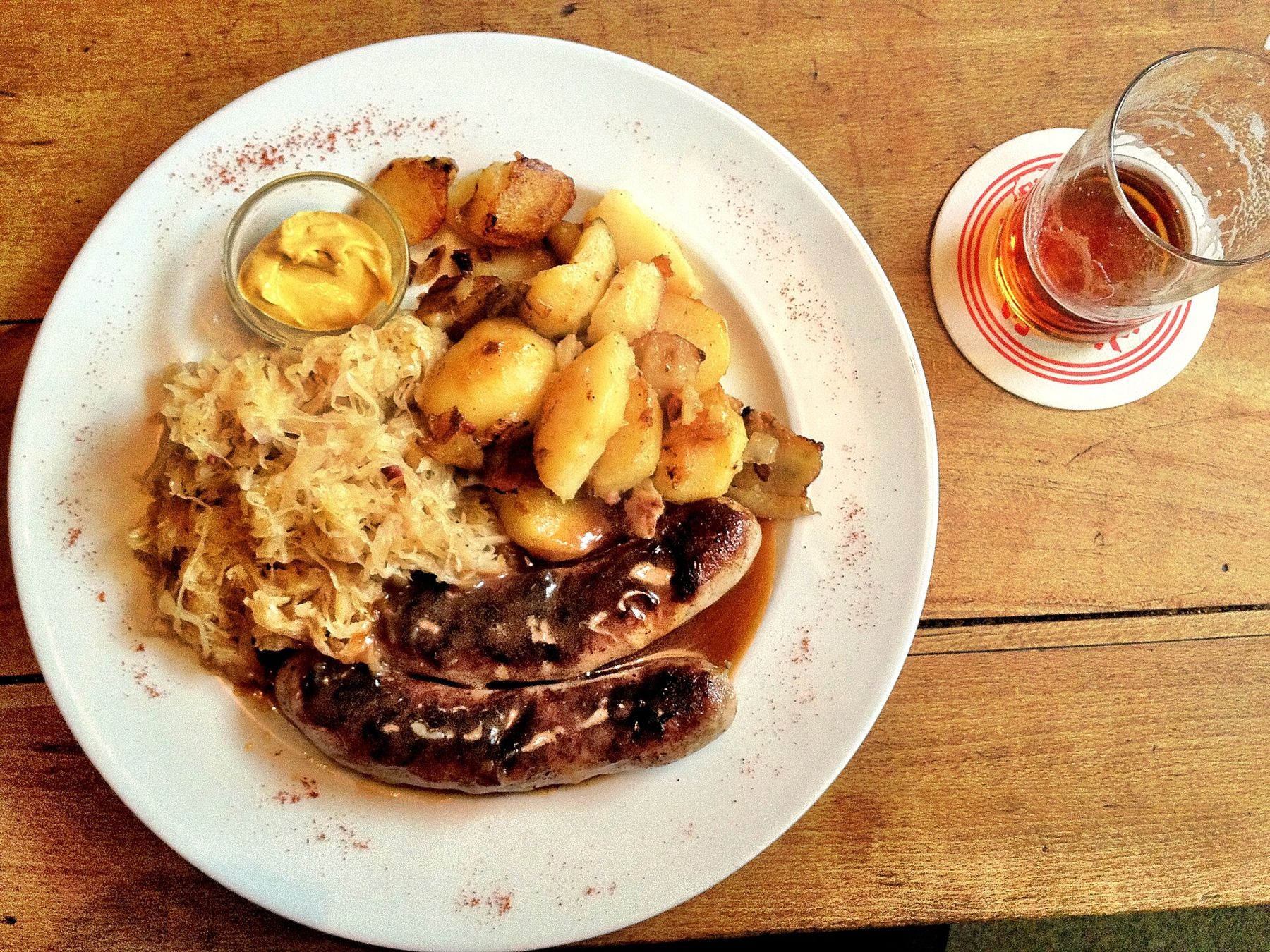
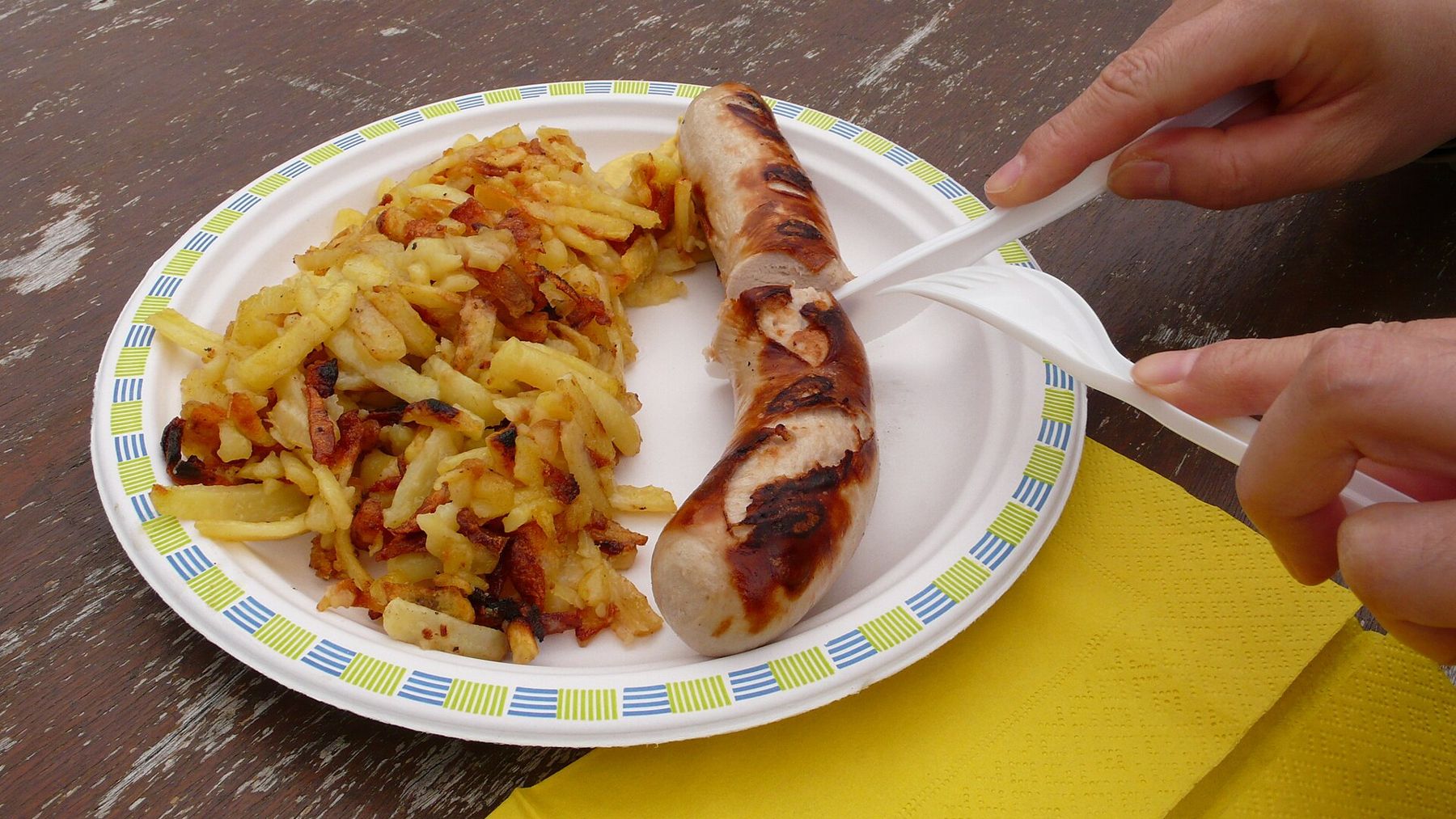
In Germany a bratwurst is usually grilled or pan-fried and eaten with mustard and bread, or with sauerkraut and potatoes. You can still find it that way at Christmas markets and town festivals across the country, cooked on long grills and handed over in a roll.
Coming to Wisconsin
From the 1840s onward, Germans settled Wisconsin in great numbers. They farmed the eastern counties and filled the neighborhoods of Milwaukee, Sheboygan, Manitowoc and dozens of smaller towns. They opened breweries, beer gardens, bakeries and butcher shops, and the butchers made sausage the way they had at home.
Sausage fitted the farm calendar. Hogs were butchered in late fall, when cold weather kept the meat, and families or neighborhood butchers turned the trimmings into sausage of every kind: bratwurst, summer sausage, liver sausage, blood sausage and smoked links. Fresh brats were eaten quickly; smoked and dried sausages lasted through the winter. The German clubs, singing societies and turner halls of Milwaukee and the lakeshore towns held picnics and festivals where brats and beer were the standard fare.
The bratwurst stayed local and fresh for a long time. It was a butcher-shop sausage, sold raw by the pound, cooked at home or at church and club picnics. A sausage company founded in Sheboygan County in 1945 later sold brats across the country and helped turn a regional sausage into a supermarket staple. In Wisconsin itself, though, much of the best still comes from small meat markets, many of them family businesses that have been grinding and stuffing by hand for generations.
Sheboygan and the brat fry
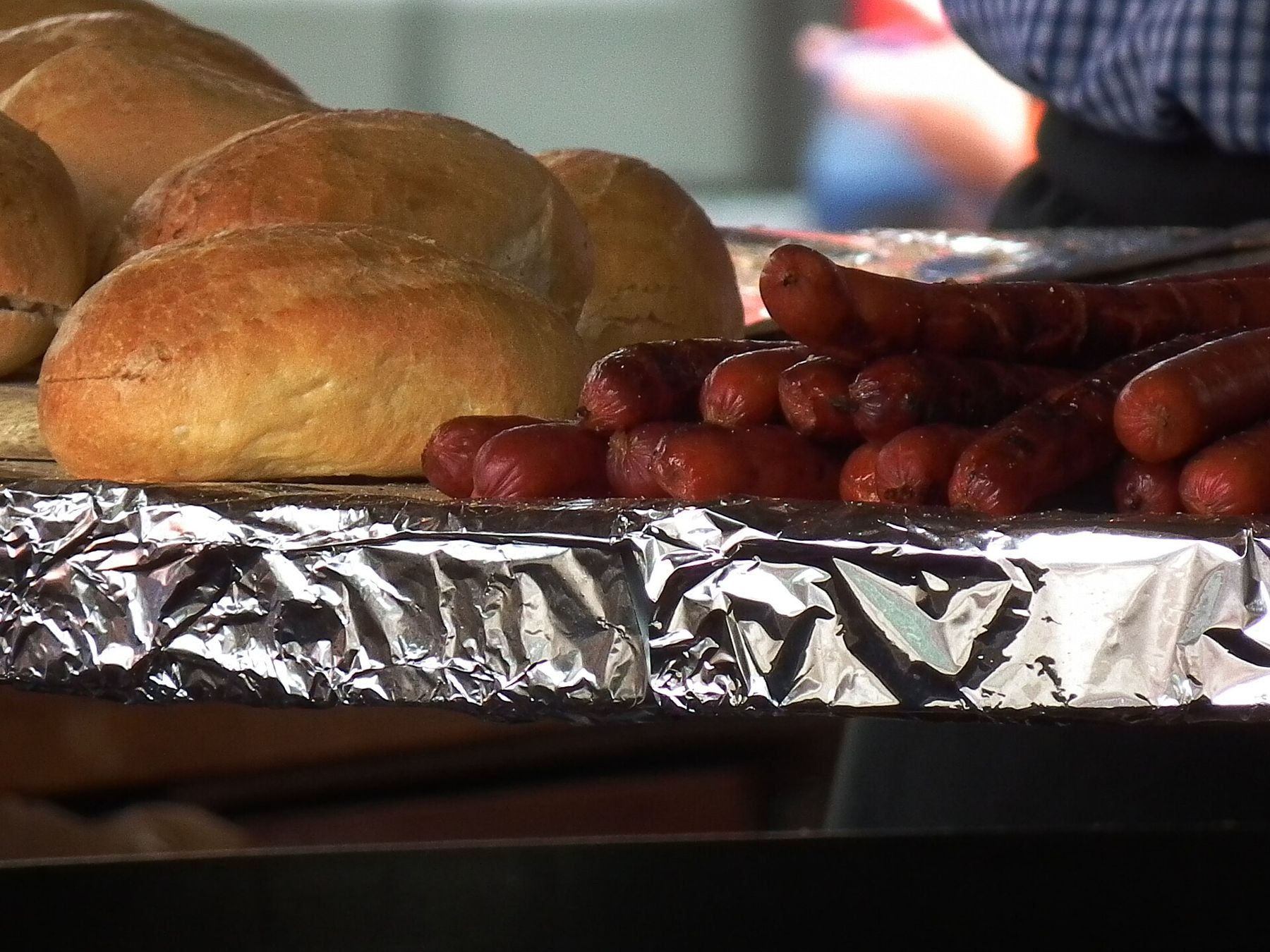
Sheboygan, on Lake Michigan about an hour north of Milwaukee, calls itself the bratwurst capital of the world, and it has its own rules. The Sheboygan brat is served on a hard roll, a round, crusty bun called a semmel roll, rather than a soft hot dog bun. Order a double and you get two brats side by side on one roll. The usual dressings are butter, brown mustard, raw onions and pickles. Ketchup is frowned on.
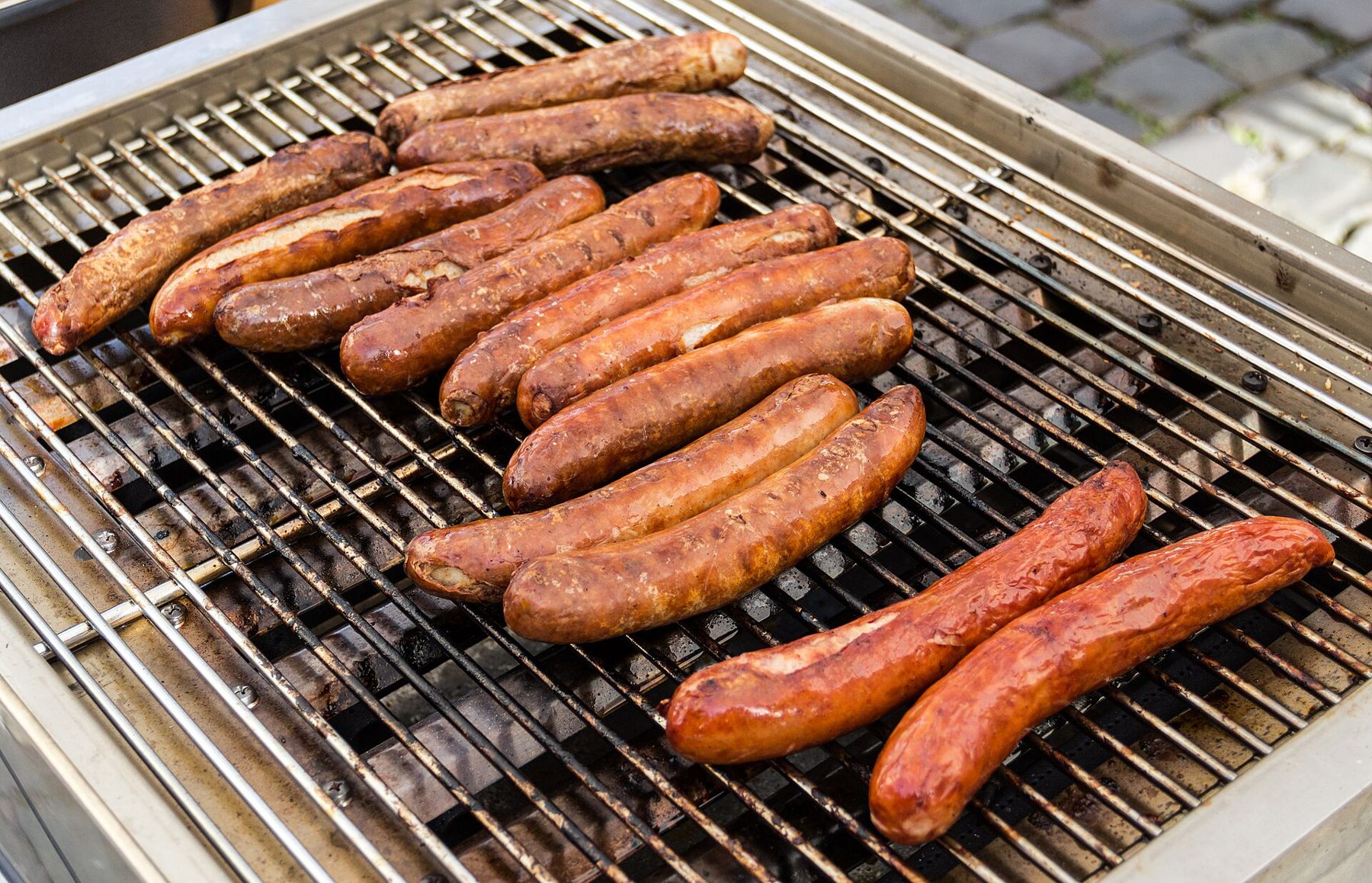
A brat fry is the local word for grilling brats, and also for the event: a fundraiser stand outside a grocery store or tavern, a backyard party, a church picnic. The grill is often a long, low charcoal pit, and the cook keeps the brats over a moderate fire, turning them often. Sheboygan holds a brat festival every summer, with music and food stands.
Sheboygan cooks are particular about the fire. They use charcoal, let it burn down until it is covered in gray ash, and keep the brats moving so the casings brown slowly without bursting. Some keep a pan of butter and onions on the grill for dipping. A good brat fry cook rarely leaves the grill and rarely hurries, and the brats come off evenly browned, plump and still juicy inside. That patience, more than any secret seasoning, is what separates a Sheboygan brat from a charred one at a busy cookout.
The beer brat and the bun
Elsewhere in the state the beer brat is the common form. The idea is simple: cook the brats in beer with onions and butter, either before grilling or after, so they stay moist and pick up a little malt. The method that works best:
- Grill fresh brats over medium, not high, heat for 15 to 20 minutes, turning often, until browned and cooked to 160°F inside.
- Meanwhile, simmer sliced onions in a pan of beer and butter on the side of the grill.
- Move the cooked brats into the beer and onions and keep them there, steaming but not boiling, until you serve.
Do not pierce the casings, and do not boil them hard; both let out the fat and juice that make a brat worth eating. A grill that is too hot will split the skin and char the outside before the middle is cooked. Patience is most of the skill.
Serve on a hard roll or a sturdy brat bun, never a flimsy hot dog bun, with brown or stone-ground mustard, the beer-soaked onions and sauerkraut. Our page on tailgate food has a full game-day plan for cooking brats for a crowd.
Making your own
Brats are not hard to make if you have a meat grinder and a stuffer, and many Wisconsin families still make a batch each fall. The general method:
- Choose the meat. Use pork shoulder, which has roughly the right balance of fat and lean, or mix pork with a little veal. Cut it into cubes and chill it until it is almost frozen.
- Season. Toss the cubes with salt, white pepper and a small amount of spice, such as nutmeg, ground ginger, marjoram or mace. Go lightly; a brat should taste of pork first.
- Grind cold. Grind through a medium plate, then mix in a little ice water by hand until the meat turns sticky and binds.
- Stuff. Stuff into soaked natural hog casings, twist into links and rest them in the refrigerator overnight before cooking.
Keep everything cold from start to finish. Warm fat smears and gives you a crumbly, greasy sausage instead of a juicy one.
Brats in everyday Wisconsin life
The bratwurst is now everywhere in the state. It is sold at baseball and football games, at county fairs and summer festivals, at roadside stands on summer weekends, and at almost every parish picnic. Many families keep a package of brats in the freezer all summer for an evening on the grill.
Meat markets have added many flavors: cheddar brats, jalapeño brats, apple brats, garlic brats and seasonal specialties. The old-style plain brat is still the standard and the one to try first. Brats pair naturally with Wisconsin beer; our guide to breweries in Lake Country lists a few places to look for a matching lager.
Where to taste the tradition today
Start at a small-town meat market, where brats are made on site and sold fresh from the case. Ask the butcher which ones they make themselves and how they like them cooked. Buy a few of the plain ones and one flavor that sounds good.
In summer, look for a brat fry fundraiser outside a grocery store or hardware store on a Saturday, usually run by a youth team, a fire department or a service club. It is the cheapest good lunch in the state. If you want the full Sheboygan experience, drive up the lakeshore on a summer weekend, find a stand with a charcoal pit, and order a double on a hard roll with everything but ketchup.
At home, light a moderate fire, keep a pan of beer and onions warm at the side, and give the brats the twenty minutes they need. Eat the first one standing next to the grill.