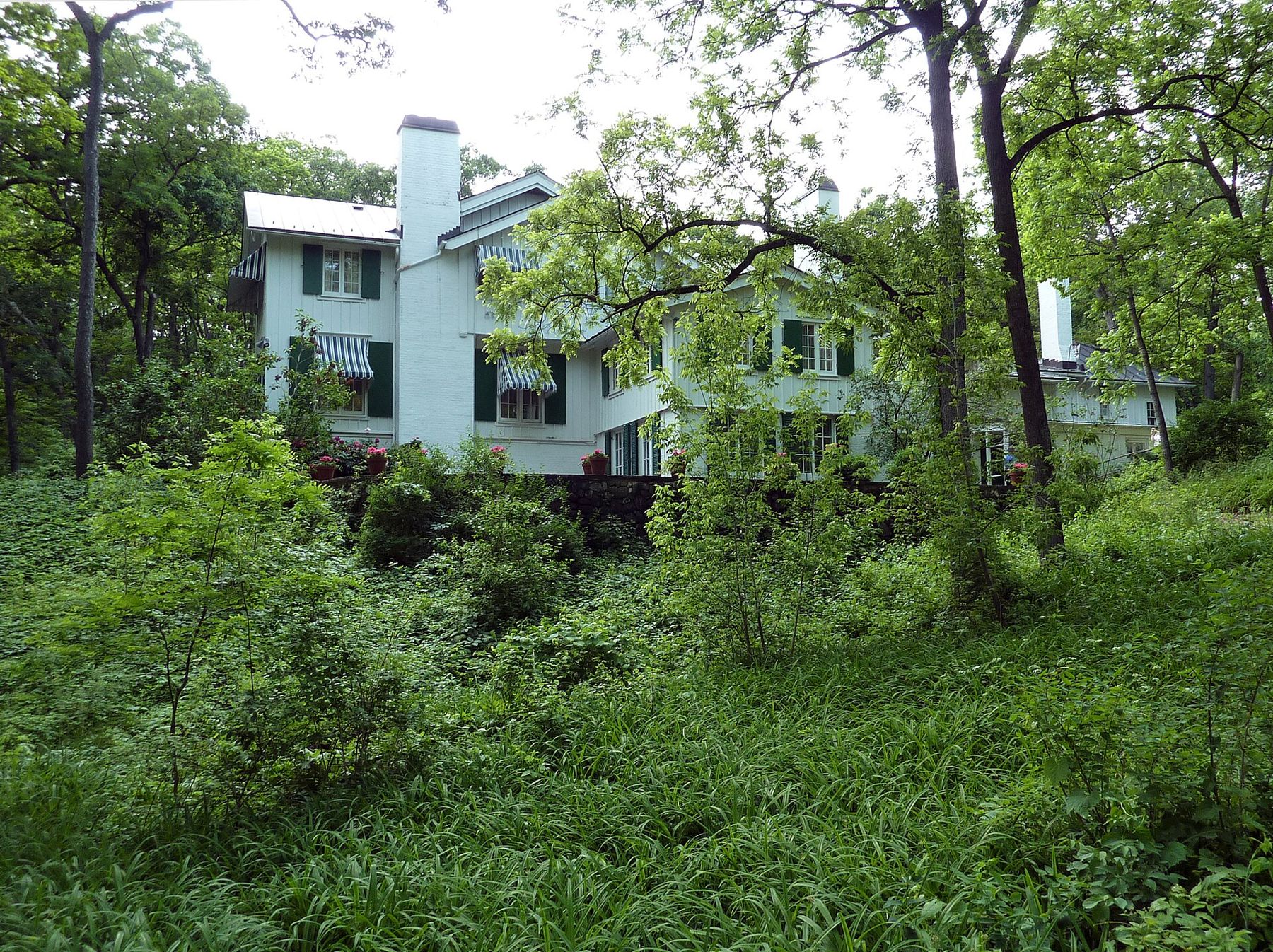
Genesee Depot is barely a village: a few houses, a church, a railroad crossing and farm fields running off into the moraine. In the summers of the 1920s through the 1960s, this crossroads in western Waukesha County received some of the most famous names in the English-speaking theatre. They came to stay with Alfred Lunt and Lynn Fontanne at Ten Chimneys, the estate the couple built on a hillside just east of the depot.
A Milwaukee boy and an English actress
Alfred Lunt was born in Milwaukee in 1892. His family had Scandinavian roots, and after his father's death his mother and stepfather settled at Genesee Depot. Lunt grew up partly there, went to school in Waukesha, and left for the stage. As a young man he began buying land at Genesee Depot, and he kept adding to it and building on it for the rest of his life.
Lynn Fontanne was born in England and came to the American stage in the 1910s. The two met in New York, married in 1922, and soon began acting together. For more than three decades they were the leading couple of Broadway, appearing side by side in comedy and drama, touring widely, and setting a standard for ensemble acting that other actors studied closely. A Broadway theatre was later renamed in their honour.
Their working year ran on the theatre's calendar. Seasons in New York and long tours took most of the year. Summers belonged to Genesee Depot.
Building Ten Chimneys
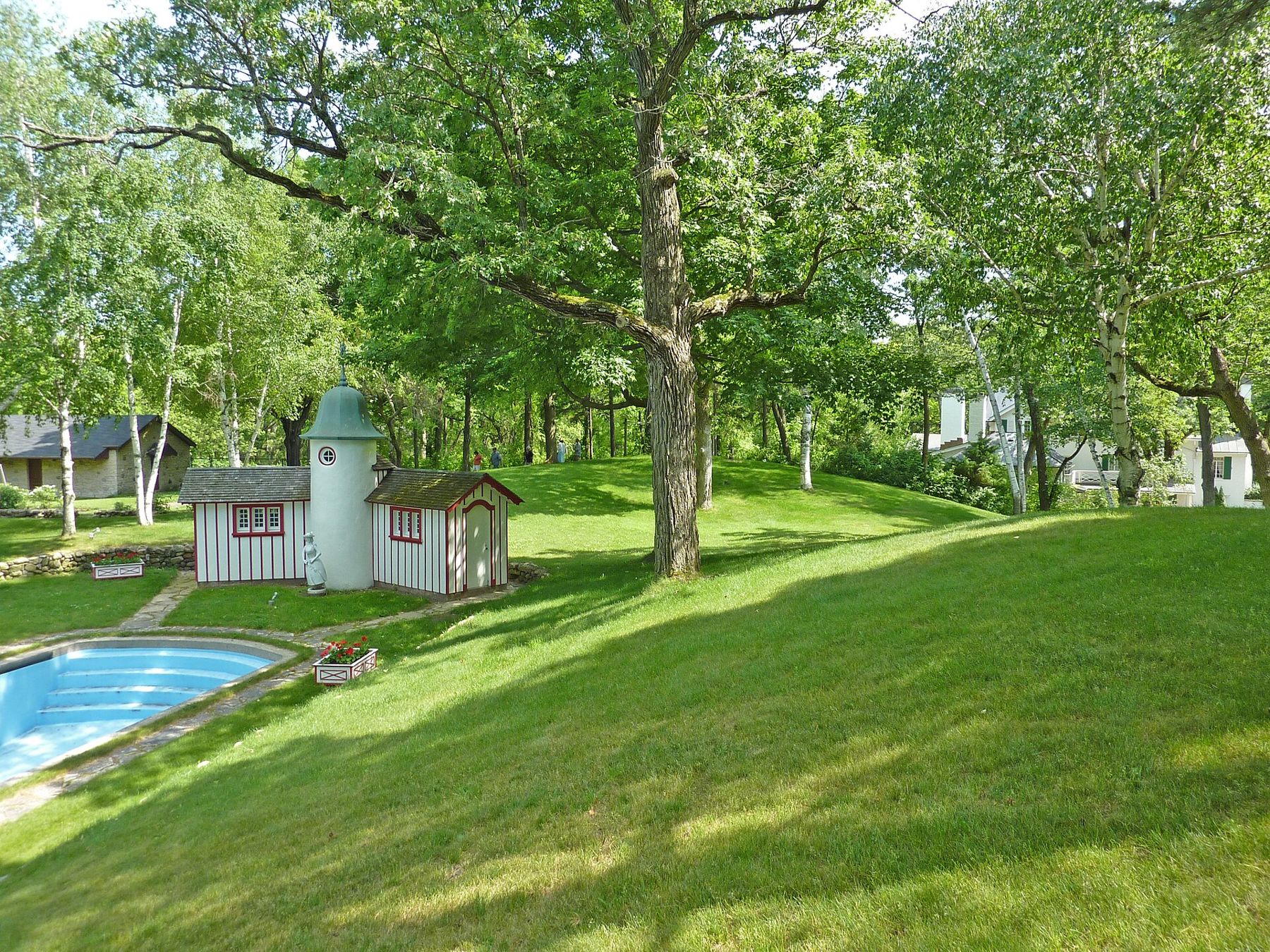
The estate grew piece by piece. Lunt remodelled an existing farmhouse, added rooms, and eventually built the main house, named for the number of its chimneys. Around it went a cottage, a Swedish-style log cabin, a studio, a poolhouse, a farm and outbuildings: a working country place rather than a single mansion.
Inside, the house is famous for its decoration. Walls and ceilings are painted with scenes, figures and patterns, some by a theatre designer friend of the couple and some by Lunt himself, who also cooked seriously and ran the farm. Furniture, china and keepsakes collected on tours fill the rooms. The effect is theatrical and personal at the same time, closer to a stage set lived in for forty years than to a formal estate.
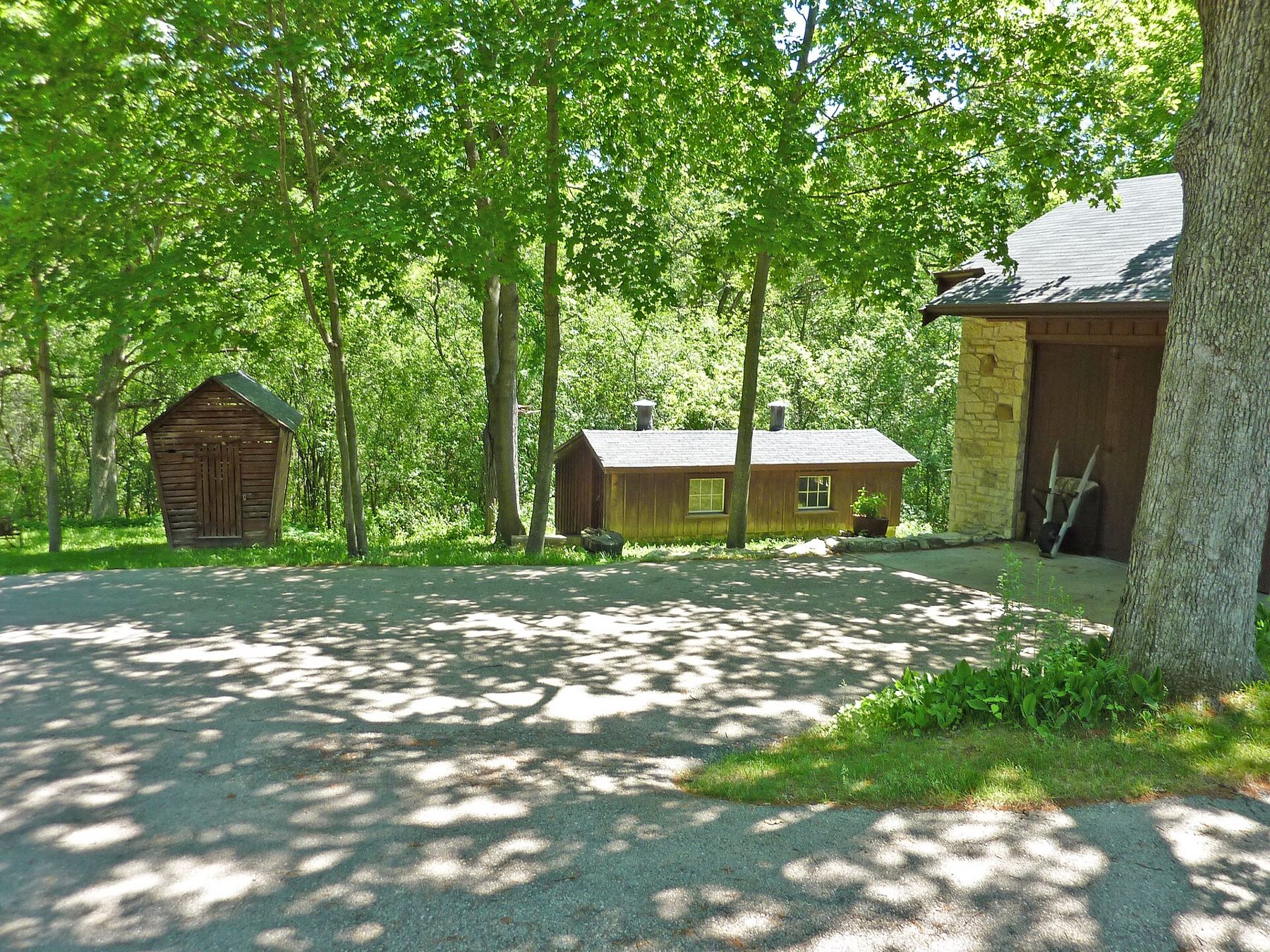
The farm mattered to Lunt. He raised animals and vegetables, and the corn crib, chicken coop and pigsty still stand beside the main grounds. The couple's guests were expected to eat well, and much of what they ate came from these fields.
A summer house for the theatre
Ten Chimneys became a retreat for actors, playwrights and friends from New York and London. Well-known guests of the period included Noël Coward, Helen Hayes, Laurence Olivier, Vivien Leigh and Katharine Hepburn, among many others from the stage and screen. Visitors rested, swam, ate long dinners and talked shop.
The house was also a workplace. The Lunts rehearsed new plays here in the summer, learning lines and working through scenes in the rooms and gardens before taking a production to New York. For younger actors, an invitation to Genesee Depot meant being taken seriously by two of the most respected performers of the age.
The Lunts retired from the stage in the late 1950s and spent more of the year at Ten Chimneys. Alfred Lunt died in 1977 and Lynn Fontanne in 1983. They had no children, and the estate passed out of their hands with most of its contents still in place.
Why Wisconsin
It is fair to ask why two of the most celebrated actors in the world spent their free months on a farm in Waukesha County rather than in Connecticut or the south of France. The answer is mostly Lunt. Genesee Depot was home to him, the place his family had settled, and he never lost his attachment to it. His mother and other relatives lived on the property, and the estate stayed a family place as well as a showpiece.
Fontanne, born and raised in England, came to share his attachment. The couple gardened, cooked and walked the grounds, and treated the summer months as the one part of the year that belonged to them rather than to an audience.
The setting helped. The estate sits in rolling country at the edge of the Kettle Moraine, with farm fields, woodlots and small lakes nearby. Guests arriving by train stepped down at the depot, a short walk from the gate, into a landscape that looked nothing like Broadway. For people who spent most of their lives in hotels and dressing rooms, that was the point.
Ten Chimneys also shows how a working farm and a creative life could share the same ground. The barns and coops stood within sight of the painted drawing room, and the same afternoon could include a rehearsal, a swim and a walk to check the chickens.
Saved, restored and opened
For years after Fontanne's death, the estate's future was uncertain. Houses like this are often broken up, their contents sold and their land divided. A group of supporters formed a foundation in the 1990s, acquired the estate and its furnishings, and began a long restoration. Ten Chimneys opened to the public as a museum in 2003, and it has been designated a National Historic Landmark.
What makes it rare is how much survived. The rooms hold the Lunts' own furniture, books, costumes and kitchenware, and the painted walls are original. The foundation also runs programs for working actors and theatre teachers, which keeps the estate tied to the profession that built it.
Seeing what remains today
Drive west from Waukesha on Highway 18 and turn south toward Genesee Depot, or come north from the Eagle area on Highway 83 and County D. The estate sits on a rise just east of the crossroads; follow signs to the program centre, where tours begin and there is parking.
You see the main house only on a guided tour. Tours run on a seasonal schedule, usually from spring into autumn, and groups are small, so book ahead. Tour lengths, prices and days change, so check before you go. Some tours include the cottage and the log cabin as well as the main house; ask which one you are booking.
Arrive a little early. The program centre usually has exhibits on the Lunts' careers, with photographs and material from their productions, and it sets up the tour well if you know little about the couple.
Look up as you go through the rooms. The painted ceilings and the small details over doorways are the parts most visitors miss. Look at the kitchen, which tells you as much about the Lunts as any portrait does.
Walk the grounds afterward. The farm buildings, gardens and the poolhouse sit on a slope that runs down toward the fields, and from the upper lawn you can see how the estate sits in the moraine country west of Waukesha.
Then keep going. Delafield and the tower at Lapham Peak are a short drive to the north. If you came from the south, take the back roads home through Dousman and the forest, the same country lanes the Lunts' guests would have seen from the depot platform when they stepped off the train.