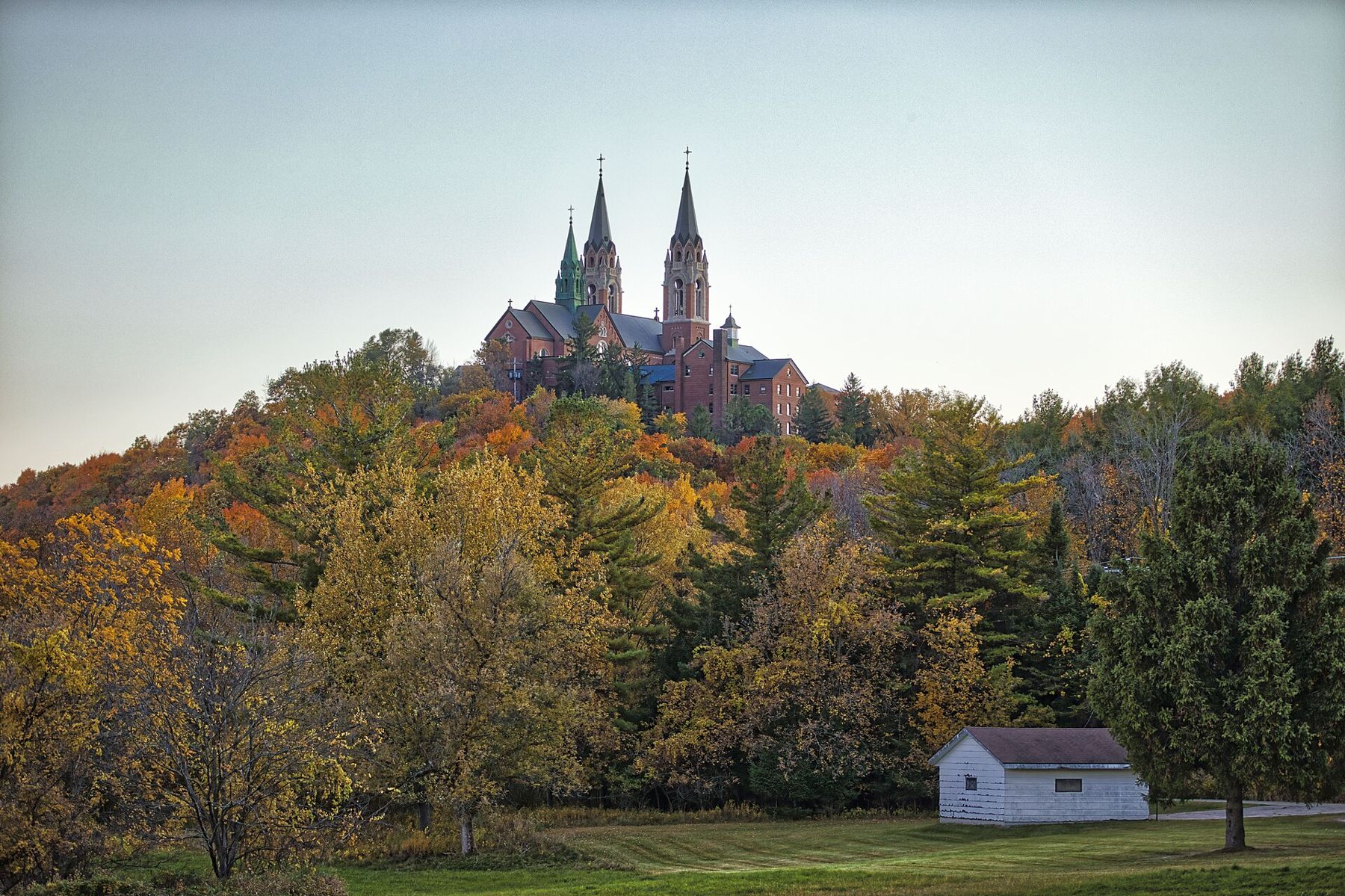
Coming north on Highway 83 past Hartland, you see the spires before you see anything else: two pale towers standing over a wooded ridge, far above the farm country around them. The ridge is one of the highest points in southeastern Wisconsin, and the church on it is the Basilica of the National Shrine of Mary, Help of Christians, known to almost everyone simply as Holy Hill.
A hill the ice built
The hill itself is glacial. It belongs to the Kettle Moraine, the band of gravel hills left between two lobes of the last ice sheet, and it is usually described as a kame, a steep mound of sand and gravel laid down by meltwater. It rises well above the surrounding land, and from the top you can see across several counties on a clear day. For a full explanation of how hills like this formed, read how the glaciers made the Kettle Moraine.
That height is the reason for everything that followed. People in the area have long treated the summit as a place apart, and the hill gathered stories early. One local legend tells of a hermit who lived on the hill. The stories are told as legend, and they belong to the hill's tradition rather than to its documented history.
From a cross to a church
Catholic settlers, many of them German and Irish, farmed the land around the hill in the mid-1800s. They raised a cross on the summit and later built a small chapel there. Pilgrims began to climb the hill, and over the following decades a larger church replaced the first chapel.
In 1906 the Discalced Carmelite friars took charge of the shrine. They have cared for Holy Hill ever since, and they live in the monastery buildings beside the church. Under their care the number of pilgrims grew, and the hill became one of the best-known Catholic shrines in the Midwest.
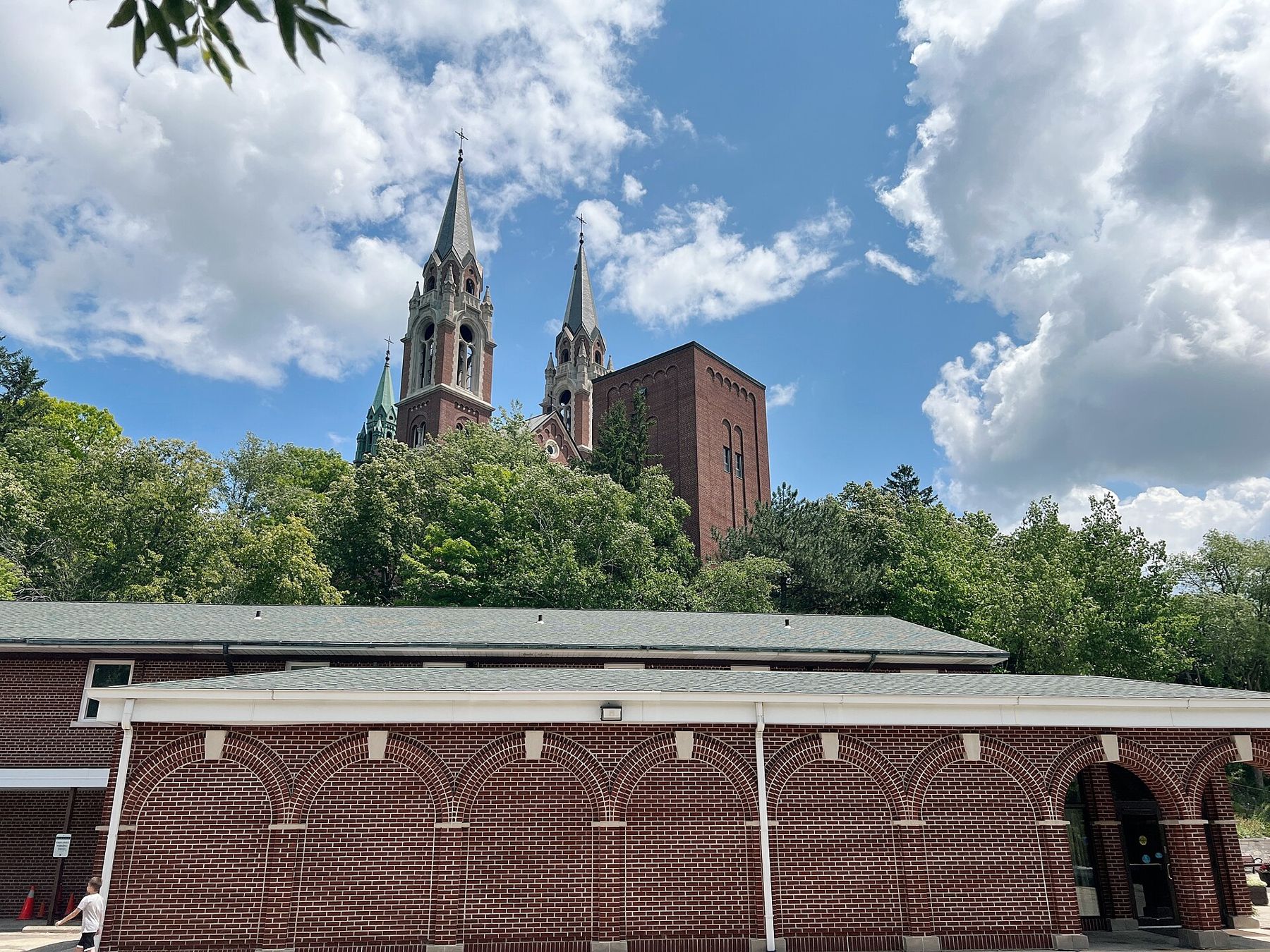
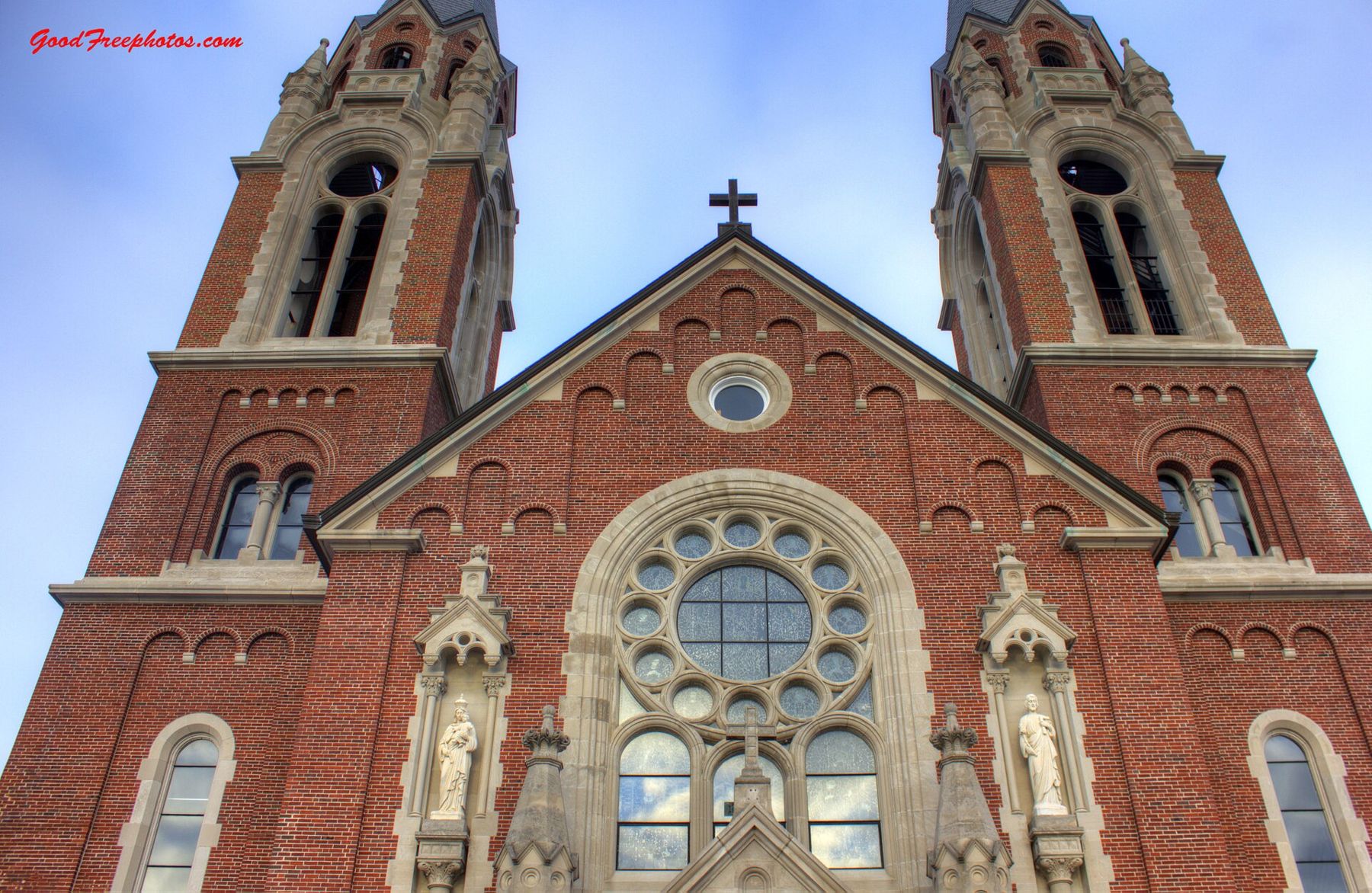
The present church was built in the late 1920s and dedicated in 1931. It is a large neo-Romanesque building of brick and stone, with tall twin spires and a separate scenic tower that visitors can climb. Inside, the main church is high and bright, with a shrine chapel to Mary that holds the centre of the pilgrimage tradition. Pilgrims have left crutches and other tokens there over the years in thanks for healing.
A basilica and a shrine
In 2006, the church was designated a minor basilica, a title given to churches of particular importance in Catholic life. Its full name reflects two roles: it is a basilica, and it is a national shrine to Mary under the title Help of Christians. The hill draws people for Mass, confession and quiet prayer throughout the year, and in larger numbers on feast days and in autumn.
The grounds have grown along with the shrine. There are walking paths, outdoor Stations of the Cross in the woods, a gift shop, a cafe and space for retreats. The friars also look after a large area of wooded land around the church, much of it left as forest. The Ice Age Trail passes along the hills nearby, so the summit is part of a wider walking country as well as a church.
The church inside
The interior is larger and lighter than the brick exterior suggests. Tall columns carry round arches down the length of the nave, and stained glass fills the windows on both sides. Side altars and chapels line the walls, and a lower level beneath the main floor holds additional chapels used for quieter services.
The Shrine Chapel of Mary, Help of Christians, is the heart of the place for pilgrims. It holds a statue of Mary that draws people to pray, and nearby you will see the tokens left by those who believed their prayers were answered. Even if you came for the view, spend a few minutes here. It explains why the hill matters to so many people.
The friars' monastery buildings stand beside the church, along with a guest house used for retreats. Much of this is private, so keep to the public areas, which are clearly marked.
Pilgrims and visitors
Holy Hill draws a wide mix of people. Some come on organized pilgrimages from parishes across Wisconsin and the Midwest, often on buses that arrive early on weekend mornings. Others come alone to pray or to attend Mass. Many more come as hikers, sightseers and photographers, drawn by the tower and the autumn colour.
The friars welcome all of them, but the church is a working place of worship first. Dress modestly, keep phones silent inside, and avoid photography during services. Outside, the grounds are open for walking, and the woods around the hill are some of the quietest in the county.
The view from the tower
The scenic tower is what brings many non-pilgrims up the hill. It is a long climb on narrow stairs, roughly 180 steps, and it opens onto a small platform high above the church roof. From there, the Kettle Moraine spreads out in every direction: wooded ridges, small lakes, farm fields and on a very clear day the skyline toward Milwaukee to the southeast.
In October the view is famous. The hills below turn red, orange and gold, and the hill road fills with cars on weekends. For more on where to find colour across the region, see our guide to fall colour in the Kettle Moraine.
Seeing what remains today
Drive north on Highway 83 toward Hartford, then turn east onto Highway 167, the Holy Hill Road, and follow the signs. Follow it up the ridge to the large parking lots below the church. From Eagle, allow about an hour by back roads.
Walk up to the church first. Go inside quietly, sit for a few minutes, and visit the shrine chapel. Check the schedule of Masses before you arrive, and time your visit so you are not walking through the church during a service.
Then climb the tower. It is open seasonally, usually from spring into autumn, and closes in bad weather. Hours change, so check before you go. Take your time on the stairs; they are steep and narrow, and you will pass people coming down.
From the platform, find the landmarks. Look southeast for the line of the moraine running toward Hartland and Delafield, and west across the farm country of Dodge County. The small lakes you can see below sit in kettles left by melting ice.
Walk the outdoor Stations of the Cross in the woods behind the church if you want a slower hour. In winter, when the tower is closed, the paths and the church are still open, and the hill is quiet.
Come in autumn on a weekday morning, before ten, for the clearest air and the least traffic. Pack a lunch or use the cafe, then drive west or north into the forest. A hike on the trail from Holy Hill to Loew Lake follows the Ice Age Trail through the same hills you saw from the tower, and Pike Lake and Powder Hill are a short drive north.