Lay a ruler across a map from Milwaukee to Lake Geneva and it passes close to East Troy, a village of a few thousand people in the northeast corner of Walworth County. It sits on rolling farmland just south of the Kettle Moraine country, with I-43 skirting its north side and a cluster of lakes and steep, wooded hills a few miles to the south and west.
The village is built around a square, which is unusual in this part of Wisconsin, and it keeps a working stretch of the electric interurban railroad that once linked it to Milwaukee. Those two things, plus the lakes and the Alpine Valley ski hill nearby, are why you come.
How to arrive in East Troy
From Milwaukee, drive southwest on I-43 about 35 miles and take the WIS 20 exit into the village; allow about 45 minutes. From the Chicago area, come north on I-94 or US 12 and cross to I-43, or take the back roads through Lake Geneva; plan on two hours. From Eagle, it is a 20-minute drive south and east on county roads through farm country.
From Madison, the most direct way is east on US 12 through Fort Atkinson and Whitewater, then on county roads past the lakes; allow about an hour and a half for the roughly 70 miles. There is no passenger train or regular bus to the village.
Park on the streets around the square. Parking is free and usually easy except on festival days and summer concert evenings.
The village square
The square is a green park in the middle of the village, with big shade trees, benches and a bandstand, surrounded on all four sides by 19th-century commercial buildings. Many of them are brick, with tall upper windows and decorated cornices. They now hold restaurants, taverns, shops and offices.
Walk the four sides of the square first, then sit under the trees. In summer the village holds concerts, markets and festivals on and around the square; dates change from year to year, so check the village calendar. On a weekday morning outside those events, it is a quiet place to drink a coffee and watch the town go about its business.
The East Troy Electric Railroad
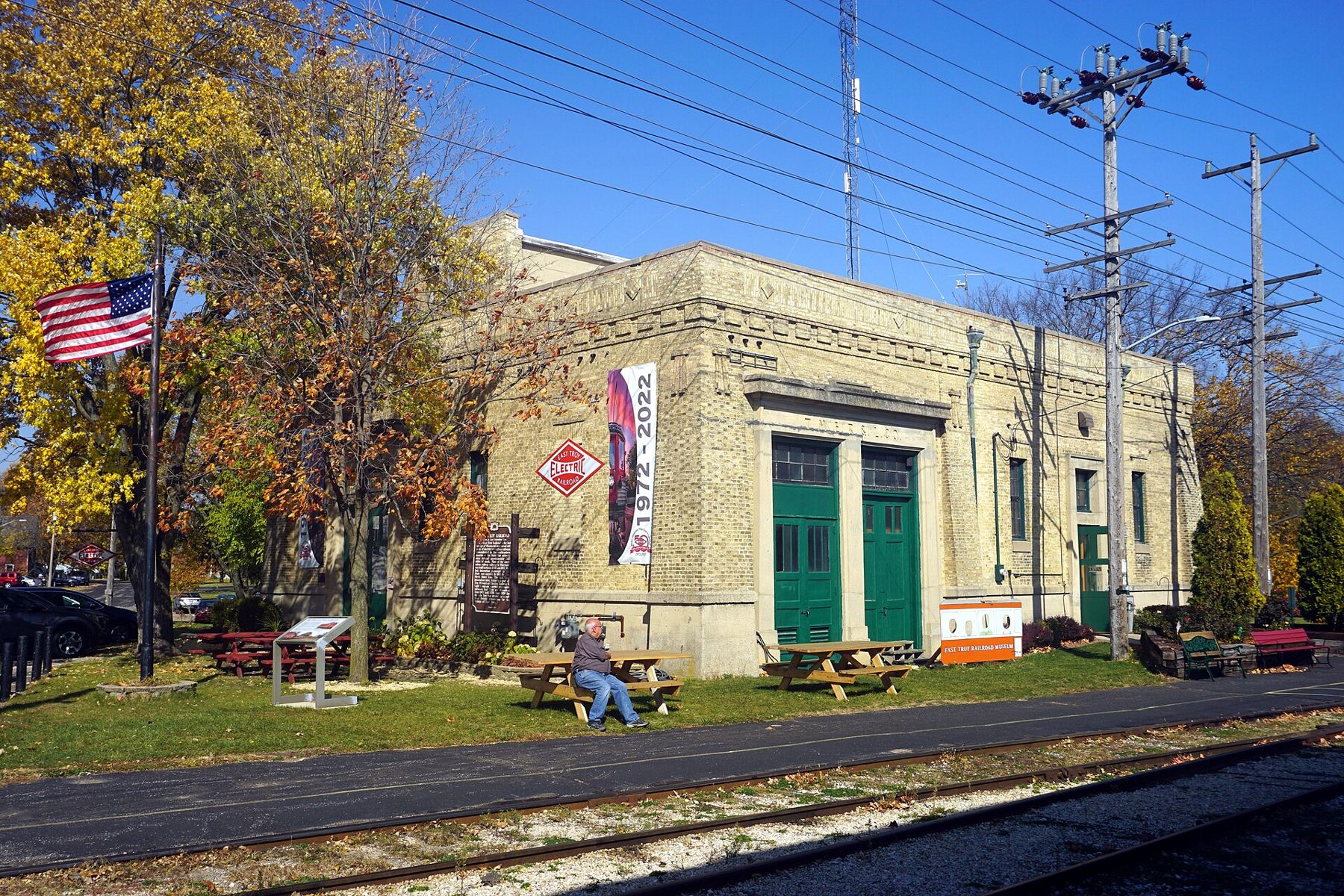
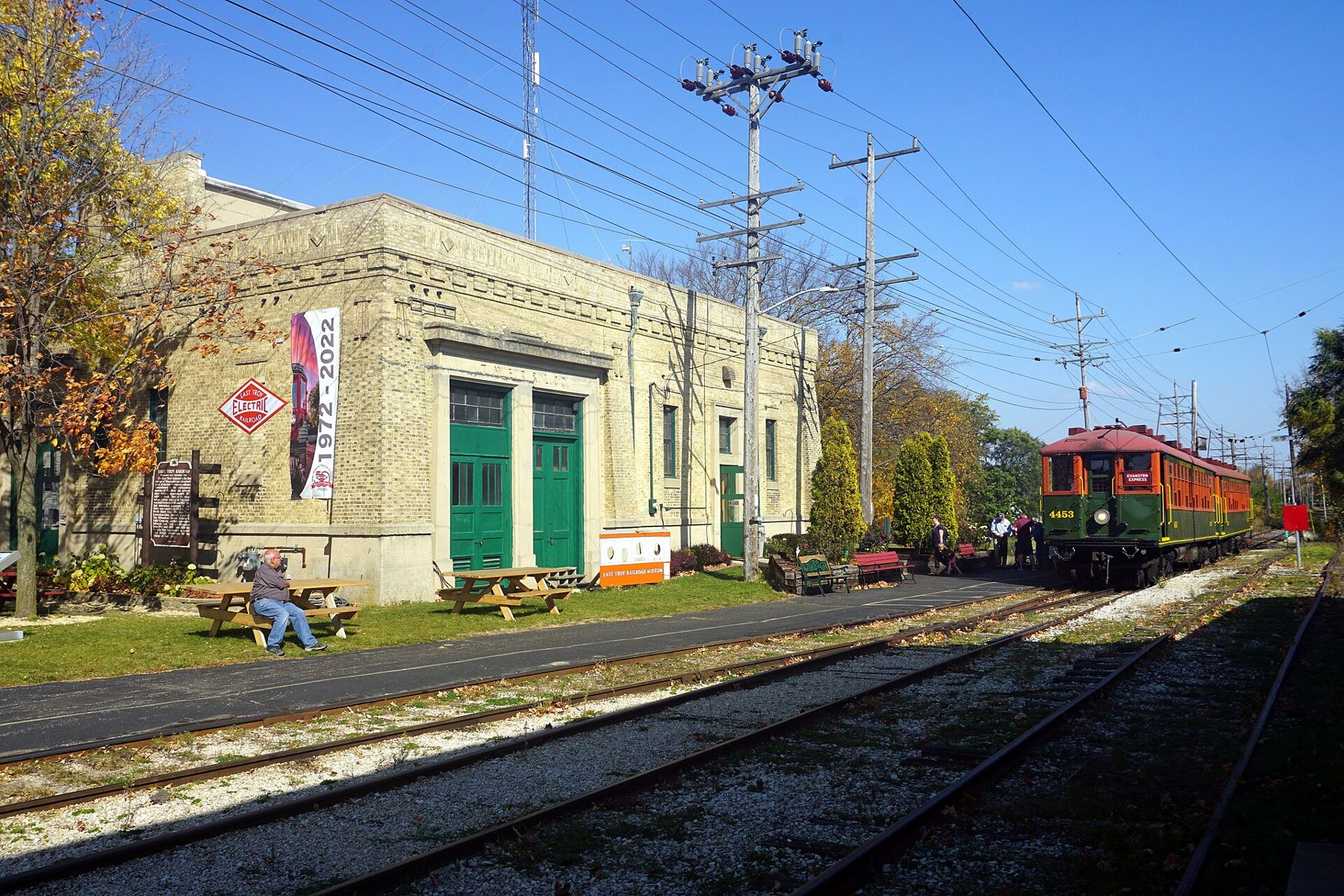
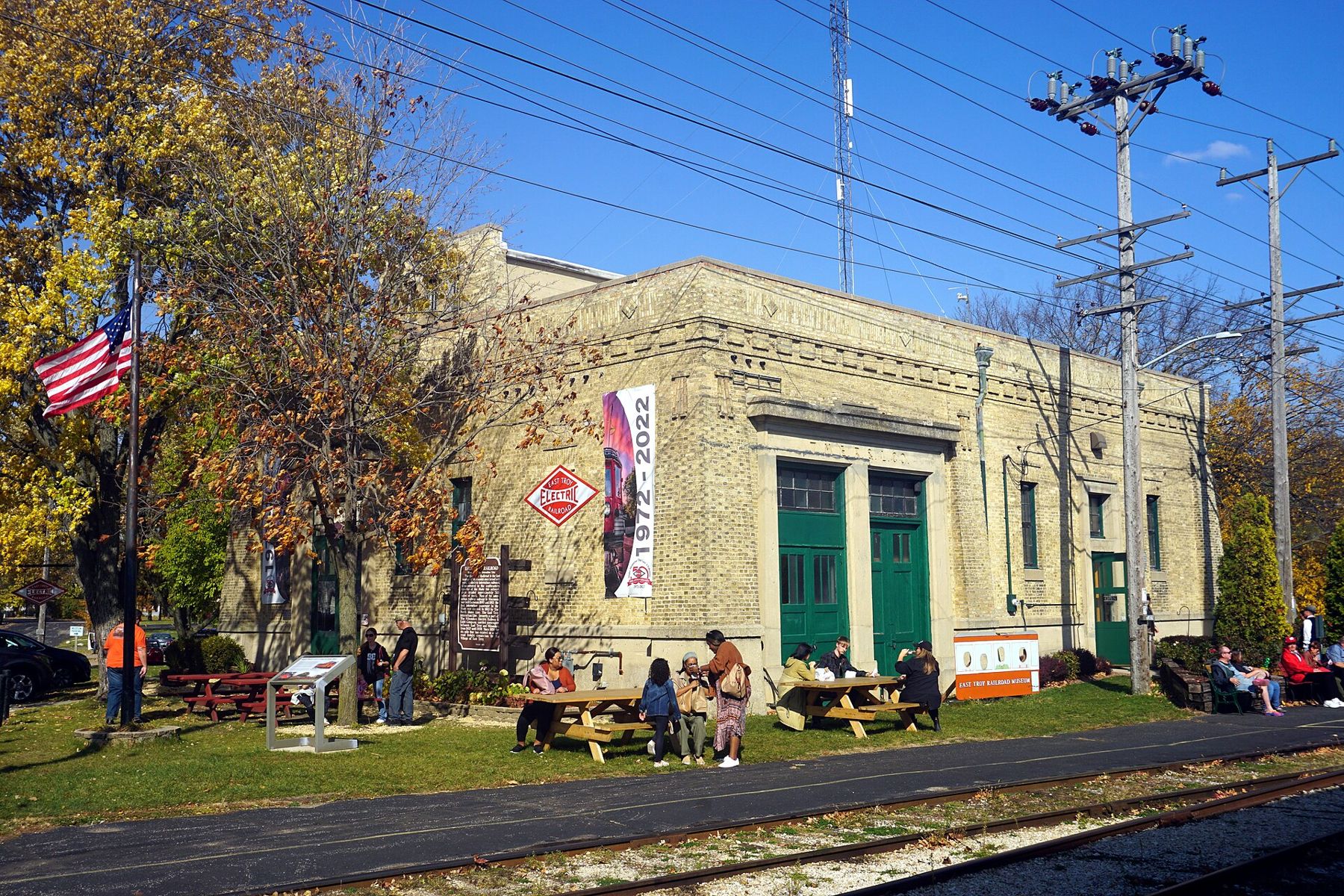
A few blocks from the square stands the brick depot and substation of the old electric interurban line, built in the early 1900s when electric trains ran between Milwaukee and East Troy. The passenger service ended long ago, but the village kept a section of the line running, and volunteers now operate it as a museum railroad.
The museum inside the depot covers the interurban era with photographs, equipment and exhibits. Outside, restored streetcars and interurban cars from Wisconsin and other Midwest cities stand on the tracks, among them an old car from Chicago's elevated lines. On operating days you ride a vintage trolley along the line east through farm fields and woods toward Mukwonago and back. Event trains, including dinner and holiday runs, are offered at times through the year.
Check the schedule before you go: trains run mainly on weekends in the warm months, and special trains often need tickets in advance. Our page on the East Troy Electric Railroad covers its history and the ride in more detail.
A few practical points for the ride. The cars are old and open-windowed, so bring a layer in spring and fall. Seats on the shaded side fill first on hot days. Children love the clang of the bell and the motorman's controls; let them stand where the crew says they can see. Strollers and wheelchairs may need help boarding the older cars, so ask at the depot before you buy tickets.
Alpine Valley and the lakes
South of the village, the land rises into steep, wooded hills. Alpine Valley is a ski area on one of those hillsides, with lifts, groomed runs and night skiing in a good winter. It is a regional hill rather than a mountain. Nearby, a large outdoor amphitheater with the same name hosts summer concerts that draw big crowds; on show nights the country roads back up for miles.
The lakes around East Troy are small and mostly ringed with cottages and homes: Lake Beulah to the northwest, Army Lake and others nearby. Lake Beulah has public access and is popular with anglers and boaters; see Lake Beulah and East Troy for launches and fishing. Swimmers should look for designated public beaches rather than trying to reach the water across private land.
Around the village
The countryside is farmland, orchards and nurseries. Late summer and fall bring farm stands and pick-your-own orchards within a short drive; our guide to apple orchards and pumpkin farms lists what is in season when. Lake Geneva is about 20 miles south, and the Kettle Moraine's Southern Unit begins a few miles northwest, past Eagle Spring Lake.
The roads here are good for cycling: rolling, with long views over the fields, and less traffic than the lake towns. Watch for farm machinery and blind hills, and ride single file.
When to go
Summer brings the square to life with concerts and markets, the trolleys run on weekends, and the lakes are full. Avoid big concert nights unless you are going to the show.
Fall is the best all-round season: orchard harvests, oaks turning on the hills, and trolley rides through colored woods in October.
Winter belongs to Alpine Valley when there is snow or cold enough for snowmaking, and to holiday trains on the railroad in December.
Spring is quiet. The trolleys start their season and the lakes open up, but the ski hill is closed and the farms are just getting to work.
A day in East Troy
Arrive mid-morning and walk around the square. Take the late-morning trolley out along the line and back, and look through the depot museum. Eat lunch on the square. In the afternoon, drive the county roads west past Lake Beulah, stopping at an orchard or farm stand in season. Come back to the square in the evening, when the streetlights come on and the bandstand stands empty under the trees.