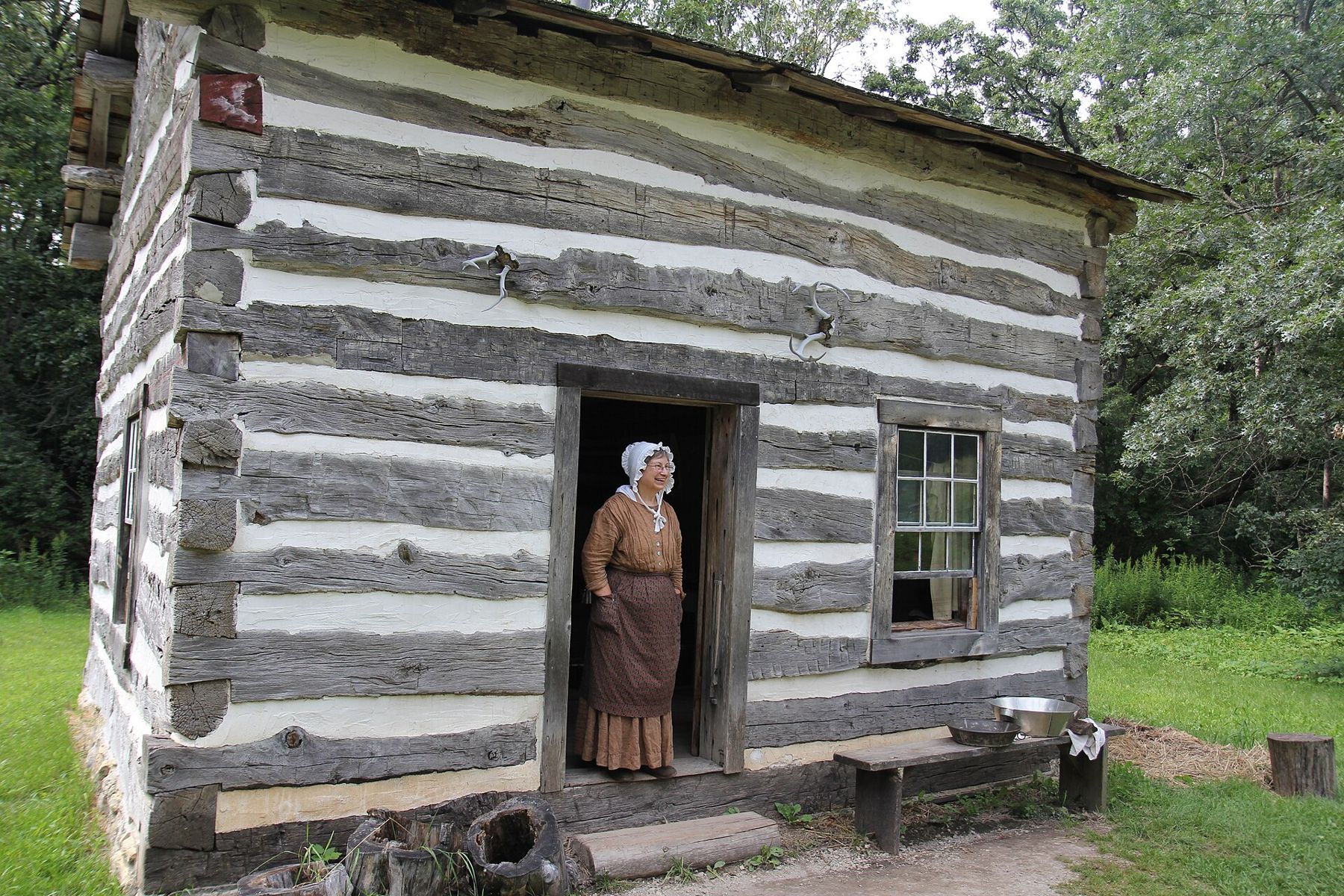
A mile or two south of the village of Eagle on Highway 67, the woods open onto a gravel lane, a split-rail fence and a farmhouse of squared logs with a sod-green yard. Nothing about it looks new, and none of it began here. Almost every building on these grounds was taken apart somewhere else in Wisconsin, numbered, hauled to this corner of the Kettle Moraine and put back together.
That is the idea behind Old World Wisconsin, an open-air museum run by the Wisconsin Historical Society. It opened in 1976, and it remains one of the largest museums of its kind in the country, with dozens of historic structures spread across several hundred acres of the state forest's southern edge.
Why the farms came to Eagle
Wisconsin filled with farmers in the decades after statehood in 1848. Many came from New England and New York, and many more came straight from Europe: Germans in great numbers, Norwegians, Danes, Finns, Poles, Irish, Czechs and others. They cleared oak openings and woodlots, raised log houses first and frame or brick ones later, and built barns in the styles they knew from home.
By the middle of the twentieth century those first-generation buildings were vanishing. Farms consolidated, old houses were abandoned or burned, and barns fell in. A group of historians and architects began surveying what was left and choosing buildings that showed how each community had worked the land. The rolling ground south of Eagle, already protected as state forest, gave room to set the farms far apart, the way they had stood on real sections of land.
The result is not a single village but a string of farmsteads along a long loop, each with its fields, fences, gardens and animals, and each set in the decade its family would have known.
The farms, community by community
The buildings are grouped by the people who built them. The Norwegian area holds log houses with steep roofs and small windows, including the Fossebrekke farmhouse, a low log home of a kind built by Norwegian settlers in the southern counties. The craftsmanship shows in the corners, where the logs are notched to lock without nails.
The German farms are larger and busier. You will see half-timbered walls filled with brick or clay, a granary built for storing grain off the ground, and kitchen gardens laid out in tight beds. German families were the biggest single immigrant group in nineteenth-century Wisconsin, and their farms here show how quickly some of them moved from a first log cabin to a substantial home and barn.
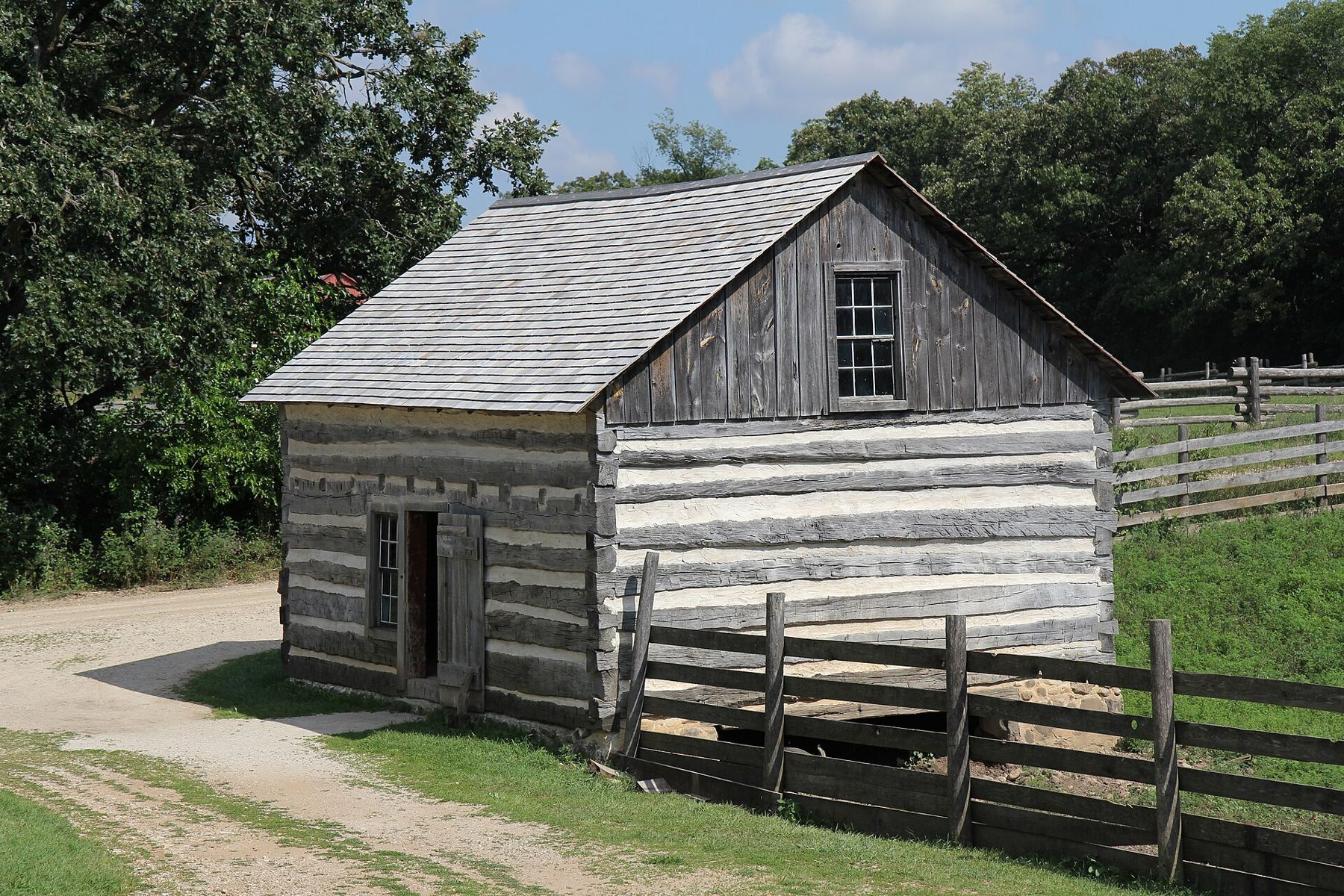
The Danish farm centres on a modest frame house with a working kitchen. The Finnish farmsteads, from a later wave of settlement in the north of the state, include a log sauna, which surprises most visitors more than anything else on the grounds. The Polish farm is plainer still, a reminder that some families arrived with very little and built with what the land gave them.
The Yankee farms, built by settlers from the eastern states, look the most familiar: clapboard houses and big timber barns with wide threshing floors. Their barns are some of the best places on the site to understand how much of the early farm year turned on wheat, before Wisconsin shifted to dairy.
Crossroads Village
Near the entrance, Crossroads Village gathers the buildings a farm family would have travelled to rather than lived in: a church, a general store, a blacksmith shop, a wagon shop, a hotel or inn, and houses of tradespeople. It stands for the small rural crossroads that once grew up every few miles in southern Wisconsin, where a family sold eggs, bought cloth, had a wheel mended and heard the news.
The buildings in the village came from different towns and decades, but together they show how a rural community hung together: the church that anchored it, the store that extended credit through the winter, the shops that kept wagons and tools working through harvest. Several of the buildings reflect people who are easy to leave out of farm history, including the tradespeople and the families who did not own land at all.
The village is the busiest part of the site, and it is where most special events happen. If you have only two hours, it gives you the clearest picture of nineteenth-century rural life in the shortest walk.
How the museum runs
Old World Wisconsin is a working museum. Interpreters in period clothing cook on wood stoves, tend gardens and animals, and work in the shops. Heritage-breed livestock and heirloom crops are part of the picture, and the fields are planted and harvested in season. The buildings are original, but the furnishings are chosen to match a particular year, so walking from one farm to the next can move you a decade or two in either direction.
Everything is spread out. The loop from the village to the farthest farms runs to several miles of walking, and a tram has long carried visitors between areas. The site is set within the Kettle Moraine, and the walk between farms crosses wooded hills and open fields that are worth the time on their own.
Seeing what remains today
Drive south from the centre of Eagle on Highway 67 and watch for the entrance on the east side of the road. The museum keeps a regular season from late spring into autumn, with extra events at other times. Hours, admission and which areas are open all change from year to year, so check before you go.
Start early. Take the tram, if it is running, to the farthest farms first, then walk back toward the entrance so the longest leg is behind you by midday. We'd see the Norwegian and Finnish farms early, while the light is low through the log-house windows, and save Crossroads Village for the afternoon.
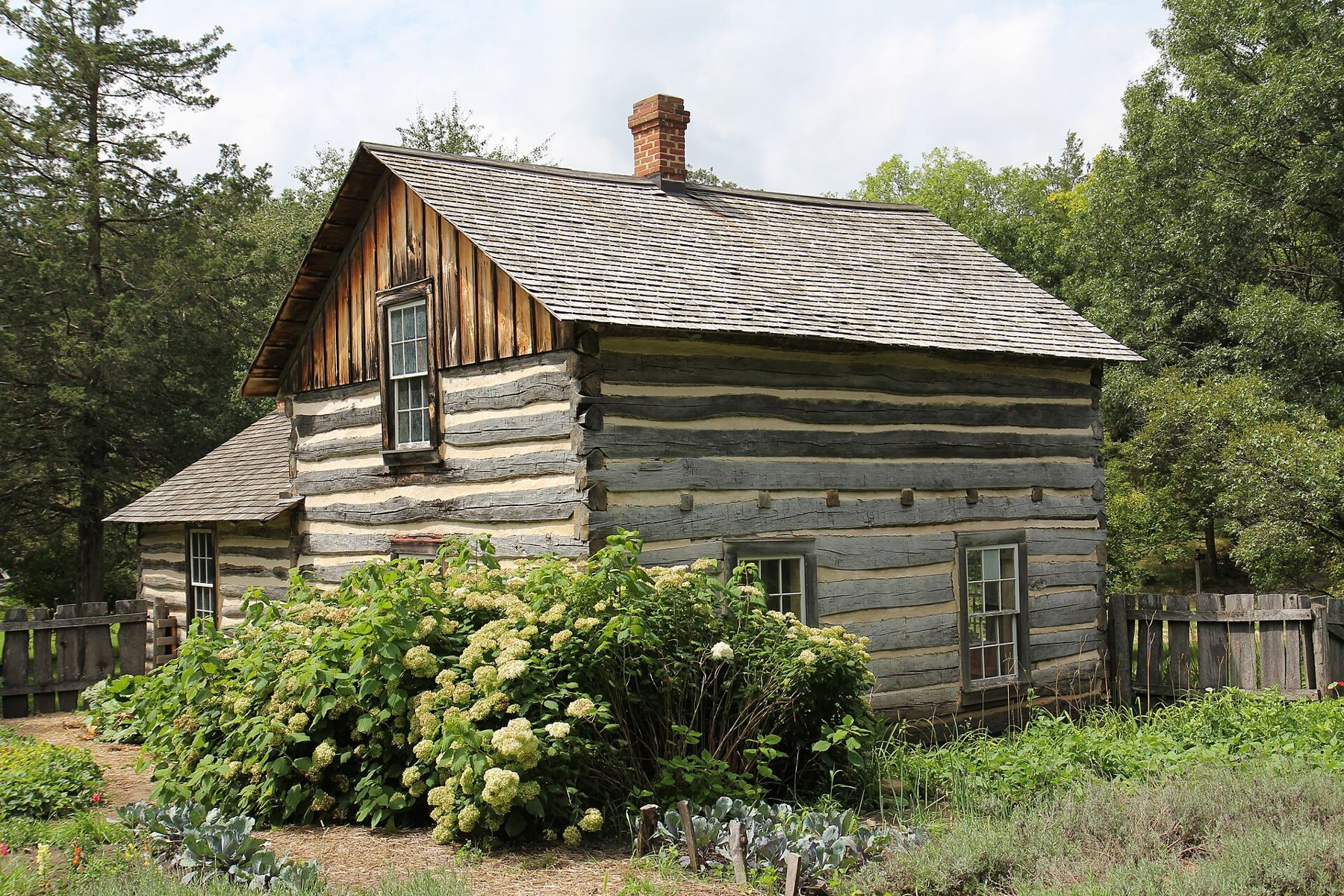
Ask questions. The interpreters know the families whose homes these were, which details are original, and what was rebuilt. Look at the corner joints of the log houses, the height of the granary floors and the way each kitchen is laid out. Those small things carry most of the story.
Bring water, a hat and walking shoes. The lanes are gravel and grass, the hills are real, and shade is patchy between the farms on a hot afternoon in July. In December, the site often opens on select evenings for lantern-lit holiday programs; read our winter page before you plan that trip.
Afterward, drive north on Highway 67 and turn onto the forest roads east of Eagle. The Kettle Moraine scenic drive runs through the same hills the settlers cleared, and from it you will pass real working farms with barns not so different from the ones you just walked through.
Stop in the village on the way home. The crossroads at the centre of Eagle, where Highways 59 and 67 meet, is the living version of the one you just left, and the story of Eagle itself is worth reading before you go.