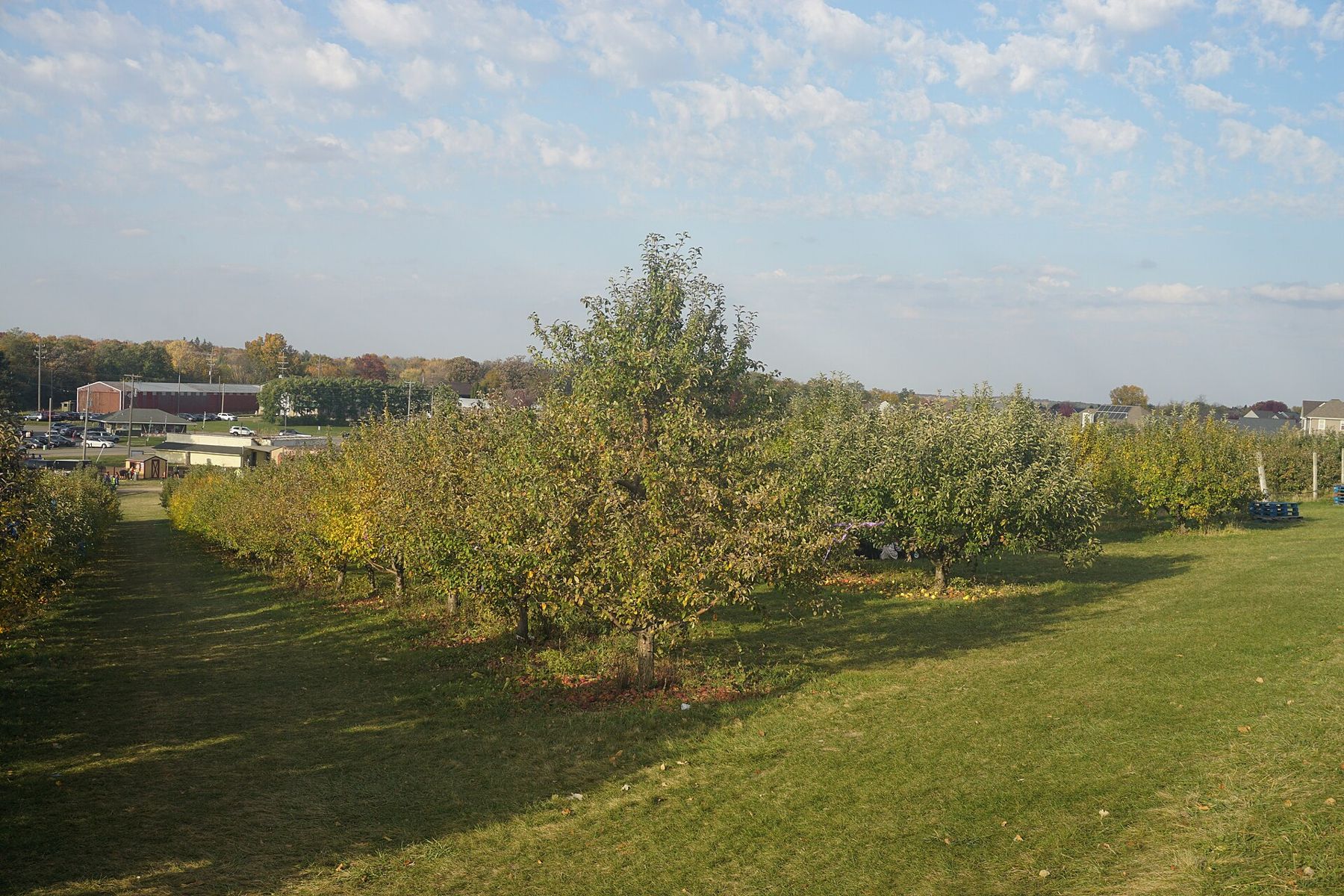
The first apples are ready before the kids go back to school. Somewhere around the last two weeks of August, the early varieties ripen in the orchards of southeast Wisconsin, and from then until late October there is nearly always something to pick. Pumpkins follow in late September, and by October every farm with a field of corn seems to have cut a maze into it.
The orchards around here are mostly family farms on the rolling ground between Milwaukee and the Kettle Moraine, with a farm market, a few rows open for picking, and a cider press. Some are small and quiet; a few have grown into full fall festivals with wagon rides, playgrounds and food stands.
What's ripe when
Every year is a little different. A hot summer brings the harvest forward; a cool one holds it back. Use this as a rough guide and check with the orchard before you drive.
- Late August into early September. Early varieties such as Zestar and Paula Red. Crisp and tart, best eaten fresh; they do not keep long.
- September. The heart of the season. Honeycrisp, McIntosh, Gala and Cortland usually ripen through the month, and the orchards are at their busiest with pick-your-own.
- Late September into October. Later, longer-keeping apples such as Jonathan, Golden Delicious, Haralson and Fuji, depending on what each orchard grows. These are the ones to buy by the bushel for winter.
- Pumpkins. Usually ready from late September; most patches are open to pick through Halloween, or until the first hard freeze turns the vines black.
How to pick an apple
Do it the way the grower would. Cup the apple in your palm, lift it up and give it a slight twist; a ripe apple comes away with its stem. If you have to pull hard, it is not ready. Don't shake branches, don't climb trees, and don't drop fruit into the bag: apples bruise easily, and a bruise turns to rot in a week.
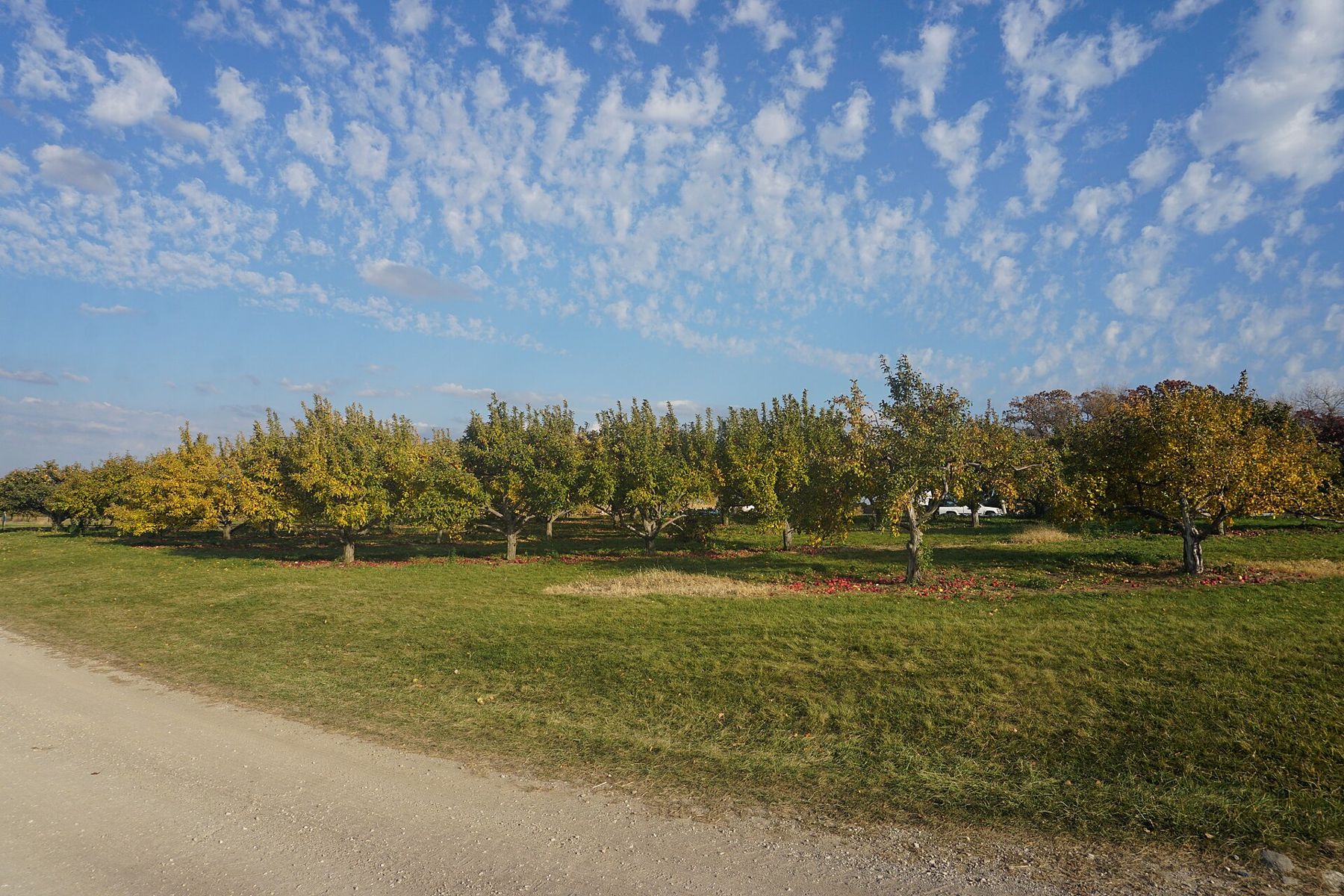
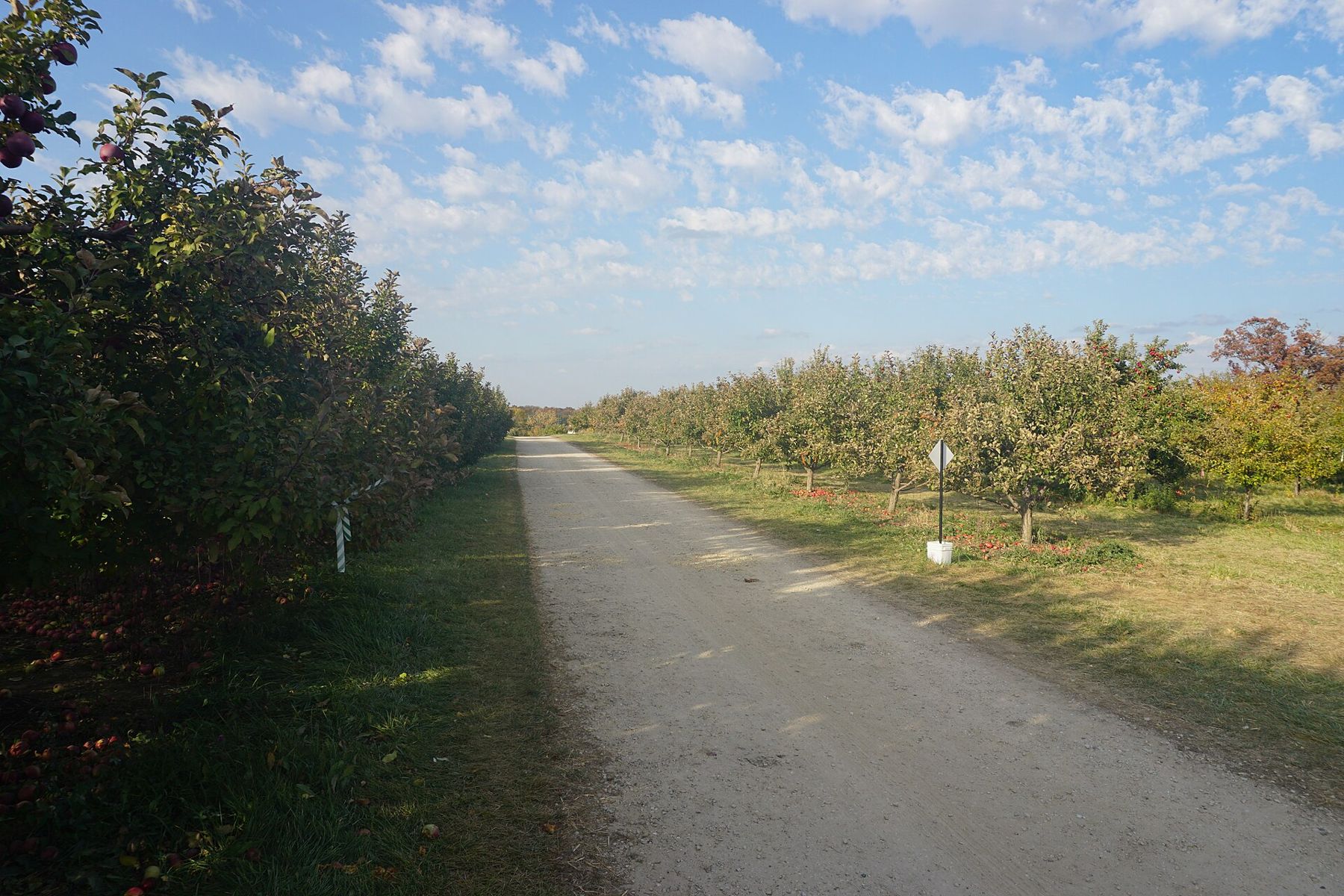
The best fruit is often on the outside of the tree and on the sunny side of the row. Leave the windfalls on the ground; most orchards do not allow you to take them, and many are already bruised. Pick only from the rows marked open. The grower opens them in order of ripeness for a reason.
Once home, keep apples cold. In a refrigerator or a cold garage, late varieties keep for weeks; on a warm kitchen counter they soften in days. Keep them apart from other produce, because ripening apples speed up everything around them.
Pumpkins, mazes and cider
Pumpkin patches are muddier than orchards; wear boots. Pick a pumpkin with a firm, unblemished skin and a solid green-brown stem, and carry it from underneath, not by the stem, which snaps easily and lets rot in. A pumpkin stored cool and dry will keep for weeks.
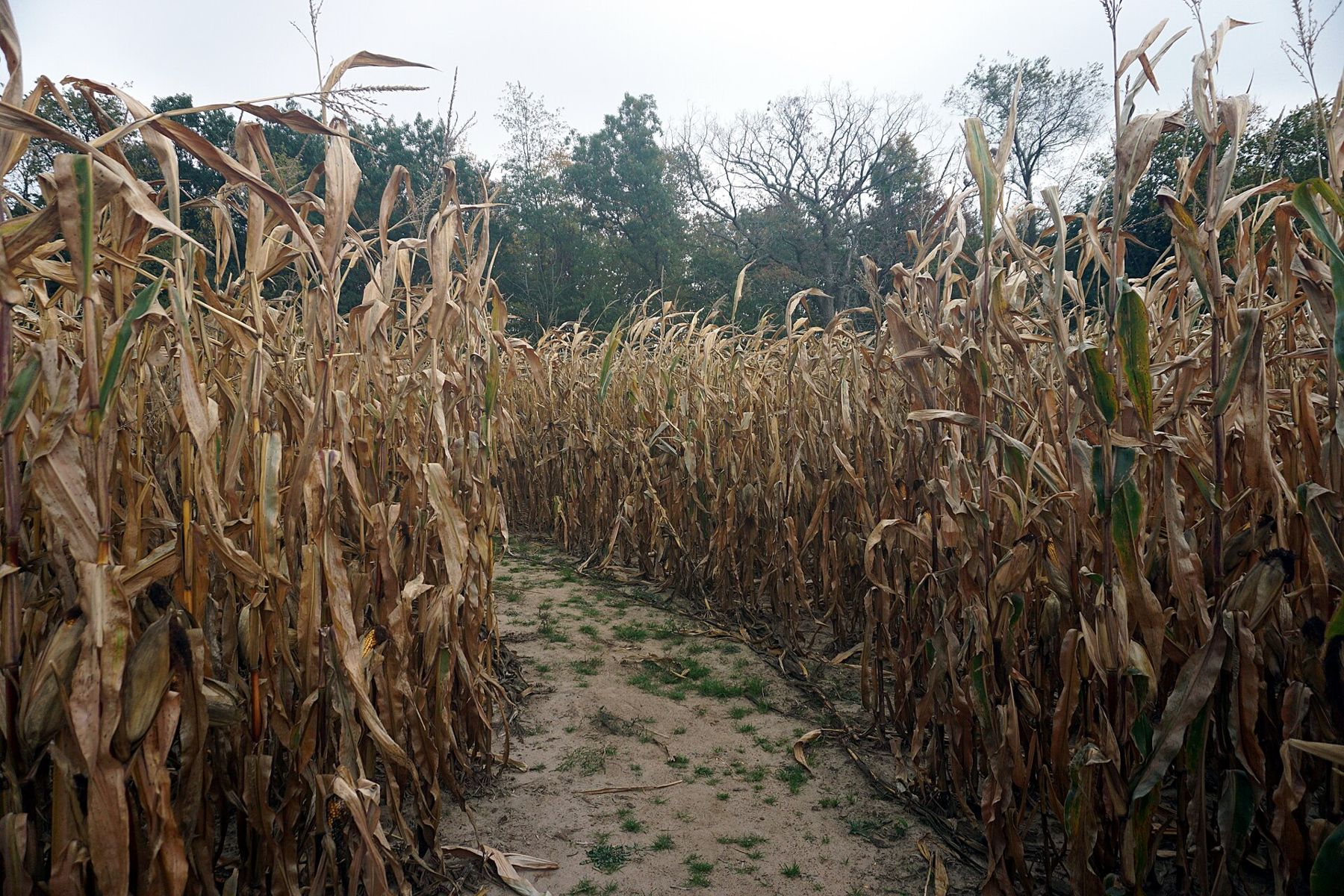
Corn mazes are usually open from September through October, and many farms charge a separate entry for the maze and the fall activities. Some run flashlight nights late in the season. Check what is on before you go, and make sure everyone knows to stay together in the tall corn.
Fresh cider is pressed at many orchards through the fall. Ask whether it has been pasteurized if that matters to you, and keep it cold. It turns sharp within a week or two in the refrigerator; some people like it that way.
Using what you pick
Different apples do different jobs, so pick with the kitchen in mind. Honeycrisp and Gala are for eating out of hand. McIntosh breaks down quickly when cooked, which makes it ideal for applesauce and poor for pie. Cortland is slow to brown when cut, so it suits salads and a fruit plate. For pie, most bakers mix a tart apple that holds its shape with a sweeter one that softens; ask at the farm market which of the day's varieties they would use. A half bushel is more than most households can eat fresh, so plan a batch of sauce or a pie the same weekend.
Pie pumpkins are a different thing from carving pumpkins: smaller, denser and sweeter. If you want to bake, look for them by name at the farm stand rather than picking the biggest one in the field.
Where to go
Orchards are scattered across Waukesha, Walworth, Jefferson and Racine counties, and the best one for you is often the nearest. One long-running landmark is The Elegant Farmer, a farm market and orchard near Mukwonago known for its apple pie baked in a paper bag; hours and fall events change each year, so check before you go. See our page on orchard pies and bakeries for more on the baking side of the season, and wineries and cideries if you would rather drink your apples.
Beating the crowds
The most popular farms are busiest on sunny October weekends, especially the two around peak fall color. Lines for wagons, pies and parking can stretch long. A Tuesday or Wednesday visit avoids most of it; failing that, arrive at opening time on Saturday, pick first, and get out before noon.
Dress for the field, not the farm market. Orchard grass is often wet with dew until late morning, the ground between rows is soft after rain, and pumpkin fields can be ankle-deep in mud in a wet October. Wear shoes that can get dirty, and keep a spare pair and a towel in the car. Bees and wasps work the fallen fruit on warm days, so look before you reach into a tree, and keep sweet drinks covered.
September is the overlooked month. The weather is warmer, the trees are fuller, the choice of apples is the best of the year, and the crowds have not found it yet. Go on a weekday afternoon, pick a half bushel of Cortlands, and eat the first one in the row where you picked it.