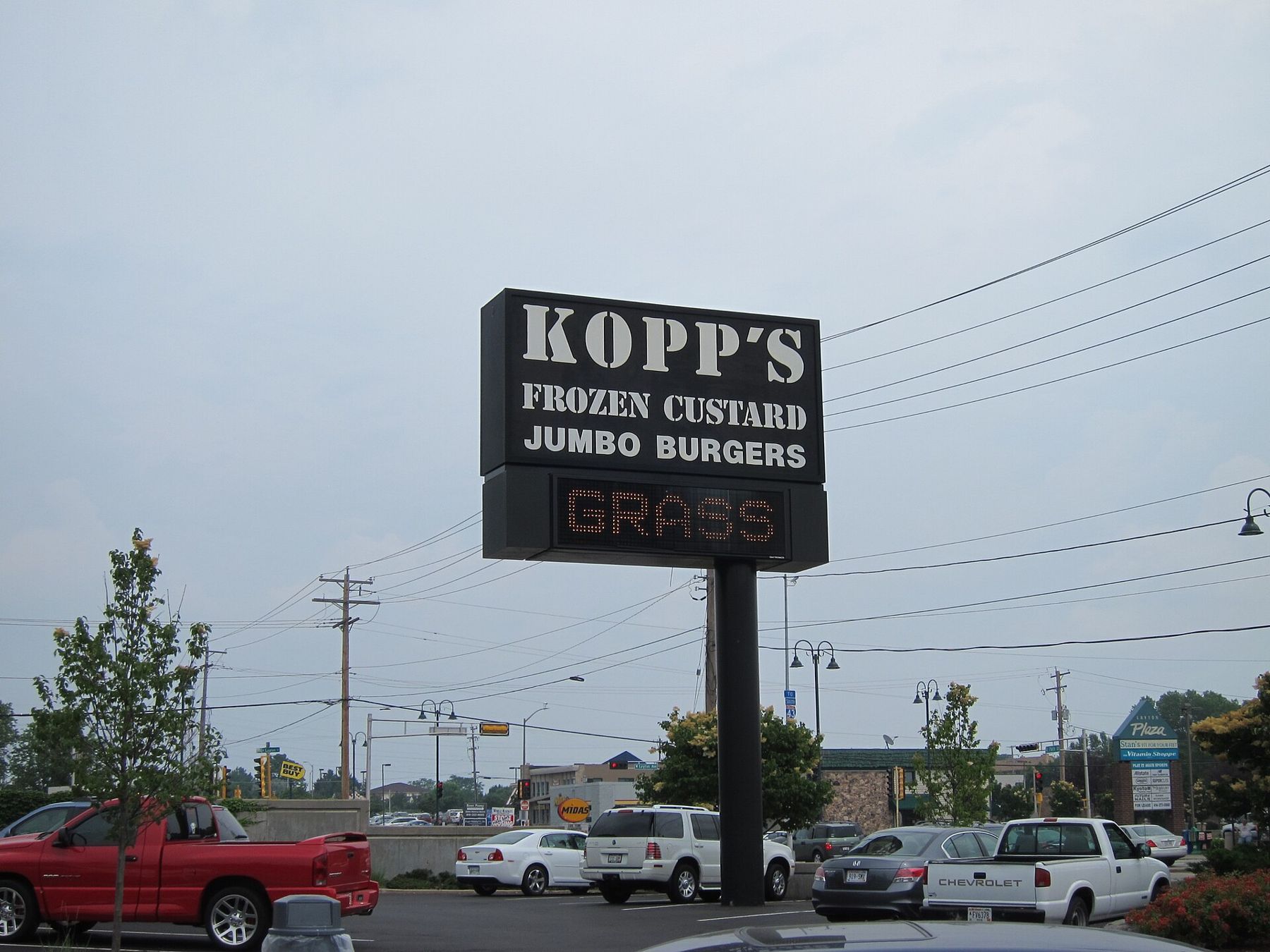
Somewhere around the Milwaukee county line, ice cream stops being the default. Drive the main roads of the city's suburbs and out into Waukesha County on a summer evening and you will pass walk-up windows and drive-ins with lines out to the parking lot, a board at the window announcing the flavor of the day. That is frozen custard, and southeastern Wisconsin treats it as a regional institution.
What makes it custard
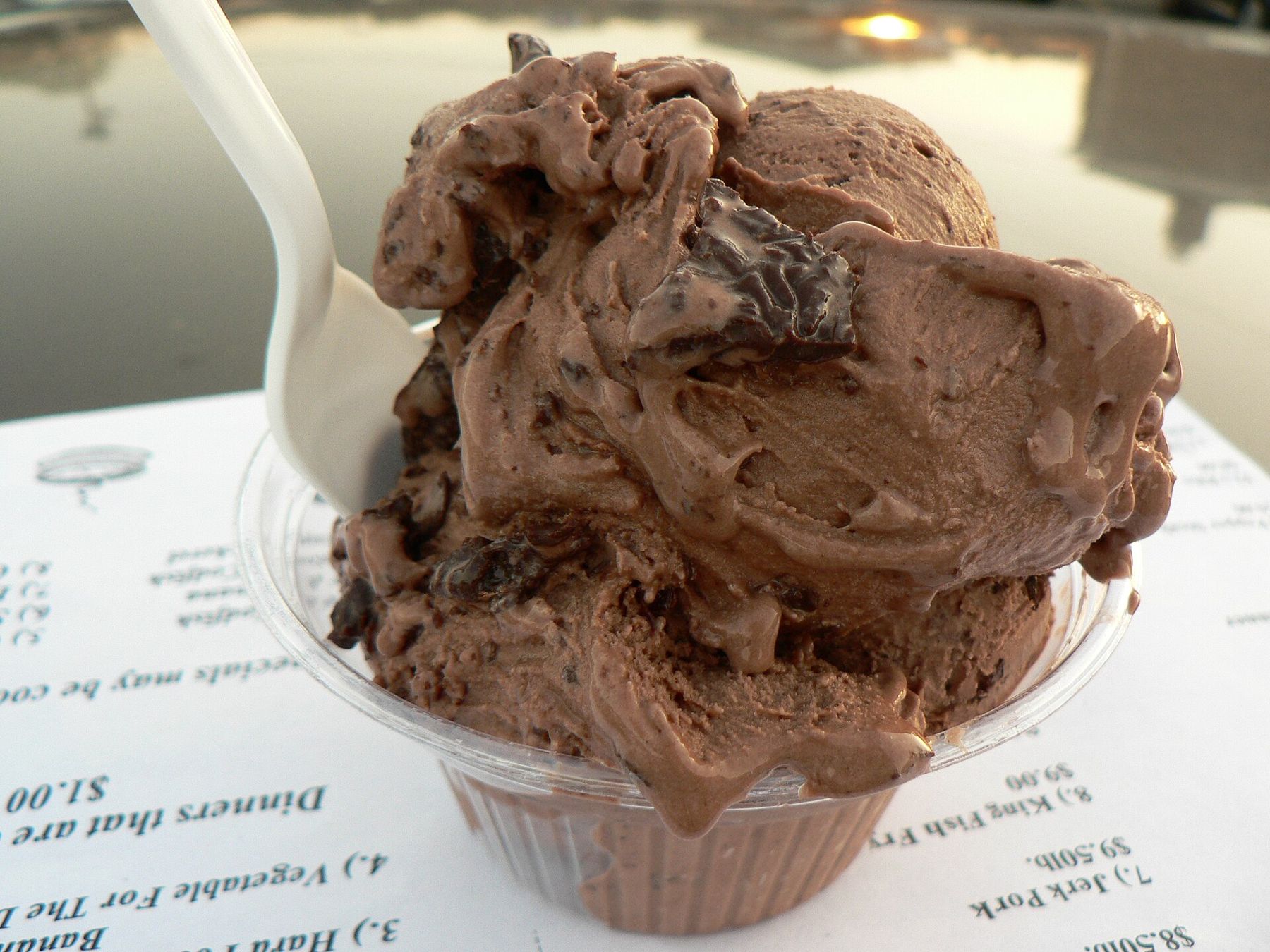
Frozen custard is ice cream's richer cousin. By federal standard it must contain egg yolk, at least 1.4 percent egg yolk solids by weight, on top of the cream and sugar of ordinary ice cream. The yolks give it a deeper yellow colour, a richer flavour and a smoother body.
The bigger difference is in the machine. Custard is made in small batches in a continuous freezer that whips in very little air. Ice cream from a factory may be a third or more air by volume; custard is far denser. It comes out of the machine at a slightly warmer temperature than hard-packed ice cream and is meant to be eaten within minutes, which is why the best stands make it fresh throughout the day and throw away what does not sell.
The result is thick, smooth and heavy on the spoon. It melts more slowly than soft serve and tastes of dairy and egg rather than sugar. You will feel the difference in the first bite.
Custard arrived in the Milwaukee area in the decades before the Second World War, carried west from the amusement parks of the East Coast, and the city took to it in a way few others did. Stands multiplied after the war, many of them family businesses with a single window and a car hop or two, and a handful of names grew into Milwaukee landmarks. The density of stands along the city's main roads earned Milwaukee its reputation as a custard capital.
The flavor of the day
Most stands keep vanilla and chocolate on every day and add one special. The special changes daily and follows a calendar printed for the month: butter pecan one day, turtle the next, then mint chip, raspberry, peanut butter, a seasonal fruit, a cake or pie flavor. Regulars plan their week around it, and the calendar is often taped to refrigerators across the area.
- Check the calendar before you drive. Most stands post it at the window and online.
- Order a dish or cone of the special, or a mix of the special and vanilla.
- Try a sundae or a malt made with custard. Malts and shakes made with custard are noticeably thicker.
- Many stands also serve burgers and fries. The butter burger and a custard is a common supper on a summer evening.
Stands across the southeast
You will find three main kinds of custard stand in the region.
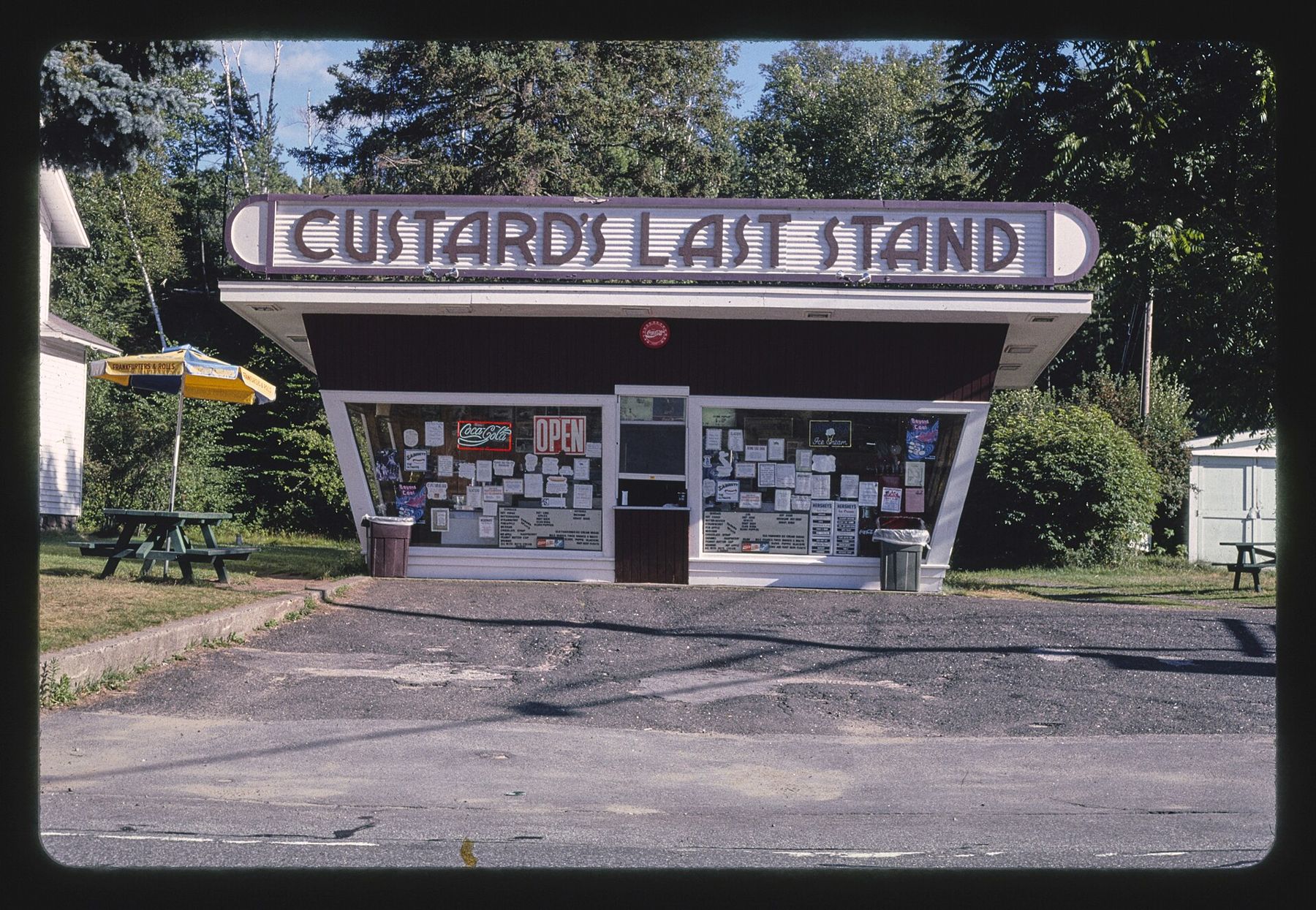
The walk-up is the oldest pattern: a small building with a sliding window, a menu board and a few picnic tables outside. You order at the window, wait while the cup is filled and eat in the car or on the bench.
The drive-in adds a big lot, sometimes with the old car-hop canopies, and often a full short-order kitchen.
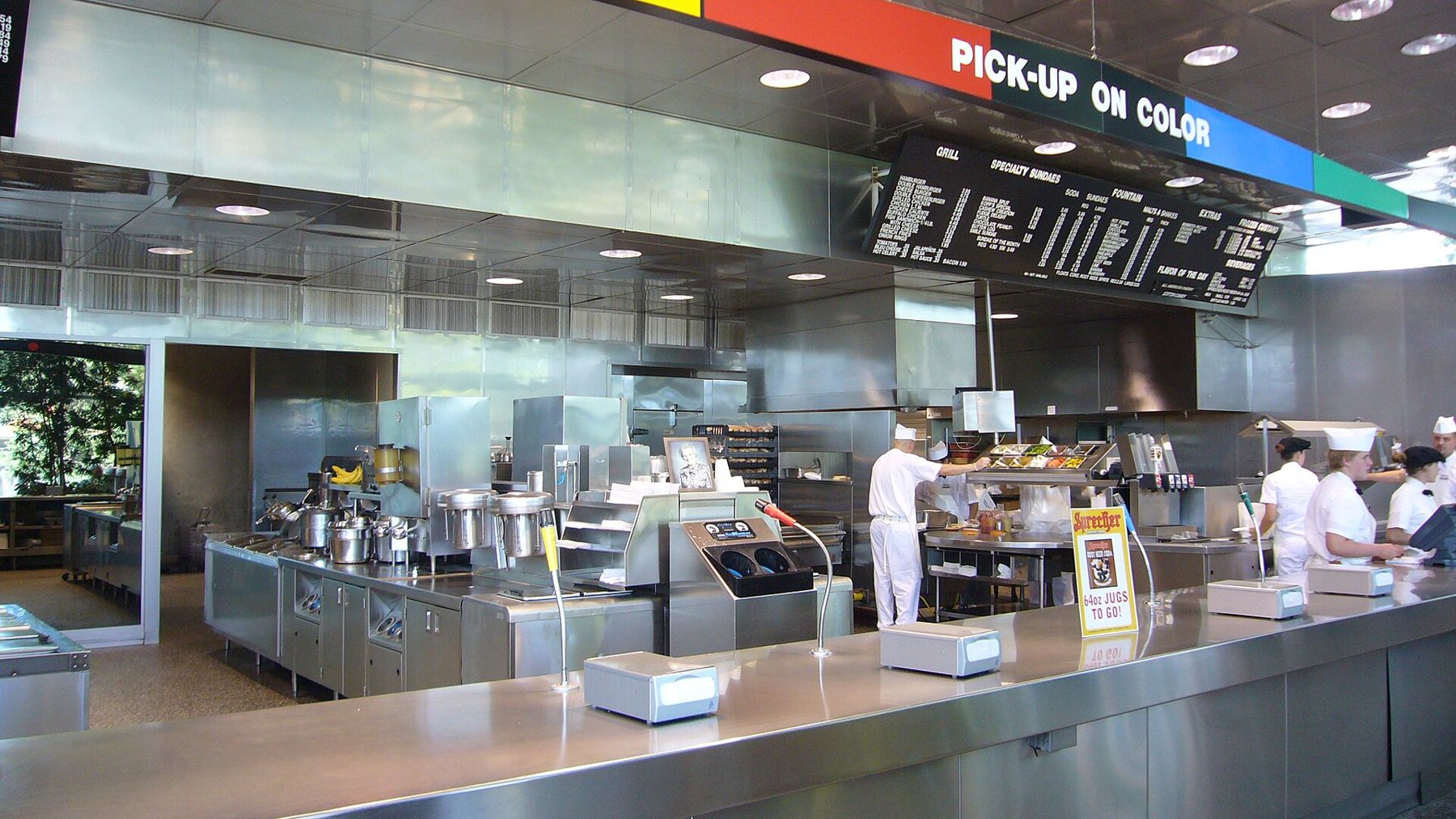
The counter shop is a larger building with a long stainless counter, an open kitchen and indoor seating. The big Milwaukee-area names work this way, and Kopp's, with its long-running flavor calendar and its tall roadside sign, is one of the best known.
Outside the city, many small towns in Waukesha, Walworth and Jefferson counties have a stand of their own, often seasonal, often at the edge of town near the ball fields or the highway. If you are coming in from Milwaukee for the day, plan your last stop at one.
Custard compared
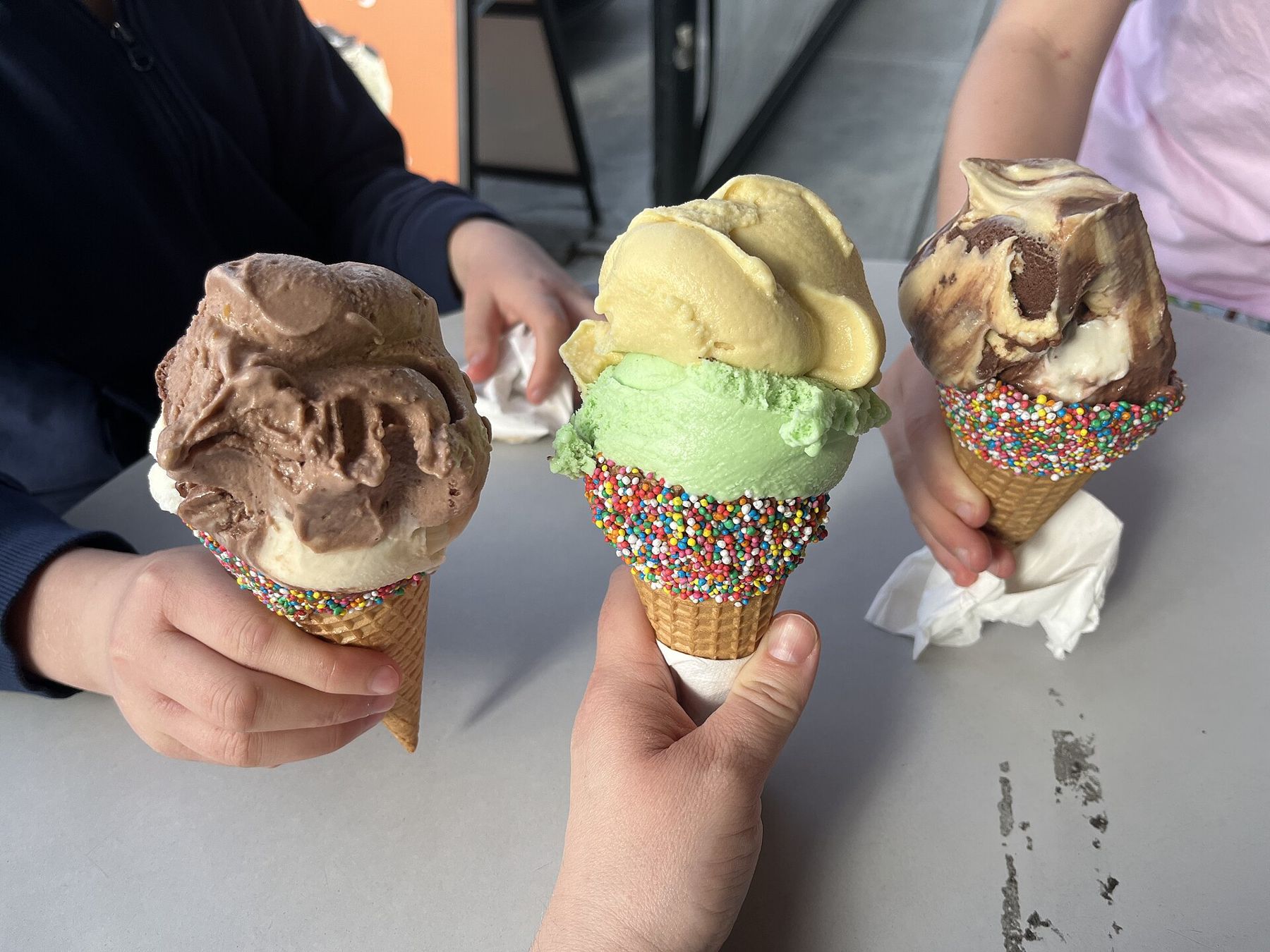
If you grew up somewhere else, you may wonder how custard differs from the soft serve at a roadside dairy bar. Both come out of a machine soft, but soft serve is usually lighter, with more air and less fat, and is often made from a mix rather than a fresh base. Custard is heavier and holds its shape in a scoop. Hard-packed ice cream, on the other hand, is frozen colder and stored for days or weeks, so it is firmer, icier at the edges and less creamy on the tongue.
Gelato is the closest relative in texture, dense and slow-churned, but it usually has less fat and no required egg. A good stand's vanilla custard tastes of cream, egg and real vanilla, and is worth ordering plain at least once before you start on the flavors.
Custard through the year
Summer is the high season, but custard in this part of the state is not only a summer thing. The larger city stands stay open through the winter, and the flavor calendar tracks the seasons: fresh strawberry and peach in summer, pumpkin and apple in fall, peppermint and eggnog around the holidays, and cherry or mint for the spring holidays. Many stands sell custard pies and cakes for birthdays and holidays, ordered a few days ahead.
The small-town stands are more seasonal. Many open around early spring and close in late fall, and their opening day is a small local event, with a line on the first warm weekend whatever the thermometer says.
How to arrive and order
Arrive on a warm evening if you want the full scene: the line, the lit sign, the cars with the windows down. Arrive mid-afternoon on a weekday if you would rather not wait. Many city stands are open year round, and custard in February has its own small following; some small-town stands close for the winter, so check before a cold-weather drive.
- Park, join the line and read the board. The flavor of the day is usually posted at the top.
- Know your size before you reach the window. Portions are generous; a single is plenty for most people.
- Order a dish rather than a cone on a hot day. Dense custard is heavy, and cones tip.
- Ask about quarts and pints to take home if you live close. Get them into a freezer quickly.
- Eat it while it is fresh. Custard is at its best in the first few minutes after it leaves the machine.
Custard pairs naturally with the rest of the Wisconsin table. After a plate of cheese curds at a summer fair, a cup of vanilla is the obvious next stop.
Take your cup to a picnic table, sit where you can see the sign come on at dusk, and finish it before it starts to soften at the edges.