Bite a fresh cheese curd and it pushes back. The rubbery little nugget squeaks against your teeth, a sound somewhere between a balloon and a new sneaker on a gym floor. In Wisconsin that squeak is the test of freshness, and people drive to cheese plants and shops on the morning a batch comes in just to hear it.
What a curd is
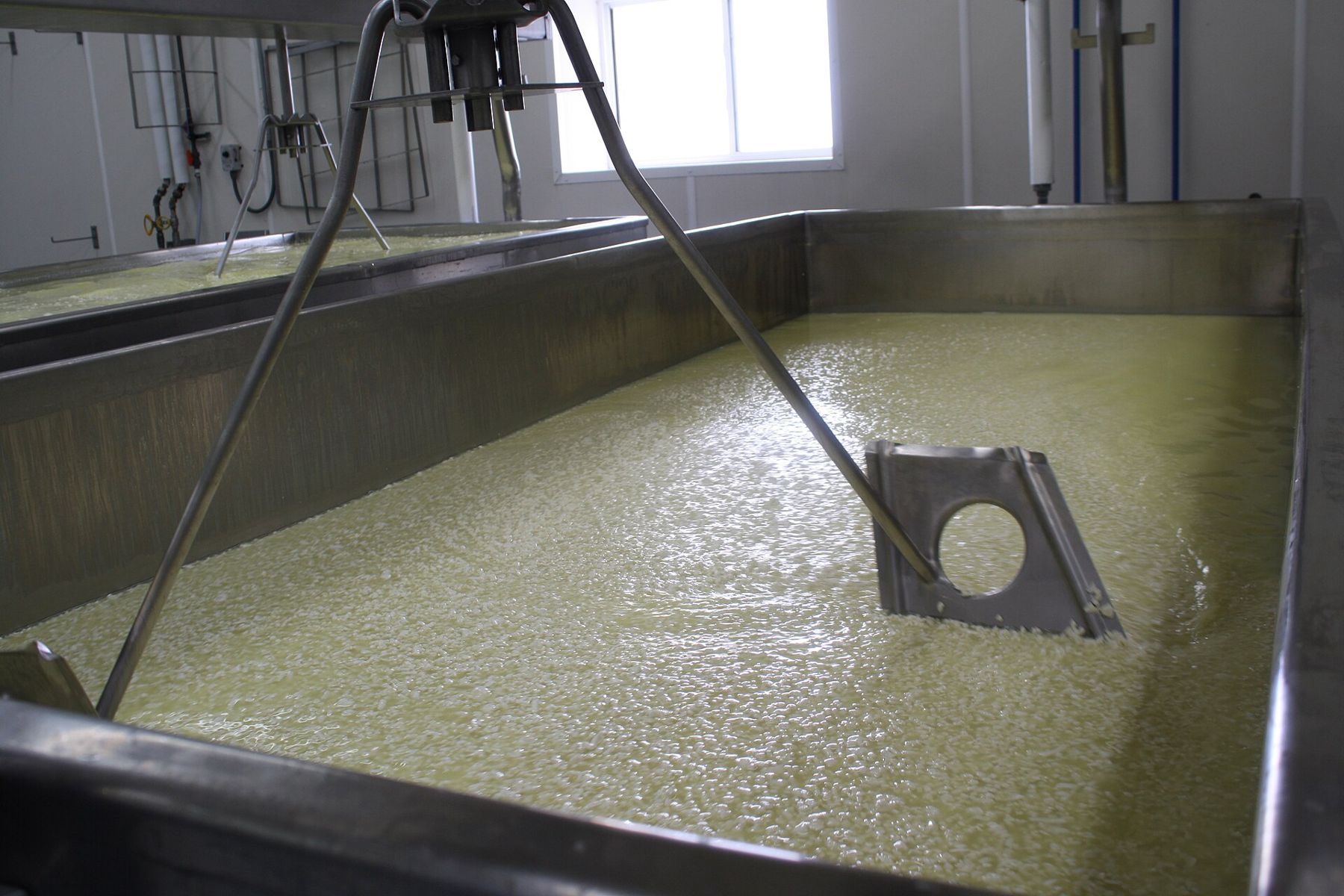
Cheese curds are young cheese, most often cheddar, caught before they become a block. Cheesemakers warm milk, add culture and rennet, and the milk sets into a soft mass. That mass is cut, cooked and stirred, the whey is drained, and the curds knit together and are cut again, a process known as cheddaring. At this point most of the batch would be salted and pressed into blocks to age. Curds are the pieces that are salted and sold loose instead, irregular in shape, mild, slightly salty and milky.
Most curds are white or pale; some are coloured orange with annatto, the same plant colouring used in orange cheddar. Flavoured curds, with garlic, dill, ranch seasoning or hot pepper, are common in shops.
Wisconsin has made cheese on a large scale since the late 1800s, when wheat farming wore out the soil and farmers turned to dairy cows. Small cheese factories sprang up at crossroads every few miles, each taking milk from the farms around it, and curds were the by-product sold at the factory door to anyone who stopped. Most of those crossroads factories have closed, but the habit of buying curds where the cheese is made has outlasted them.
Why fresh curds squeak
The squeak comes from the structure of the fresh cheese. In a new curd the milk proteins form a tight, springy network, and when you bite, the curd rubs against your teeth and squeaks rather than giving way. As the hours pass the network relaxes, and moisture and salt shift through the curd. By the next day most of the squeak is gone, and refrigeration speeds the loss.
That is why curds are a local food. They taste fine for a week or more, but the squeak belongs to the first day, and only a cheesemaker or a nearby shop can get them to you in time.
Buying fresh curds
- Find the curd day. Plants make curds on set days, and shops near them receive deliveries on known mornings. Ask, and come that day.
- Read the bag. Many bags are dated. Today's date is what you want.
- Squeeze gently. Fresh curds feel springy and slightly damp through the bag, not hard or greasy.
- Look beyond cheese shops. Gas stations, grocery stores, farm markets and meat markets across the state sell curds, often near the register. The busiest have the freshest.
- Buy small. A half pound disappears quickly in a car. Buy what you will eat today and a second bag for frying.
Cheese plants and shops are spread across the state, thickest to the north and west of the Kettle Moraine. The cheese country drive links several in one day, and summer farmers markets often have a cheesemaker's stall.

Keeping them
- If you will eat them the same day, keep them in a cool spot rather than the fridge; they keep their squeak longer. Do not leave them in a hot car.
- For anything longer, refrigerate them in their bag. They keep well for about a week; the squeak will fade, but the flavour holds.
- To bring back some squeak, warm a handful in the microwave for a few seconds.
- Day-old curds are the ones to fry or to put on poutine, where squeak no longer matters.
Fried cheese curds
Fried curds are the bar, fair and ballpark version: battered, deep fried until the shell is golden and the inside just starts to melt, then served hot in a paper boat. They are a fixture at every county fair and on most tavern menus, often on the same Friday as the fish fry.
To make them at home, work in small batches:
- Chill the curds well; cold curds hold their shape in the oil.
- Make a thin batter of flour, a pinch of salt and enough cold beer, or milk and an egg, to coat a spoon.
- Heat neutral oil in a deep, heavy pot to about 375 degrees, no more than a third full.
- Dip the curds a few at a time, let the excess drip off and lower them into the oil.
- Fry for a minute or so, until golden, then lift onto a rack or paper towels.
- Eat at once, with ranch or marinara.
Pull them as soon as the batter is set. A curd left too long bursts and leaks cheese into the oil, and the batch is lost. Keep a lid nearby, never leave hot oil unattended, and let it cool completely before you pour it off.
When ordering fried curds out, look for a menu that names the cheesemaker or says the curds are battered in house. Frozen, pre-breaded curds are common and fine, but hand-battered curds have a lighter, crackly shell and a softer middle. White or orange makes no real difference to the taste; the colour comes from annatto, not from the milk.
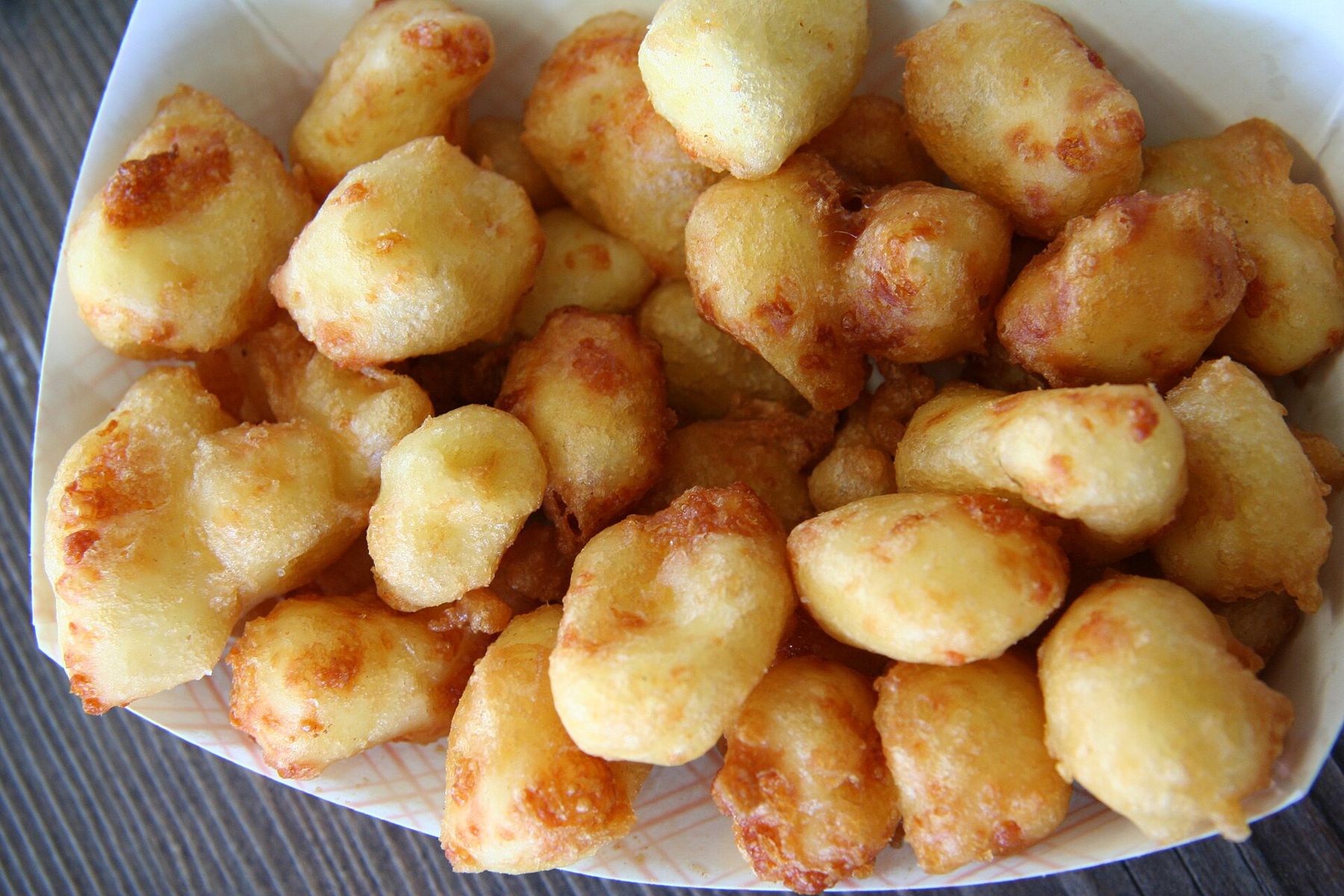
Fresh in the car, fried at the fair: eat the first handful of a new bag on the drive home, and listen.