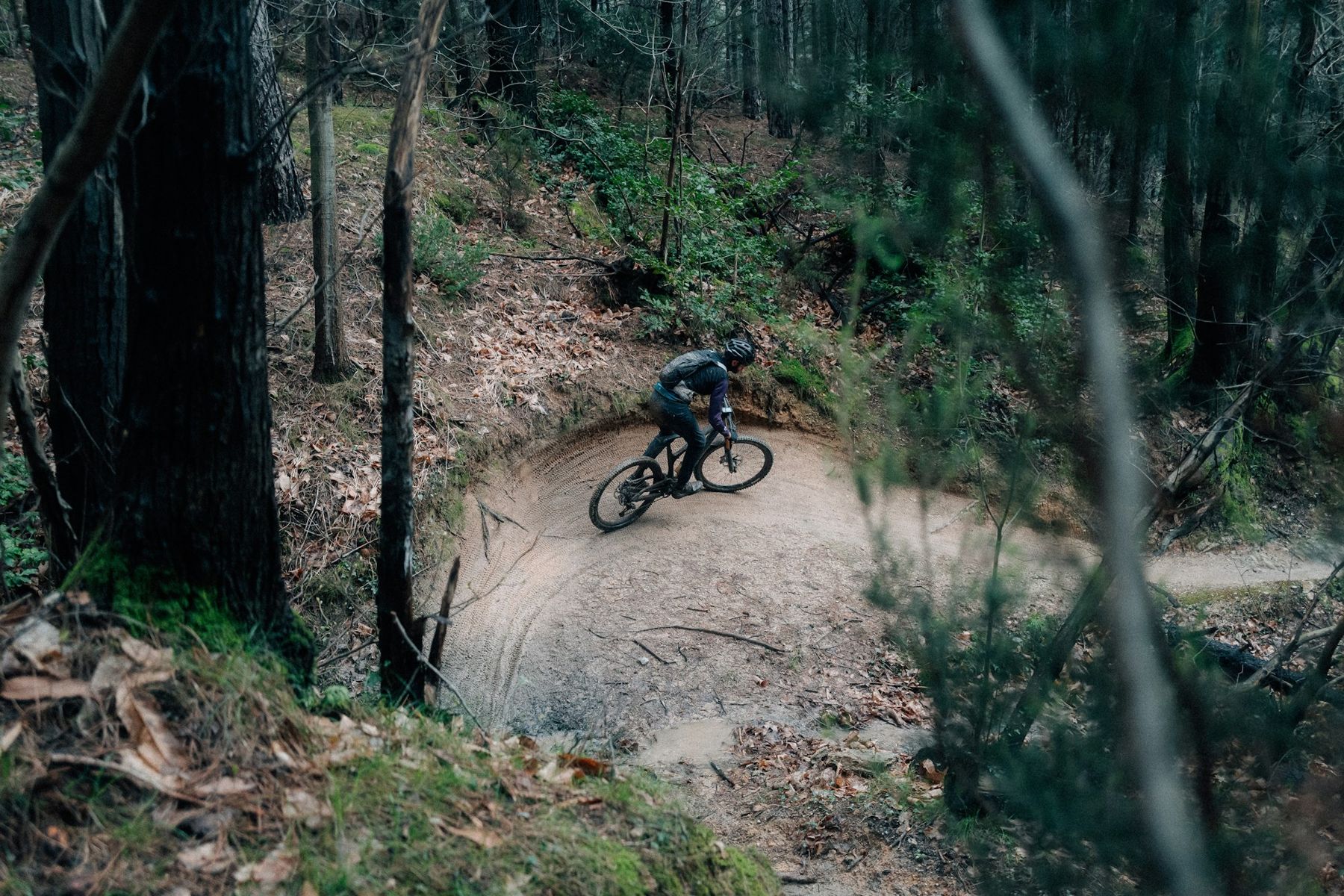
County H runs north from US 12 near La Grange through flat farmland, then the woods close in on both sides and a brown sign points you into a large gravel lot. That lot is the trailhead for the John Muir Trails, the busiest mountain bike trails in the Southern Unit of the Kettle Moraine State Forest. A few miles east, off County Z, the Emma Carlin Trails offer a shorter, steeper and rockier ride. A connector trail links the two systems, so a strong rider can string them together.
Read this before your first visit. Most of what goes wrong here, from tickets to ruined trails, comes from skipping one of the steps below.
Before you ride
- Check the trail status. The forest closes the bike trails after heavy rain and during the spring thaw, when tyres cut ruts into the soft ground. The status is posted by the forest; look at it on the morning you ride. If the trails are closed, do not ride them.
- Buy your passes. Your car needs a state forest vehicle sticker or daily pass in the lot. Each rider 16 or older also needs a state trail pass, daily or annual. You can buy them at the self-registration station or in advance. Rangers do check.
- Pick your loop. The John Muir system is a set of colour-coded loops of different lengths that share a start. The map board at the trailhead shows each one. Choose a short loop for your first ride and add distance next time.
- Read the arrows. Bikes ride the loops in one direction only. Follow the arrows at every junction. Riding against them puts you head-on with riders coming fast downhill.
On the trail
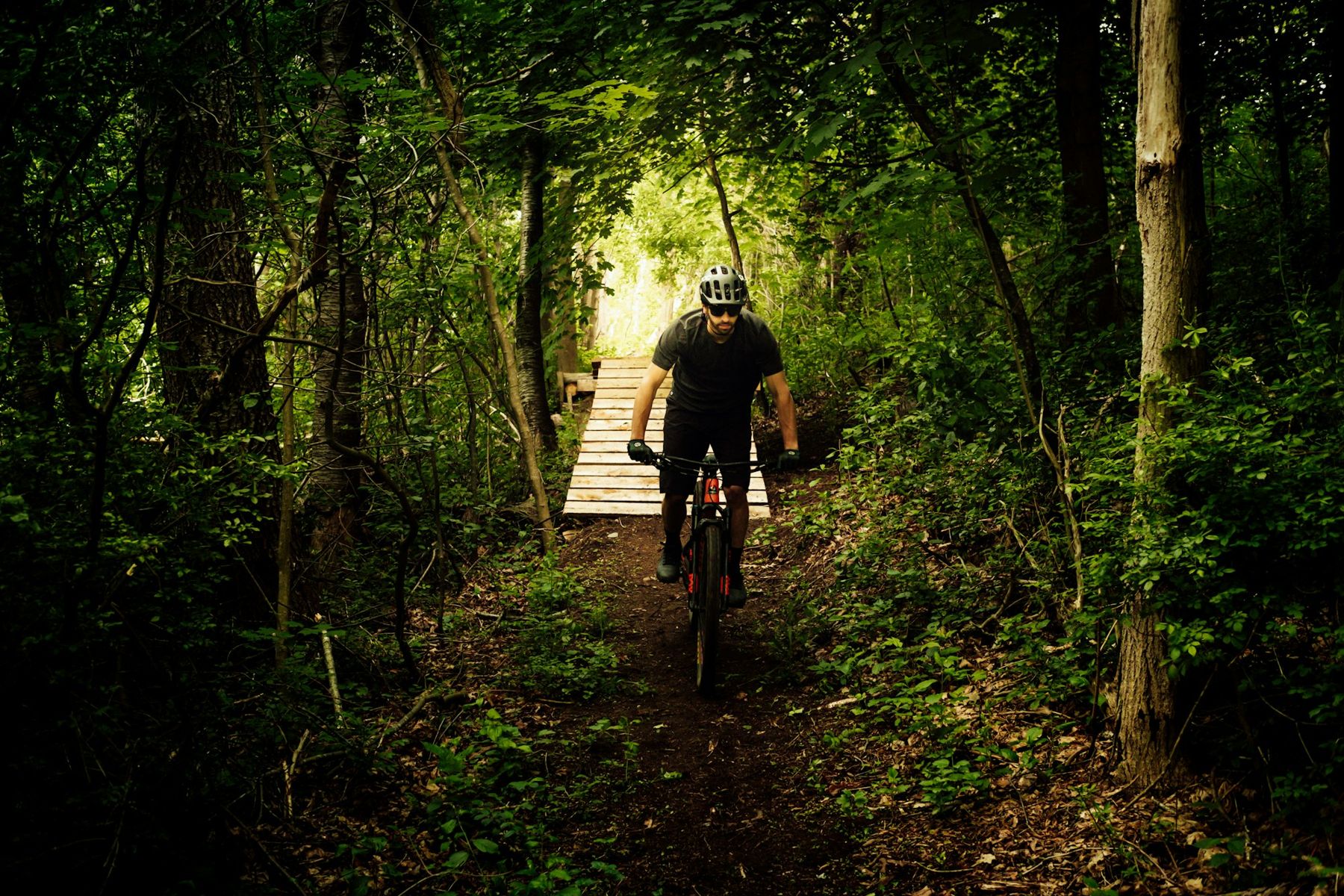
The John Muir loops are singletrack and narrow double track through oak and hickory woods, over the knobs and around the kettles the glacier left. Expect short, punchy climbs, fast descents, roots, and patches of loose sand that grab a front wheel on corners. Some sections have rock gardens and log features; most have a ride-around line.
The shorter loops near the trailhead suit riders new to the sport, as long as they are comfortable on loose ground. The longer loops head deeper into the woods with more climbing and more technical descents. Emma Carlin is harder for its length: the climbs are steeper and the rocks larger. Ride it after you know you enjoy John Muir.
Hikers use the trails too. Call out as you come up behind them, slow to a walk, and pass with room. Horses use separate trails in the forest, but you may cross a horse trail. If you meet a horse, stop, speak to the rider and let them tell you how to pass.
What to carry
- Water: at least one large bottle per hour of riding in summer.
- A spare tube, a pump or inflator, tyre levers and a multi-tool.
- A paper map or a photo of the trailhead map board. Phone signal is weak in some hollows.
- Insect repellent from late May through August, and a tick check when you get back to the car.
- A light layer in spring and autumn. The low ground near the kettles holds cold air.
Where not to ride
The Ice Age Trail crosses the John Muir system and runs close to Emma Carlin. It is a foot trail. Do not ride it, even for a short connection. The same goes for the hiking-only paths elsewhere in the forest. Our page on the John Muir and Emma Carlin trails covers the hiking side, and trail difficulty explained helps you read the ratings on the map boards.
Your first ride
If you have never ridden here, keep the first visit simple. Arrive early, park at the John Muir lot, and ride the shortest loop once at an easy pace. Stop at the top of each climb and look at the next descent before you ride it. Walk anything that looks beyond you; there is no shame in it, and the next rider would rather pass you on foot than find you in the leaves.
On a second lap, or a second visit, try a longer loop. You will start to notice the pattern of the ground: the steep sides of the kettles, the sandy flats between them, the rocky crests where the glacier dropped its heaviest stones. Read the terrain and the trail gets easier.
Bring a riding partner for the longer loops and for Emma Carlin. Phone signal is patchy, and a broken chain several miles out is a long walk alone.
When to ride
Late May through October is the main season. Weekday mornings are quiet; weekend afternoons in summer and early autumn are busy, and the lot can fill. After a dry week in September the sand gets loose and slow. In early October the oaks overhead turn bronze and the trails are at their best, with cool air and firm ground. In spring, be patient. The thaw closes the trails for weeks, and riding them wet damages them for the whole season.
Finish your ride with a slow spin around the lot to cool down, then wipe the sand off your chain before it goes back on the car.