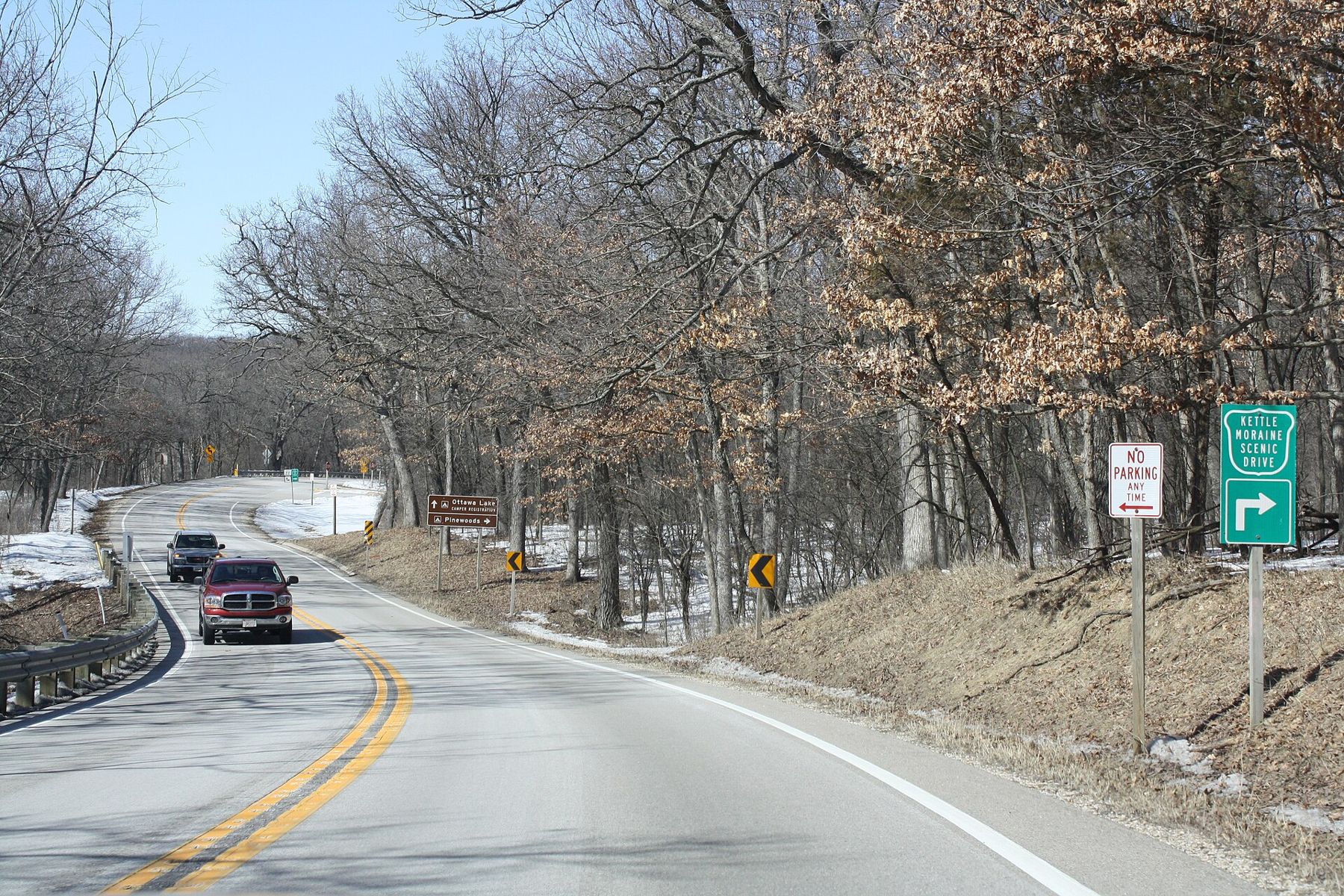
Ski trails make good summer walks. They are wide enough to walk side by side, they are mown rather than worn into a rut, and they follow the shape of the land in long, smooth curves. The Nordic Trails in the Southern Unit of the Kettle Moraine State Forest were built for cross-country skiing, but from spring to late fall they are among the quietest hiking in the forest.
The trailhead is off County H, north of the crossroads at La Grange, not far from the John Muir trailhead. On a weekday in September, you may have the whole system to yourself.
A walk around the loops
- The trailhead Park in the Nordic lot and check the map board. The loops are colour-coded and range from a short beginner loop to a long outer circuit that takes most of a morning to walk. They are nested, so the longer loops share the first and last stretches with the shorter ones.
- The first mile The trail leaves the lot through open oak woods and climbs gently onto the first ridge. The grass on the trail is mown in summer, and the walking is easy. Look for the junction posts, which carry the loop colours and numbers that match the map.
- The rolling middle The longer loops run up and down over the moraine in a series of rolling hills. The climbs are never long, but there are many of them, and the descents are designed for skiers to glide, so they are long and smooth.
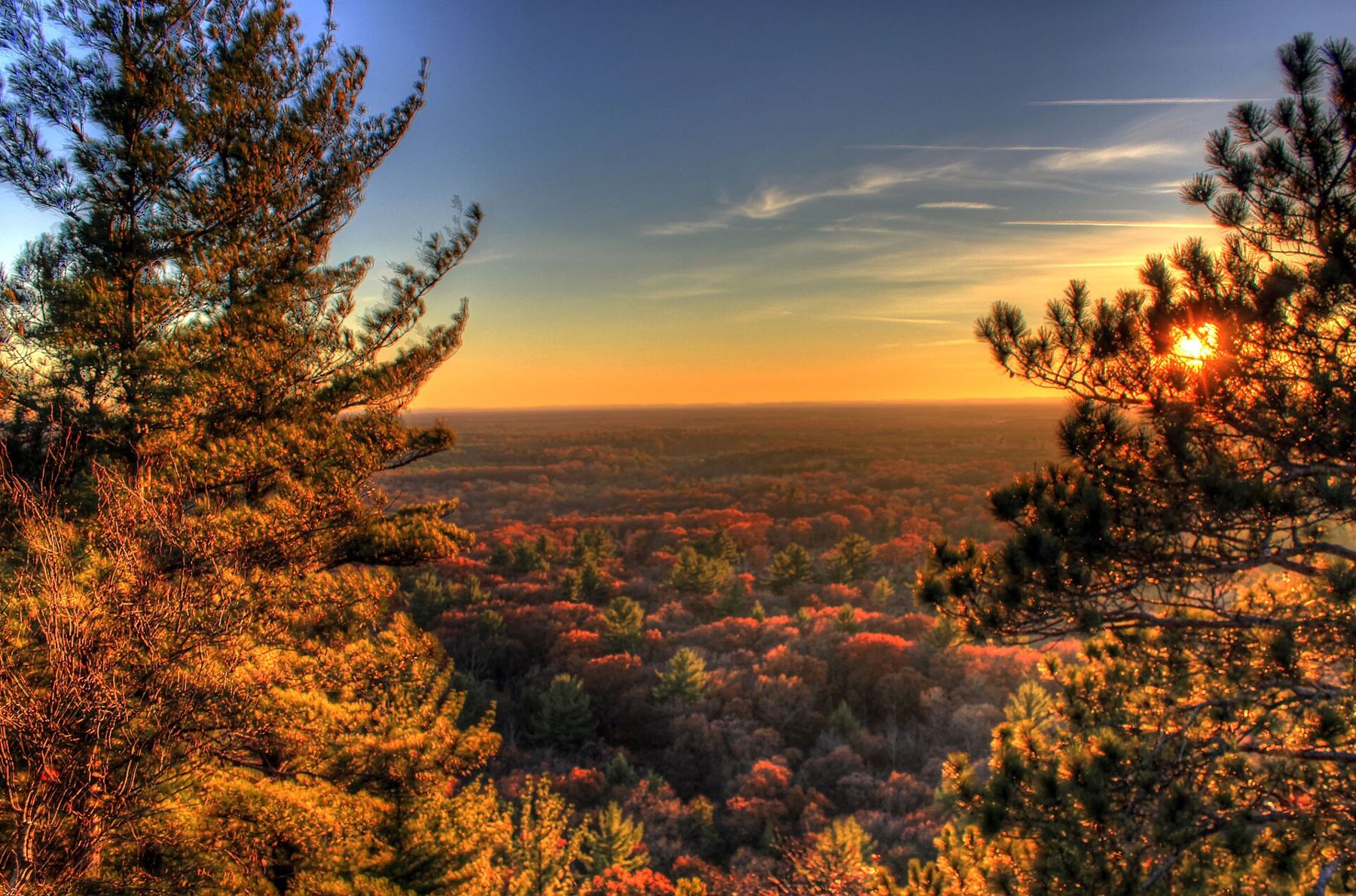
- The woods Much of the outer loop runs through mixed oak and hickory, with some pine. In fall the oaks turn rust and bronze. Watch for deer in the early morning and turkeys in the openings.
- The return The loops bring you back to the lot through the same oak woods. There are toilets at the trailhead but no water on the trails, so carry your own.
Finding your way
Junction posts at every intersection carry the loop colour and a number that matches the map board. If you take a phone photograph of the board before you start, you can check your place at each post. The loops all bring you back to the same lot, so getting lost is hard; walking much farther than you meant is easy. Turn back at the first junction if the outer loop looks too long.
What to bring
- Water and a snack: there is nothing to buy on the trails.
- A hat and sunscreen in summer: the wide trails get more sun than narrow hiking paths.
- Insect repellent from June to August, and long trousers for the grassy edges.
- Blaze orange in November: hunting is allowed in parts of the state forest in fall, so check the forest's hunting maps before you go.
If you want to stay out overnight, the forest's small backpack shelters are elsewhere in the Southern Unit, along the Ice Age Trail; see the backpack shelters of the Southern Unit.
Why ski trails walk well
Ski trails are built to a different standard from hiking paths. They need to be wide enough for a grooming machine, smooth enough for skis and graded so that skiers can climb and descend without too much difficulty. In summer that means a wide, grassy path with gentle grades and no roots or rocks to trip over. It also means the trails are easy to follow, even without a map.
The trade-off is that ski trails are less sheltered than narrow hiking paths, and they can be hot and sunny in summer. Go early in the day or wait for a cool fall morning.
A fall morning plan
Arrive at the trailhead soon after sunrise on a dry October weekday. Walk the shortest loop first to warm up and get your bearings, then decide whether to add a middle loop. Stop on the highest ridge you reach and look back over the forest: the oaks turn the hillsides rust and bronze, with the darker green of pine plantations in patches. Be back at the car by late morning, before the day warms up.
If you have the afternoon free, drive to the John Muir trailhead on County H and walk one of its short loops through the prairie openings. The contrast between the two trail systems, one wide and mown and the other narrow and twisting, is a good lesson in how trail design changes the walk.
On a wet day, the Nordic loops are a better choice than the narrow bike trails nearby. The wide, grassy tread drains well and does not rut the way narrow paths do, and the forest asks walkers to stay off the bike trails when they are soft.
In late spring, before the first summer mowing, the grass on the loops can stand knee high and hold the morning dew. Wear gaiters or quick-drying trousers, or wait until midday when the sun has dried the trail.
When to go
September and October are the best months: cool, dry, with fall colour on the oaks and few insects. May and June are green and full of birdsong, but the grass can be wet with dew in the mornings and ticks are active; read our page on ticks and poison ivy. In winter the trails are groomed for skiing and closed to walkers; see our guide to cross-country skiing in the Kettle Moraine if you want to come back on skis, or snowshoeing for walking routes in snow.
Underfoot
The trails are mown grass over sand and gravel, firm in dry weather and soft in the low spots after rain. Running shoes are fine from June to October. In spring the grass can be long before the first mowing; wear trousers and check for ticks afterwards.
When you finish, drive back down County H to the crossroads at La Grange and look for the John Muir trailhead on the way. Next time, you might bring a bike.