Look at a map of Waukesha County and draw a line along each railroad. Nearly every town sits on one. Pewaukee, Hartland, Oconomowoc, Genesee Depot, North Prairie, Eagle: the places that grew in the second half of the nineteenth century are the places where the trains stopped. The places the trains passed by stayed crossroads, or vanished.
The first line west
Wisconsin's first railroad ran from Milwaukee to Waukesha. Its first train made the trip in 1851, over a line built by the Milwaukee and Mississippi Railroad. Waukesha was then a farming village on the Fox River, and the railroad's promoters saw the rich grain country west of it as the prize. Wheat was the cash crop of early Wisconsin, and every farmer wanted a way to get it to Milwaukee and the lake boats.
From Waukesha the line pushed on west and southwest over the following years, through the southern part of the county toward Milton, Janesville and eventually the Mississippi. Stations went up along the way. Some were at existing hamlets; others were placed in open country, and towns grew around them. Genesee Depot's very name records how it began.
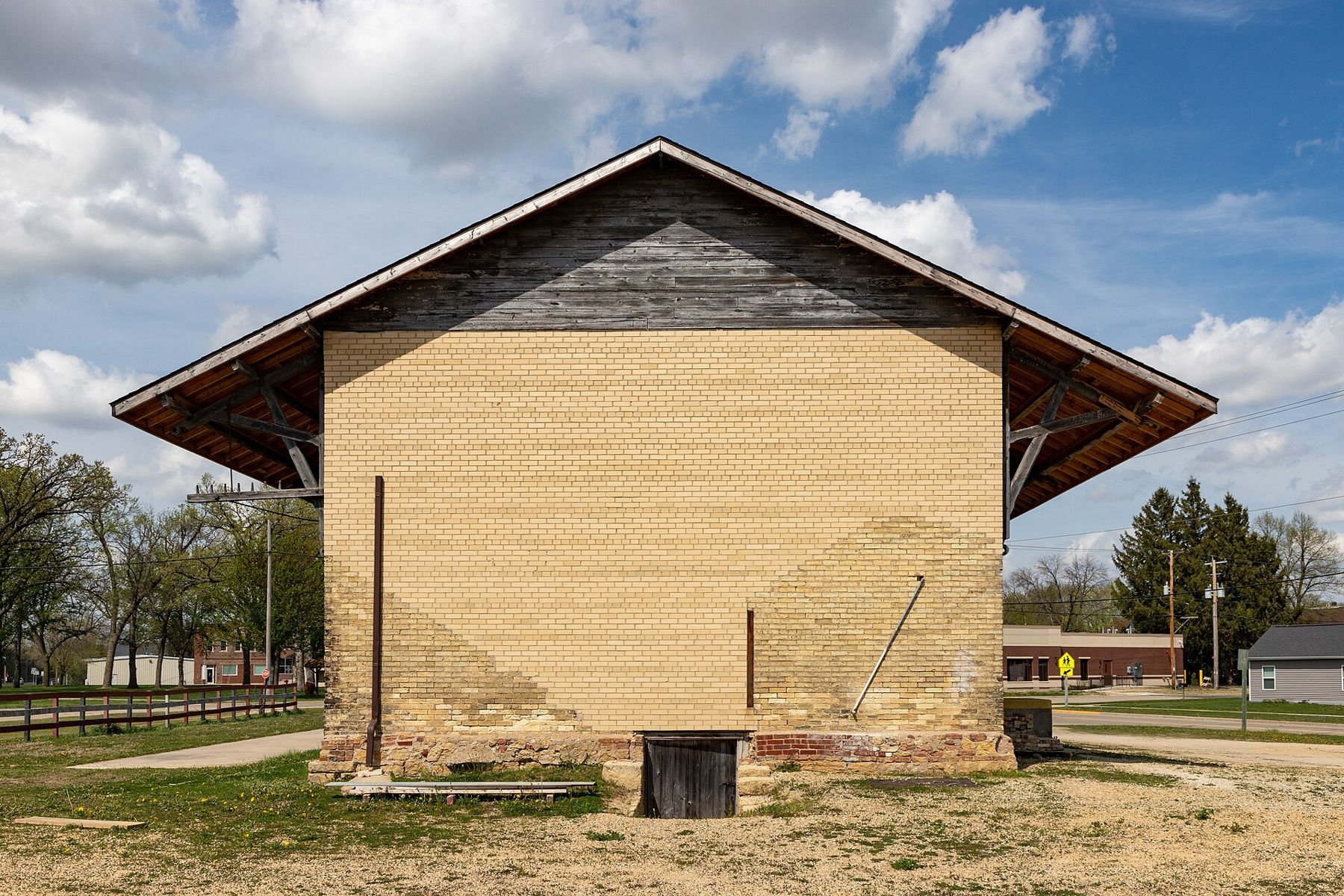
Eagle was one of the stations on that line, and the railroad shaped it for the rest of the century. Grain, livestock and later milk moved out by rail; lumber, coal, machinery and goods from Milwaukee came in. A depot, an elevator and a cluster of stores and hotels grew around the tracks. Our page on Eagle's history follows that story in the village.
Before the railroads, farmers hauled grain to Milwaukee by wagon over rough roads, some of them planked to get through the mud. A load could take days to reach the lake. Our page on the old plank roads tells that story. Once a station was within a few miles, a farmer could make the trip in a morning, sell for cash and be home by evening. Land near the tracks rose in value, and new settlers chose their farms with the railroad in mind.
The northern line and Lake Country
A second line ran across the northern part of the county in the 1850s, west from Milwaukee through Pewaukee, Hartland and Oconomowoc toward Watertown and, eventually, the Mississippi and the Twin Cities. Along it, the same thing happened. Small settlements at mill sites and lake outlets became railroad towns with depots, warehouses and hotels.
In Oconomowoc the railroad did more than move grain. By the 1870s it was carrying summer people. Wealthy families from Milwaukee, Chicago and farther afield rode out to the lakes, and the town grew into a fashionable resort, with big hotels and lakeside estates. The railroad and the resort fed each other for decades. Our page on Oconomowoc describes what the summer colony left behind.
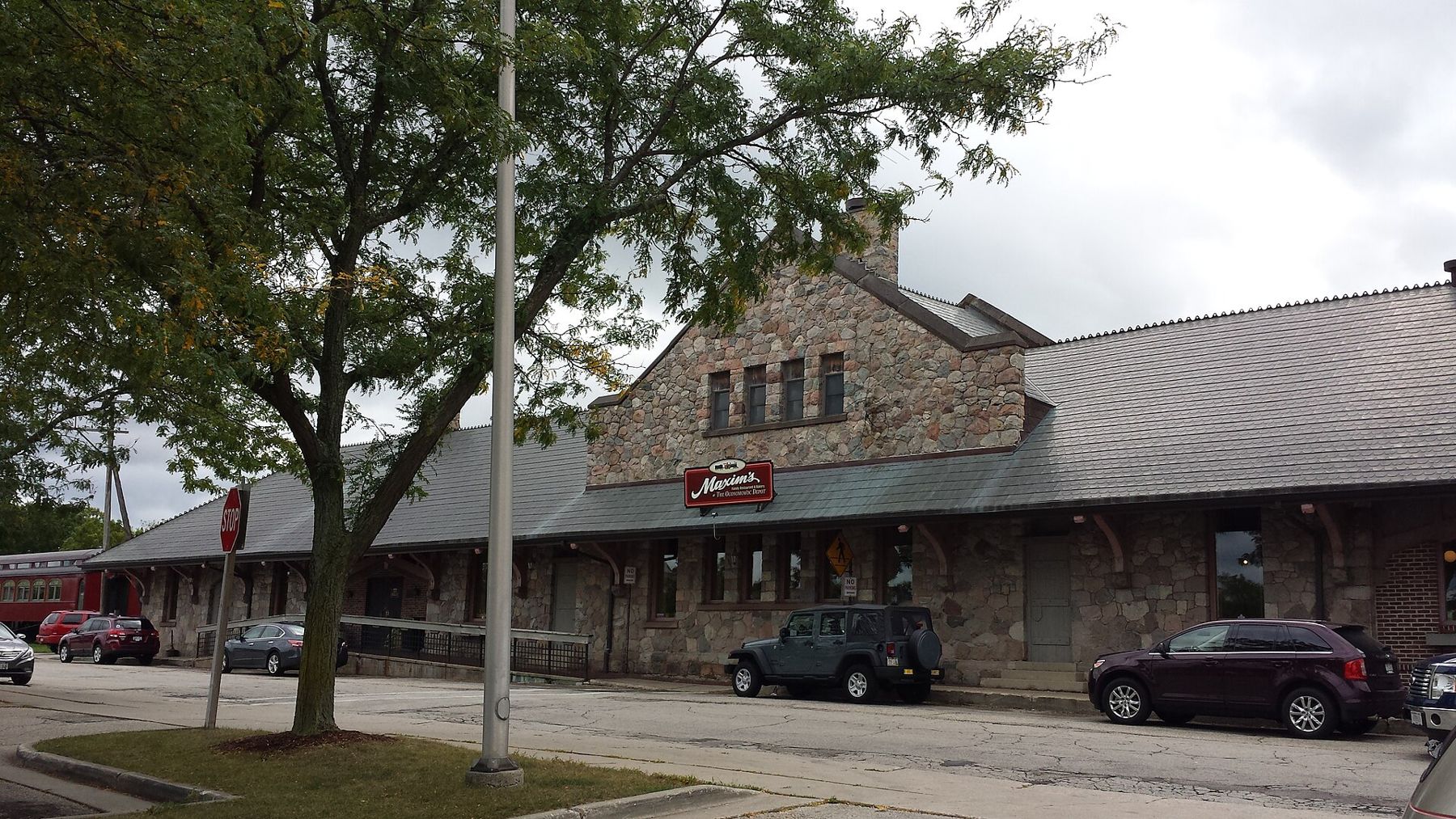
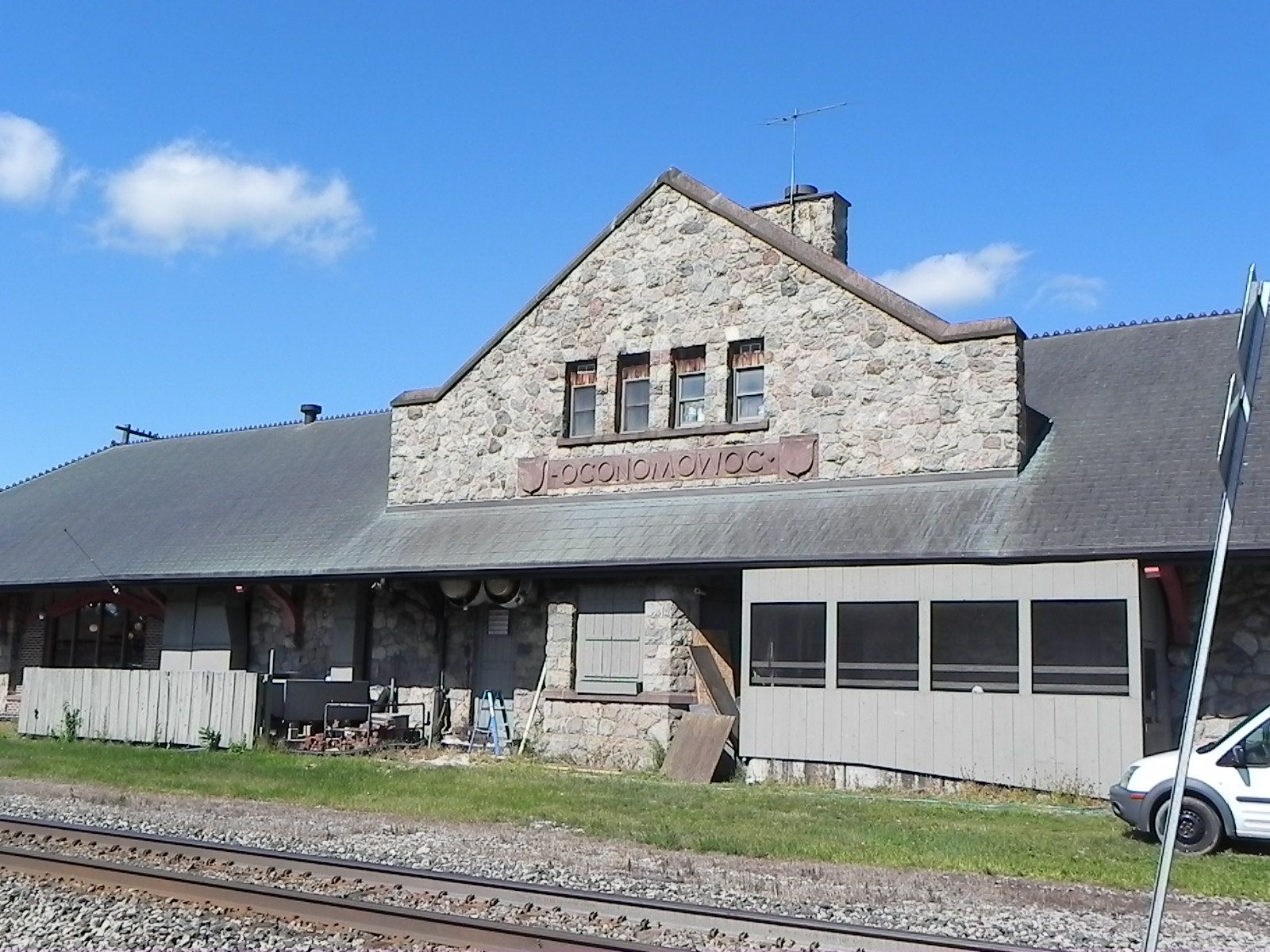
The stone depot in Oconomowoc was built in the 1890s for this traffic, solid and handsome, with heavy stonework meant to impress arriving guests. It still stands beside the tracks, one of the finest surviving depots in this part of the state. Long-distance passenger trains still run past it, but they no longer stop.
The railroads also brought the first commuters. As service improved, well-off Milwaukee families began to live in the western towns for part or all of the year and ride the trains to the city. Pewaukee Lake and the lakes around Delafield and Oconomowoc drew summer cottages and hotels, and small resort stops grew up wherever the line came close to the water.
Electric cars and the long decline
In the early twentieth century, electric interurban railways joined the steam lines. Electric cars ran from Milwaukee out to Waukesha and on to the Lake Country towns, and south and west to places like East Troy. They ran more often than the steam trains and stopped at more places, and for a few decades they made it easy to live in the country and work in the city.
The automobile ended that world. Paved roads and private cars took the passengers, trucks took much of the freight, and service cut back through the middle of the century. The interurbans were gone by the early 1950s, except for one surviving piece at East Troy. Steam and then diesel passenger service on the smaller lines followed. Depots closed, were sold, or were torn down. Some branch lines were pulled up entirely.
Freight never fully left. Trains still run on several of the old routes, carrying grain, building materials and other bulk goods. In Eagle and other towns, you will still hear horns at the crossings at odd hours.
Life around the depot
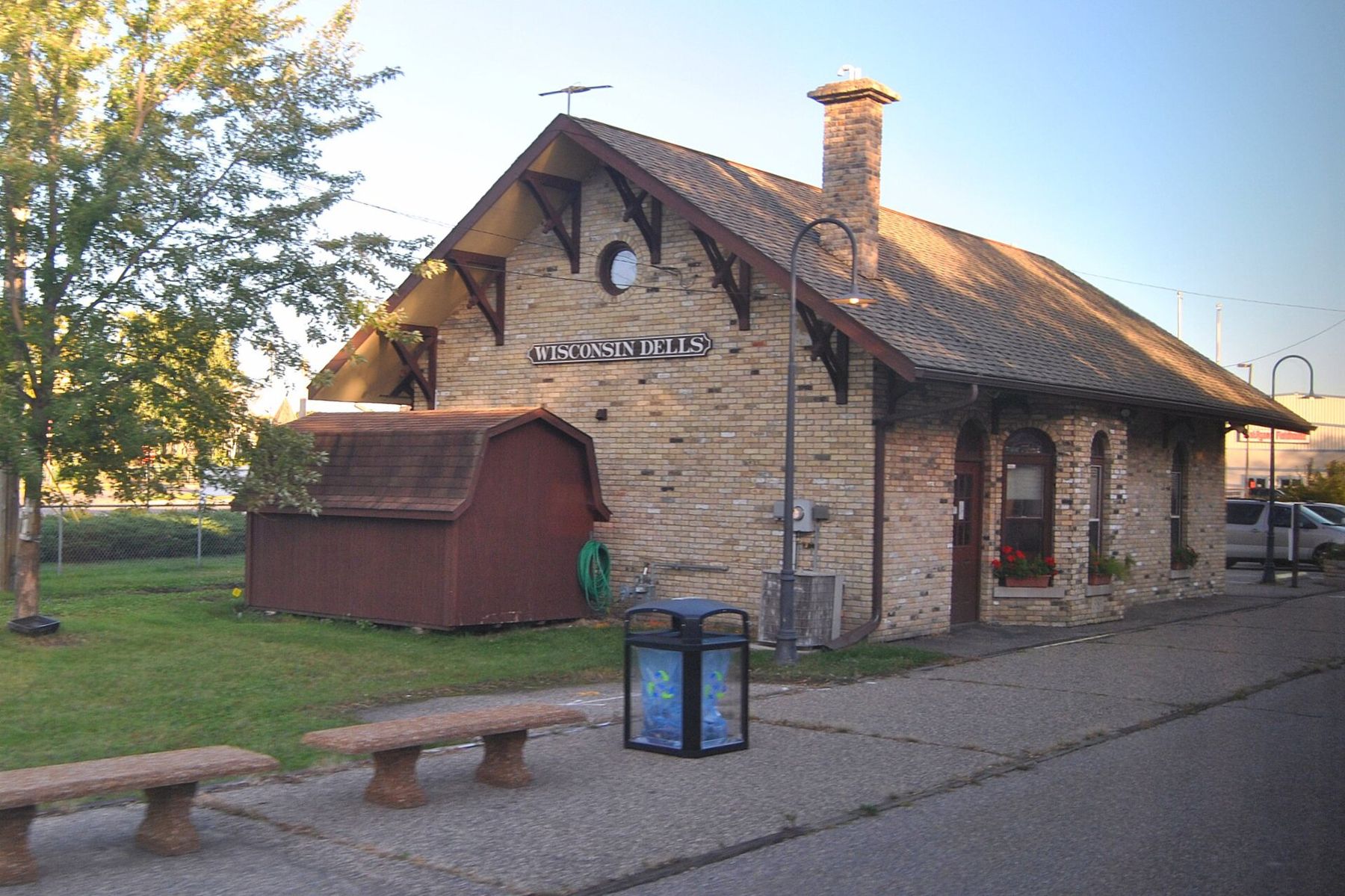
For a village in the late 1800s, the depot was the center of the world. Trains brought the mail, the newspapers from Milwaukee and Chicago, mail-order goods, visitors and news. The station agent sent and received telegrams, sold tickets and kept track of freight. Farmers waited at the platform for the milk train, and the arrival of the evening passenger train was an event in itself.
Around the depot clustered the businesses that lived on rail traffic: grain buyers and elevators, lumber and coal yards, stock pens for shipping cattle and hogs, a hotel for travelers and salesmen, and the taverns that served them all. As dairy replaced wheat, creameries and cheese factories shipped butter and cheese out by rail.
When the passenger trains stopped and the depots closed, many of these businesses moved to the highways or disappeared. But their buildings often stayed, and in most of these towns you can still find an old elevator, a former hotel or a feed mill standing near the tracks.
How the railroads shaped the towns
Walk through any of these towns and you can read the railroad in the street plan. The main business street often runs to, or parallel with, the tracks. Old hotels and taverns stand near where the depot was. Grain elevators, feed mills and lumber yards cluster along the sidings. Churches and big houses sit up the hill, a little away from the smoke and noise.
The railroads also fixed the pattern of summer resorts that still defines Lake Country. Lakes reachable by train in an afternoon from Chicago or Milwaukee became resort lakes; those that weren't stayed farm lakes longer. Much of the shoreline development you see today follows lines drawn by the railroads more than a century ago.
How to see what remains
Start in Oconomowoc. Walk to the stone depot and look at it from the platform side, the way passengers saw it. Then walk into town along the route the summer guests would have taken.
Ride a rail trail next. The Lake Country Recreation Trail follows much of the old electric line between Waukesha and Oconomowoc, and the Glacial Drumlin State Trail runs west from Waukesha County on an old steam railroad grade. On both, watch for cuts through hills, raised fills across marshes and the straight, gentle grades only a railroad would build.
To ride a car under the old wire, go to East Troy, where the East Troy Electric Railroad runs restored interurban cars through the warm months.
Then drive the southern line: Waukesha, Genesee Depot, North Prairie, Eagle and on toward Palmyra. In each village, find the tracks, then find the old elevator or the building that stands where the depot was. Stand at the crossing, back from the rails, and wait for a freight to come through.