Before the farms, the ground around Eagle was open: a stretch of prairie and oak opening on the southern edge of the moraine, with scattered bur oaks standing over tall grass. Fire kept it that way, set by lightning and by the people who lived and hunted here. When the first settlers arrived in the 1830s, they found land that needed no clearing, and they called it Eagle Prairie.
The prairie and its first people
For many centuries before settlement, this was the home ground of Native nations. In the years just before Wisconsin's settlement boom, the Potawatomi and Ho-Chunk were among the peoples who lived, hunted and traveled across the country between Lake Michigan and the Rock River. Treaties in the early 1830s forced their cession of these lands to the United States, and most were pushed west. Their paths and campsites shaped where early roads and farms went, though little visible trace of them remains in the village.
The prairie itself was the draw for newcomers. Open land could be plowed in a season. The moraine to the north and east gave timber and fuel, and the kettle marshes held water and hay. The story told in the village is that the first settlers saw an eagle over the prairie and named the place for it. Whatever the truth of it, the name has lasted.
Yankees, then Germans
The first wave of settlers came mostly from New England and New York. They bought land from the federal government in the late 1830s and early 1840s, broke the prairie sod and planted wheat. They built frame houses, a few stores and a schoolhouse, organized churches and set up a town government. The Town of Eagle took shape in these years, with farms laid out on the square grid of the federal survey.
From the late 1840s, German immigrants followed. Many bought out Yankee farms or took up land on the rougher ground in the moraine, and they brought their own churches, language and farming habits. Over time, German families became a large part of the community, and their names still appear on mailboxes, church records and the stones in local cemeteries. Smaller numbers of Irish, Norwegian and other settlers came too.
The outdoor museum at Old World Wisconsin, just south of the village, tells this story in buildings. Its Yankee and German farmsteads, moved from sites around the state and rebuilt, show what the farms around Eagle looked like in their first generations.
The railroad and the village
The railroad came through in the early 1850s, part of the first line pushed west from Milwaukee and Waukesha. A station at Eagle changed everything. Farmers could now ship wheat, and later livestock, butter and milk, straight to Milwaukee. Merchants built along the tracks. A depot, an elevator, lumber and coal yards, hotels and taverns grew into a small business center.
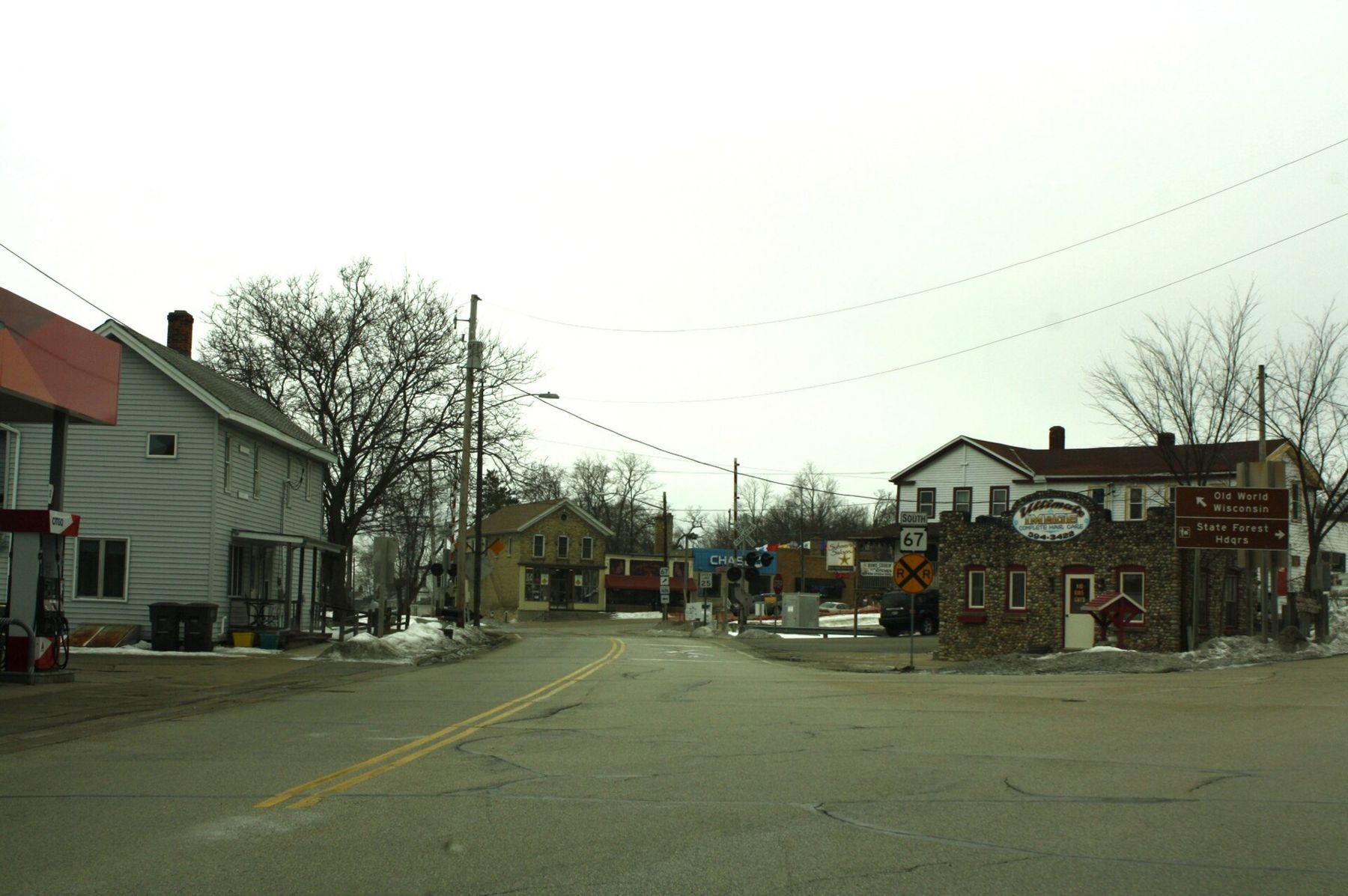
The settlement around the station grew into its own community, separate from the scattered farms of the wider town. By the end of the century it was large enough to govern itself, and in 1899 the village of Eagle was incorporated. Its business district, a few blocks along what is now WIS 67, grew up in these decades, and some of its older buildings date from this time.
Like the rest of Wisconsin, the farms around Eagle moved from wheat to dairy in the late 1800s, as wheat yields fell and prices dropped. Barns grew bigger, silos went up, and milk went out by rail and later by truck. Our page on the railroad towns of Waukesha County puts Eagle's story beside its neighbors'.
Village life around 1900
At the time of incorporation, Eagle looked much like hundreds of other Wisconsin railroad villages. A business district of frame and brick stores ran near the tracks, with general stores, blacksmiths, a lumber yard, hotels and taverns, and churches for the different congregations of the town. A school served the village children, while one-room schoolhouses were scattered across the farm country around it.
Life followed the farm year. Spring planting and fall harvest set the pace, and the busiest days in the village were when farmers came in to sell, buy and talk. Like most farm country in the state, the area had small creameries and cheese factories that turned local milk into butter and cheese for shipping.
Fire was a constant danger in a town of wooden buildings, and Wisconsin villages of the period depended on volunteers turning out with hand-drawn equipment. Eagle's fire and rescue service today carries on that tradition of neighbors answering the call for one another.
The twentieth century
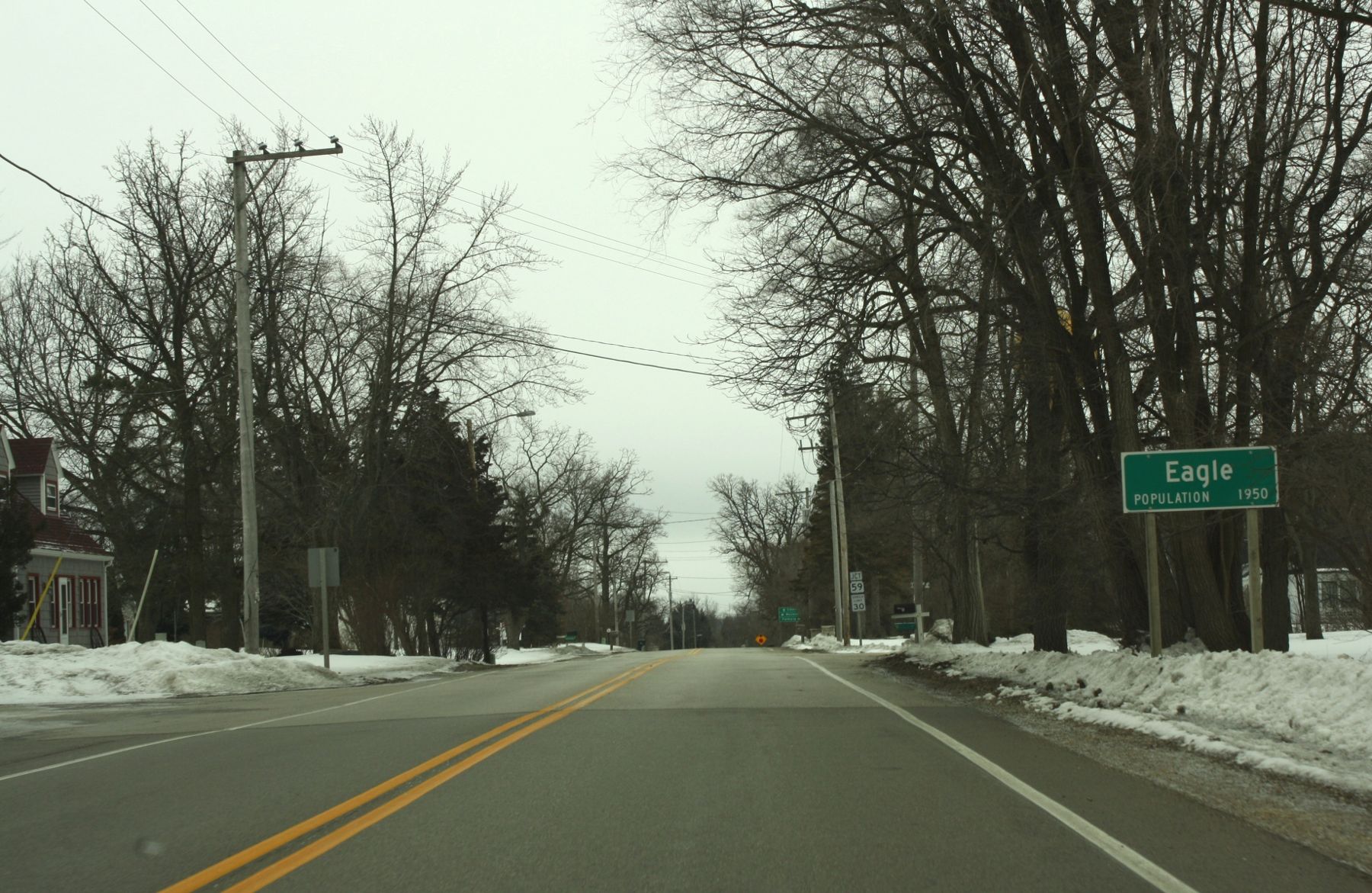
For most of the twentieth century Eagle stayed a small farm-service village. Cars and trucks gradually replaced the railroad for passengers and much of the freight, and the passenger trains stopped. The state highways, WIS 59 and WIS 67, became the village's main links to the outside world.
The land around the village changed more than the village itself. From the 1930s on, the state began buying land in the moraine for what became the Southern Unit of the Kettle Moraine State Forest. Worn-out farms and woodlots went back to forest and prairie. Then, in the 1970s, the state historical society opened Old World Wisconsin on land just south of the village. These two public places turned Eagle into a gateway for visitors as well as a farm town.

In recent decades, new houses have grown up around the village edges, and many residents now work in Waukesha or Milwaukee. The village has grown, but its center is still small, and the farm country around it is still close.
Today the village is home to a couple of thousand people. It remains a crossroads, where WIS 59 and WIS 67 meet, and its old role as a market for the farms around it has been joined by a newer one: a stopping point for hikers, skiers, cyclists and visitors to the forest and the museum. Those who come for a day see the same pattern the railroad set more than a century ago, with the village at the center and the farms and moraine all around.
How to see what remains
Start downtown. Park on the street and walk the few blocks of the old business center along WIS 67. Look at the older buildings for the shapes of stores and halls from the railroad era. Walk to the tracks and look along them, then find where the depot and elevator would have stood, near the sidings.
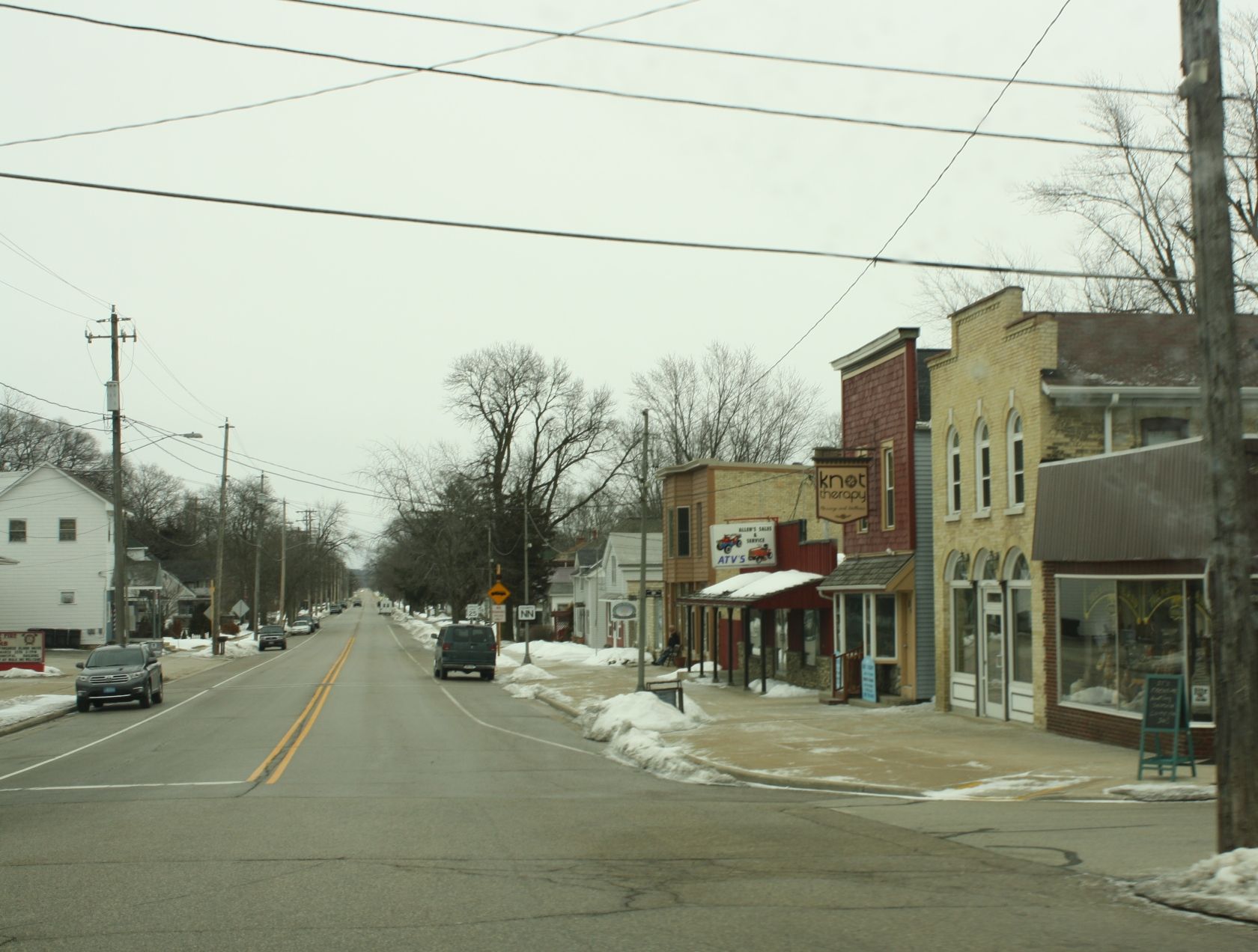
Then walk the residential streets. Older frame and brick houses, churches and the water tower mark out the village as it was a century ago. Visit one of the local cemeteries and read the names: Yankee families on the oldest stones, then German names, sometimes in German script.
Spend a half day at Old World Wisconsin to see how the settlers lived. Then drive out on the back roads into the farm country around the village. Some of the barns, houses and fence lines out there go back to the first generations of farming.
Finish at Eagle Oak Opening State Natural Area, a short drive from the village. Here, restored and managed by fire, is a piece of the oak opening the first settlers found: big, spreading bur oaks standing over grass and wildflowers. Walk out among them in the early evening, look across the open ground, and imagine the prairie as the first families saw it.