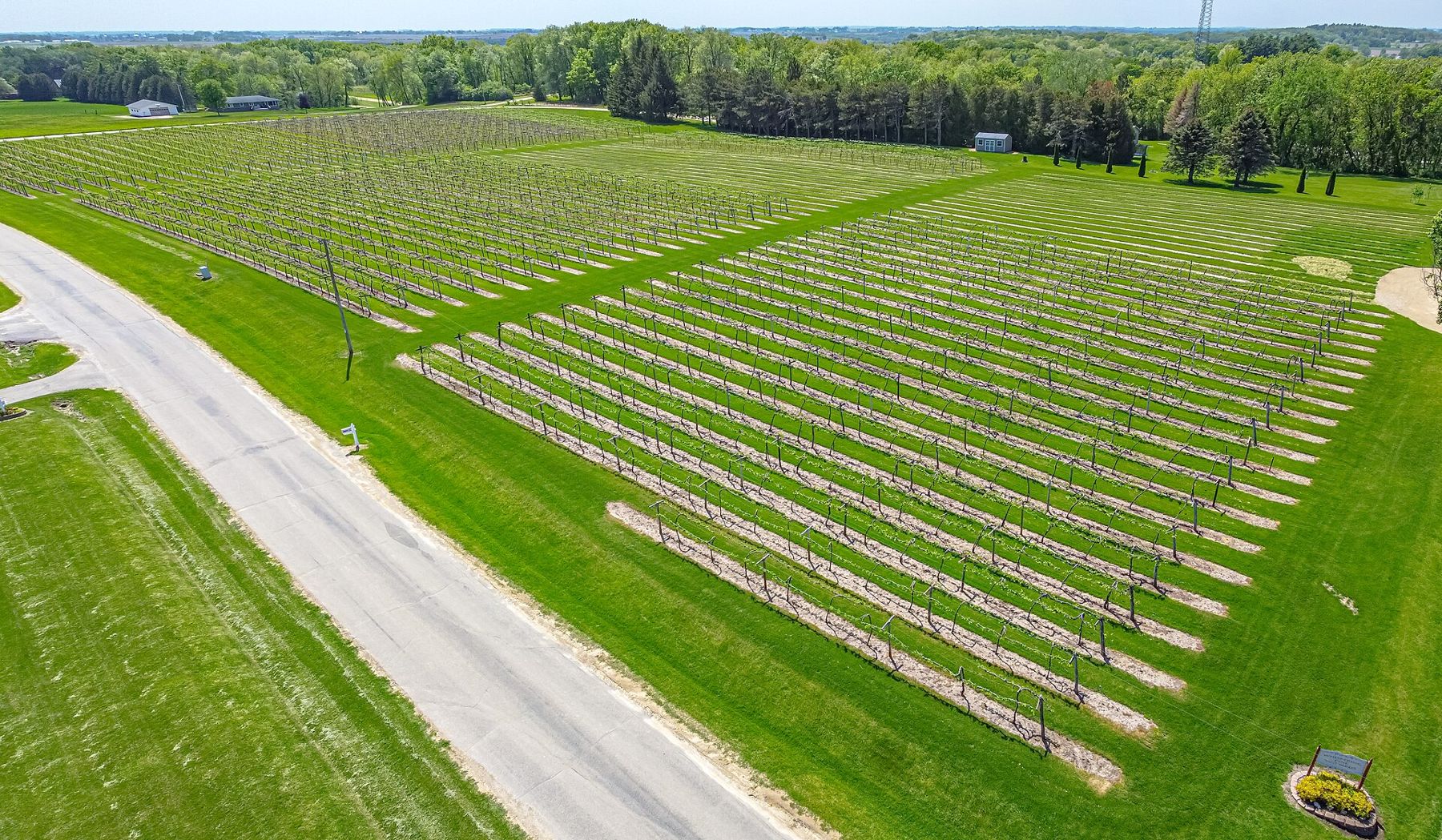
January in southern Wisconsin can drop well below zero, which is not where most people expect to find vineyards. Yet across the state, on south-facing slopes and old farm fields, there are rows of vines trained on wires, and wineries and cideries with tasting rooms open through the warmer months and often well beyond.
Grapes that survive January
The classic European wine grapes struggle here. Their buds and trunks can be killed by a hard winter, and the growing season is short. Wisconsin growers rely instead on cold-hardy hybrid grapes, many bred in the upper Midwest since the 1990s to survive deep cold and ripen in a short summer.
- Marquette and Frontenac are the main red grapes, making light to medium-bodied reds and rosés with bright acidity.
- La Crescent, Brianna and Frontenac Gris are common whites, often made off-dry with aromas of apricot, citrus and tropical fruit.
- Older French-American hybrids such as Maréchal Foch and St. Croix also grow well here.
These grapes are often high in acid, so many Wisconsin wines are made with a touch of sweetness to balance them. Taste them on their own terms rather than against California or France; the best are crisp, fruity and lively.
Many Wisconsin wineries also make fruit wines from cherries, cranberries, apples and other fruit, and some bring in grapes from other states to make familiar varieties. Ask at the bar which wines are made from Wisconsin-grown fruit.
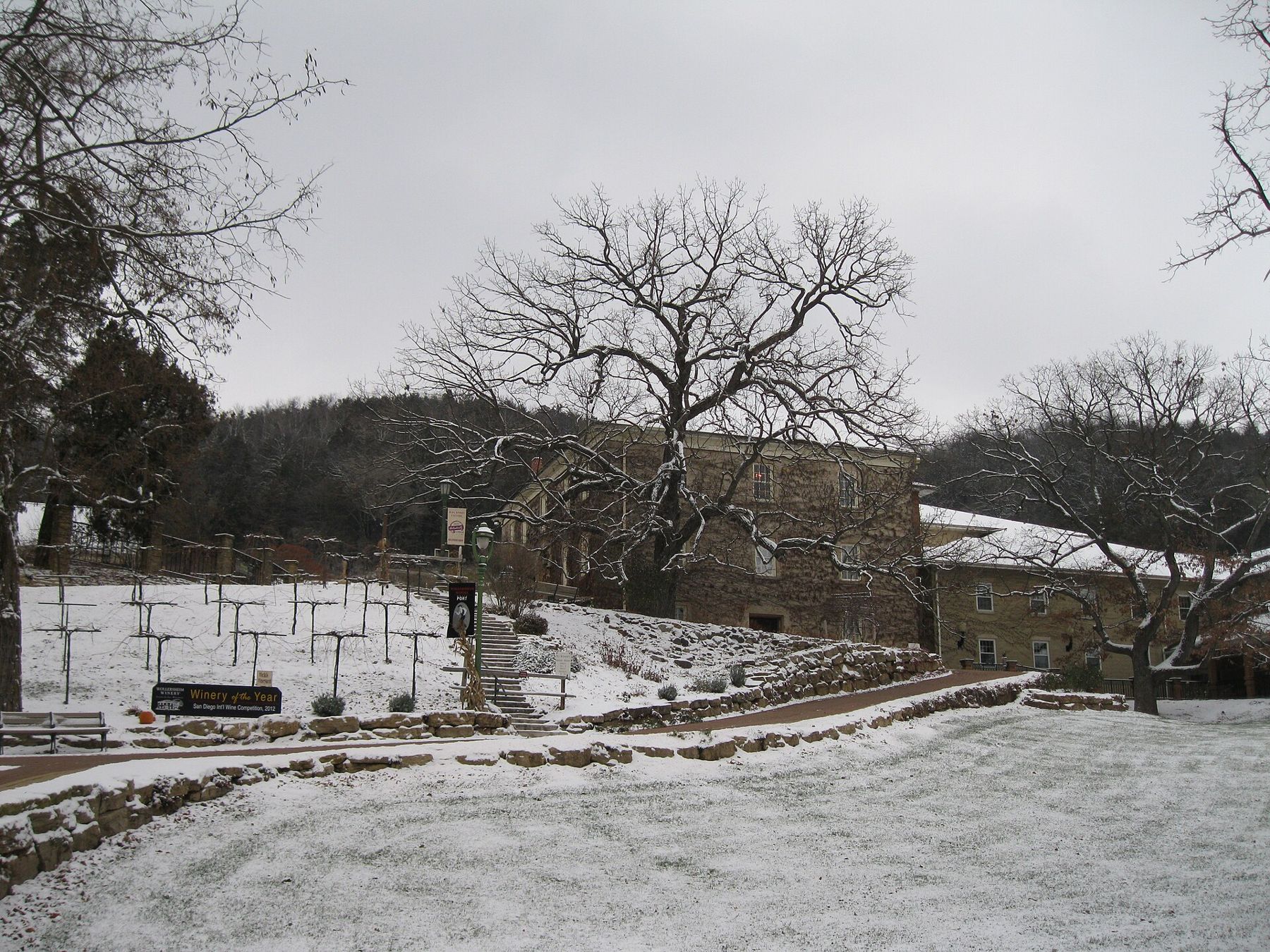
Grape growing here is not new. On a hillside near Prairie du Sac, northwest of Madison, a Hungarian immigrant, Agoston Haraszthy, planted vines in the 1840s before leaving for California, where he became known as a pioneer of wine there. The site later became the Wollersheim Winery, a long-established landmark still operating and an easy addition to a day trip from Madison.
The vineyard year
A visit lands differently depending on the month, and the vines tell you where the year stands.
- Winter: bare, pruned vines on their wires, snow between the rows. Pruning usually happens in late winter, and tasting rooms are quiet and often on shorter hours.
- Spring: buds break in May. Late frosts are the grower's worst fear, and on cold nights you may see fans or small fires in the rows.
- Summer: the canopy fills in, the clusters set and the grapes stay hard and green. Patio season at the tasting rooms, often with live music on weekends.
- Late summer and fall: the grapes soften and colour, and harvest follows from about late August through early October, earliest for the hybrid whites. Birds and wasps arrive too; netting over the rows is a sign harvest is near.
After harvest, the new wines rest in tanks and barrels through the winter. Some wineries release a young, fresh wine around the holidays, and many hold harvest festivals in fall with grape stomping, food and music.
Cider from the orchards
Apples are the older Wisconsin fruit, and cider is the natural drink of orchard country. Southeastern Wisconsin has many family orchards, and some now ferment hard cider alongside the sweet cider, doughnuts and pies they sell in fall.
Hard cider ranges from dry and sharp to sweet, and from still to sparkling. Small cideries may blend dessert apples with crab apples or heirloom varieties for tannin and bite, and some add cherries, cranberries or hops. Sweet, unfermented cider is an autumn staple at every farm stand and the right choice for drivers and children.
At an orchard cidery, taste in the same way as at a winery: dry first, sweet last, with water between. Ask which apples went into each cider; growers often press a single variety on its own to show its character. Cider is usually lower in alcohol than wine, closer to beer, but a flight still adds up.
A few producers make mead, wine fermented from honey, and some wineries sell apple and cherry brandies or fortified dessert wines. Read the strength on the label before you pour a second glass.
Cider season follows the harvest, from about late August into November. If you are already out picking apples, the orchards and pumpkin farms page covers the drive, and orchard pies and bakeries covers what else to bring home.
Wine trails and where to go
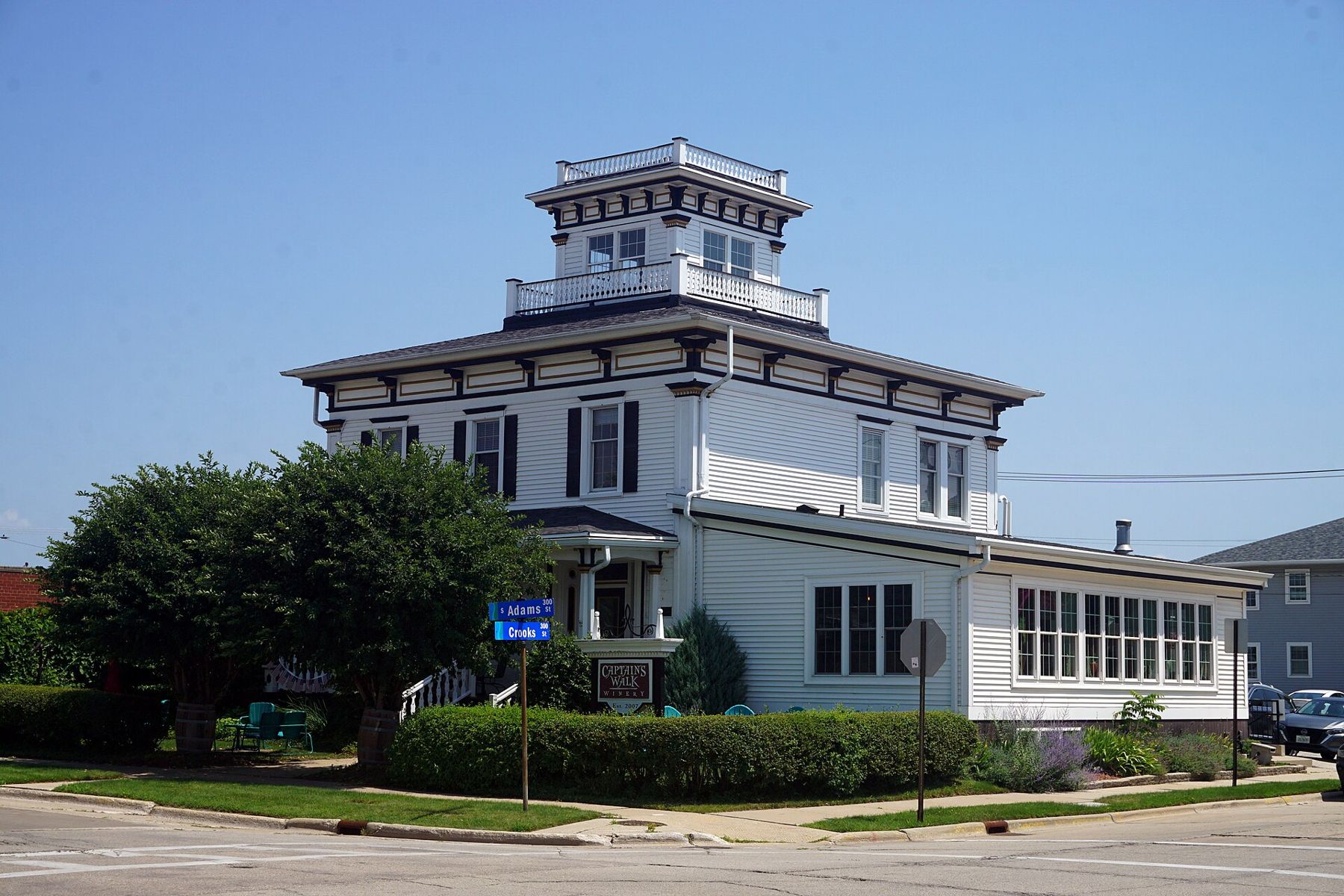
Wisconsin has more than a hundred wineries, spread across the state. Several regions link theirs into wine trails with shared maps, Door County best known among them, and trail groupings come and go elsewhere. Ask at any tasting room for the current map of wineries nearby.
In the southeast, wineries and cideries tend to sit on the edges of farm country: a converted barn, a tasting room among the vines, a cider house beside an orchard. Many are within half an hour of Lake Geneva or the Kettle Moraine, making a good afternoon after a morning on the trails. Some are open daily in summer and fall and only on weekends in winter.
Farther afield, a day spent in the hills northwest of Madison or up the Lake Michigan shore to Door County puts several wineries within a short drive of each other, with orchards and cheese shops between. Those are longer trips from the Kettle Moraine, best treated as an overnight rather than a loop you drive in an afternoon.
Look for wines labelled with the grape and with a Wisconsin origin. A bottle that names Marquette, La Crescent or Frontenac and says it was grown in the state is the clearest way to taste what the local vineyards can do. Sweeter fruit wines, cranberry above all, are the other local speciality, and a cranberry wine makes an easy gift from a state that grows more cranberries than any other.
How to arrive at a tasting room
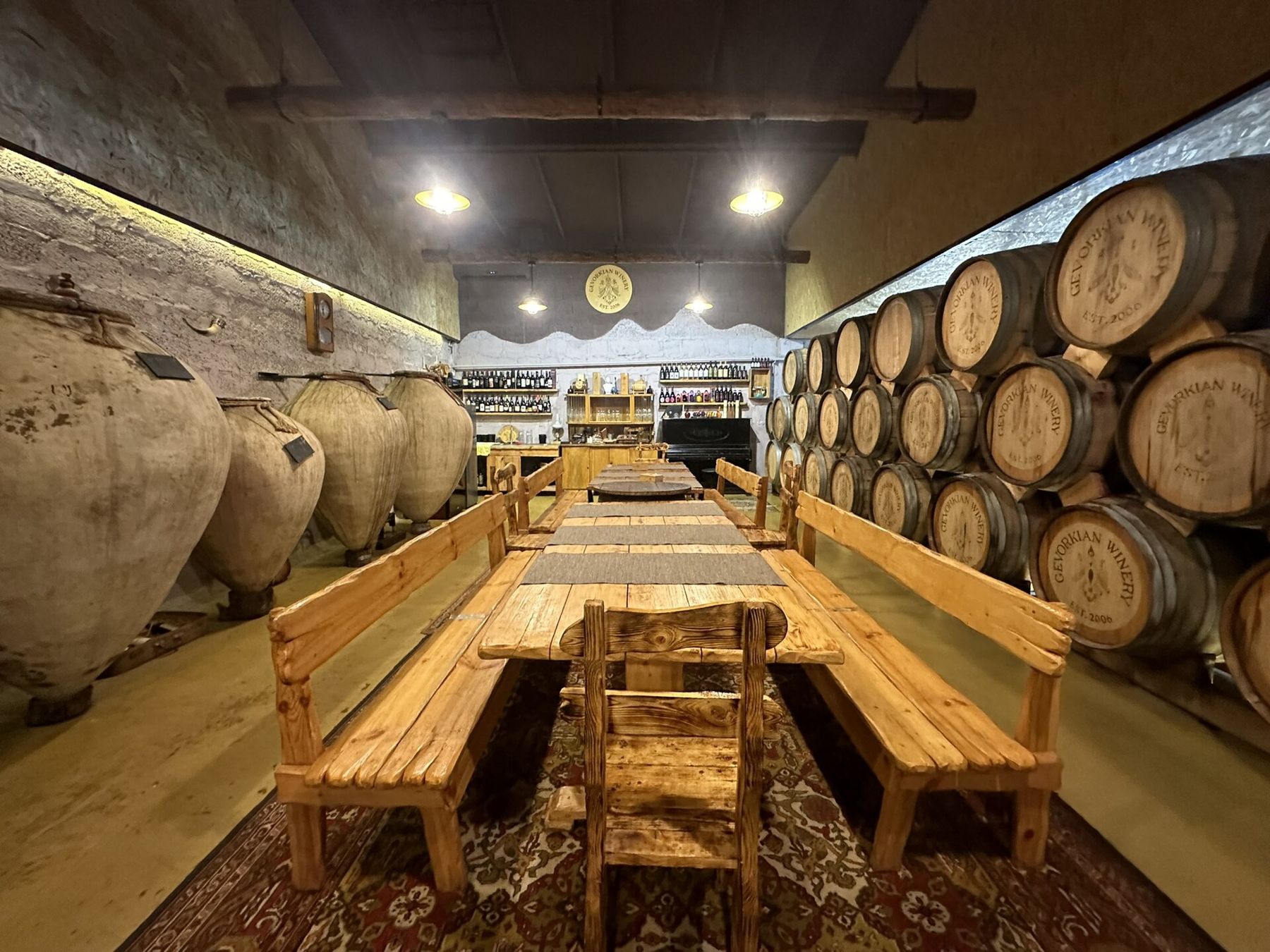
- Check hours. Small wineries may be open only Friday to Sunday, and hours shrink after the holidays.
- Arrive early on fall weekends. October Saturdays draw crowds and tour buses. Weekday afternoons are quiet.
- Plan the driving. Choose a designated driver or book a ride. A tasting of five small pours adds up to about a full glass.
- Taste in order. Start with the driest whites, move through rosés and reds, and finish with the sweet and fruit wines.
- Eat something. Many tasting rooms sell cheese, sausage and crackers; some allow picnics on the grounds.
- Ask about the vineyard. Growers are glad to say which grapes they grow, how the winter went and when harvest will start.
Buy a bottle of the wine that surprised you most, and drink it some cold evening in January when the vines outside are bare.