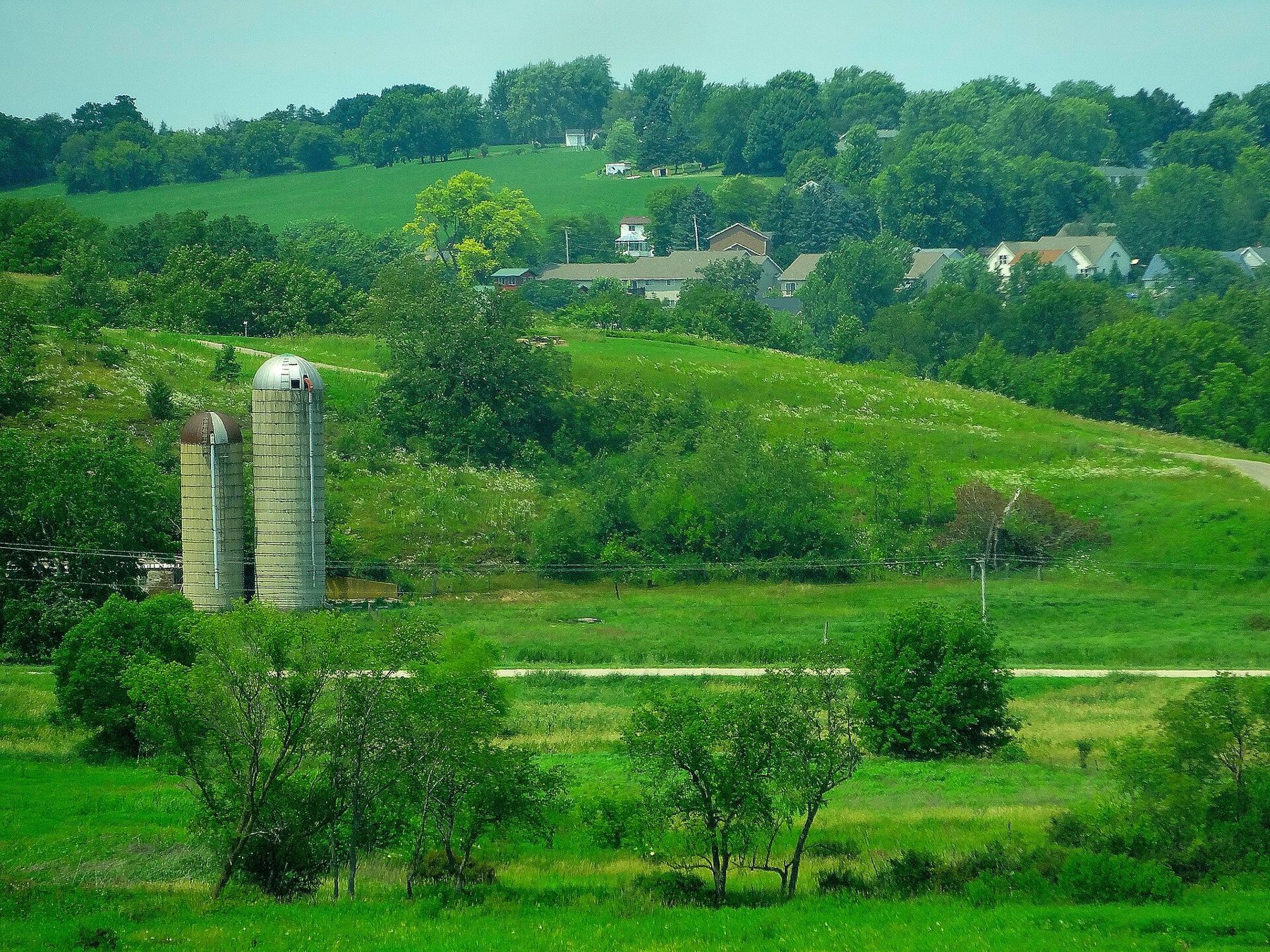
West of Whitewater the ground changes. The steep wooded ridges and kettle holes of the moraine fall away behind you, and the road runs out across a broad, gentle country of dairy farms, red barns and blue silos. Keep going for another hour and the hills rise again, rounder and greener, into Green County, where Swiss immigrants built one of the densest clusters of cheese factories in the country. This drive takes you there and back in a day.
- Whitewater Leave Eagle west on WIS 59 through Palmyra and stop in Whitewater for coffee and fuel. This is the western edge of the Southern Unit of the Kettle Moraine State Forest. Look back east from the high ground on the edge of town and you can see the line of wooded ridges you are leaving.
- Cooksville Cross Rock County on the state highways toward Evansville and slow down for Cooksville, a crossroads village of nineteenth-century brick and stone houses that has changed little since the railroads passed it by. Its old cheese factory is listed on the National Register of Historic Places. Look from the road and respect private property; this is a lived-in village, not a museum.
- The Green County hills Past the county line, leave the main highway for a stretch of county road. Watch for small brick and frame cheese factories at crossroads, some still working and some converted to houses. Many working factories still sit within a few miles of the farms that supply their milk, and the smell of whey on a warm morning tells you when you are close.
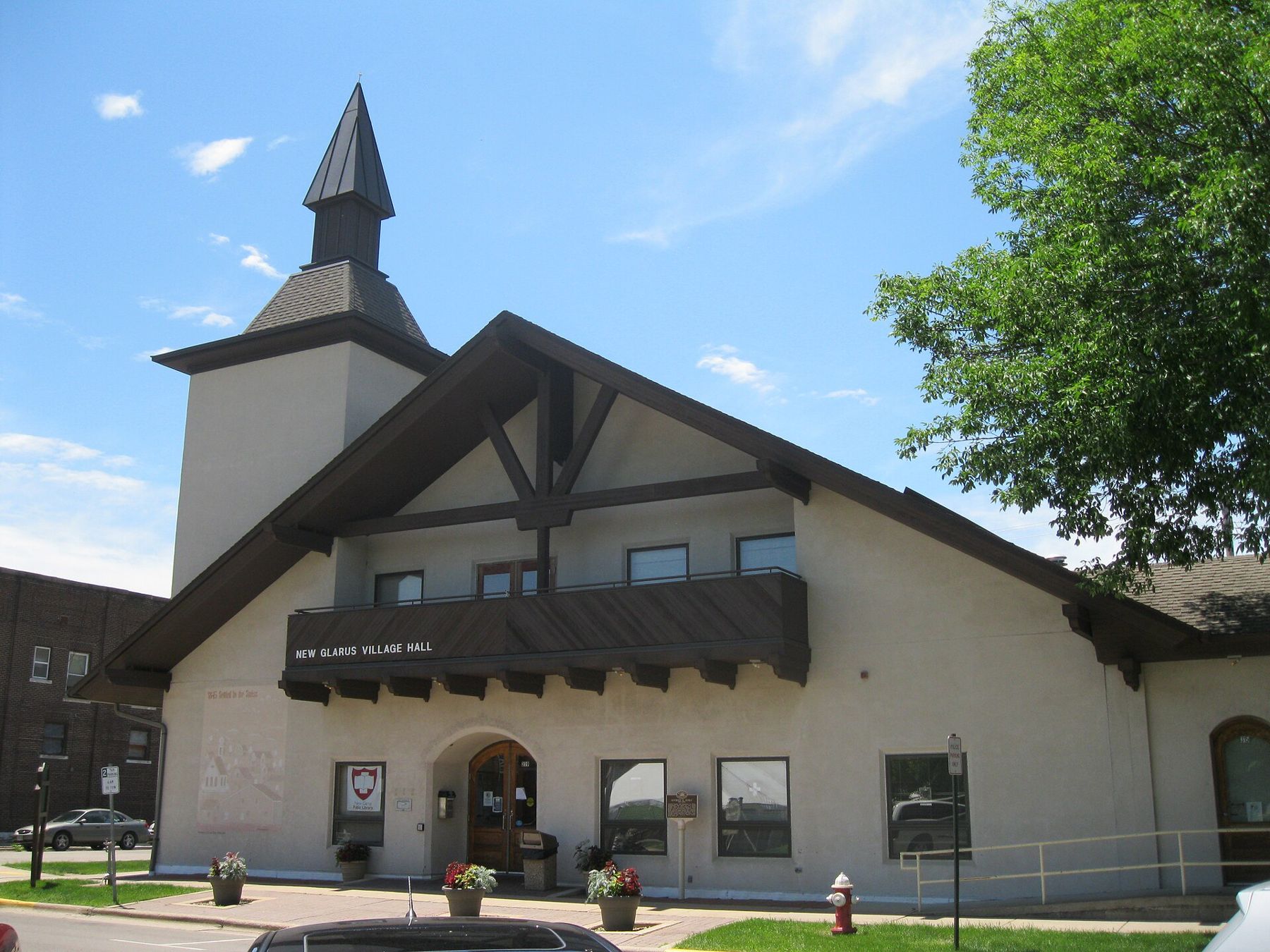
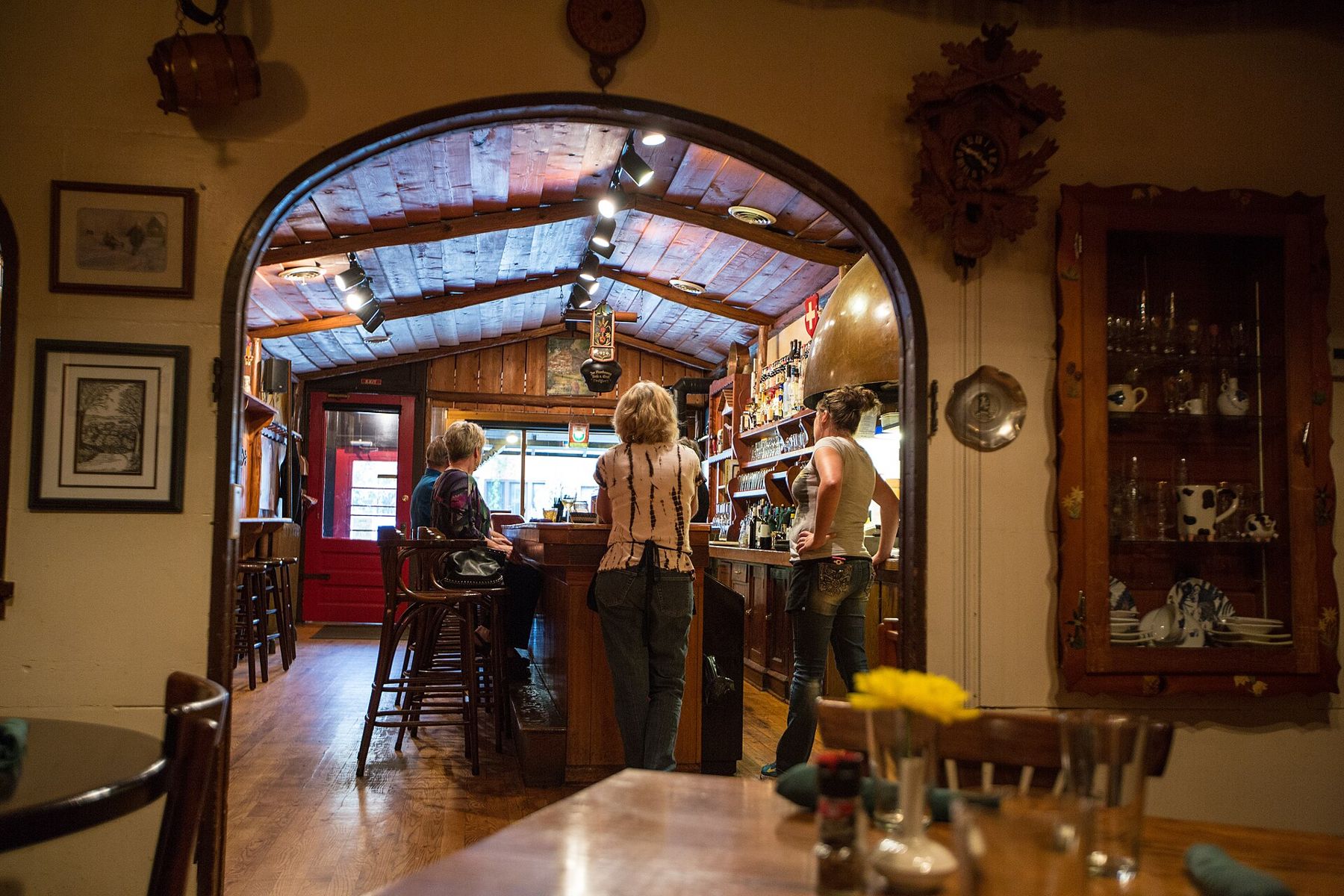
- New Glarus Emigrants from the Swiss canton of Glarus founded this village in 1845, and it still wears its heritage openly: chalet-style buildings, Swiss flags, carved balconies and window boxes of geraniums. Park once and walk the few blocks of the center. Eat a late breakfast or early lunch here; bakeries and Swiss-style restaurants serve rösti, bratwurst and pastries, and the delis carry Swiss and local cheese.
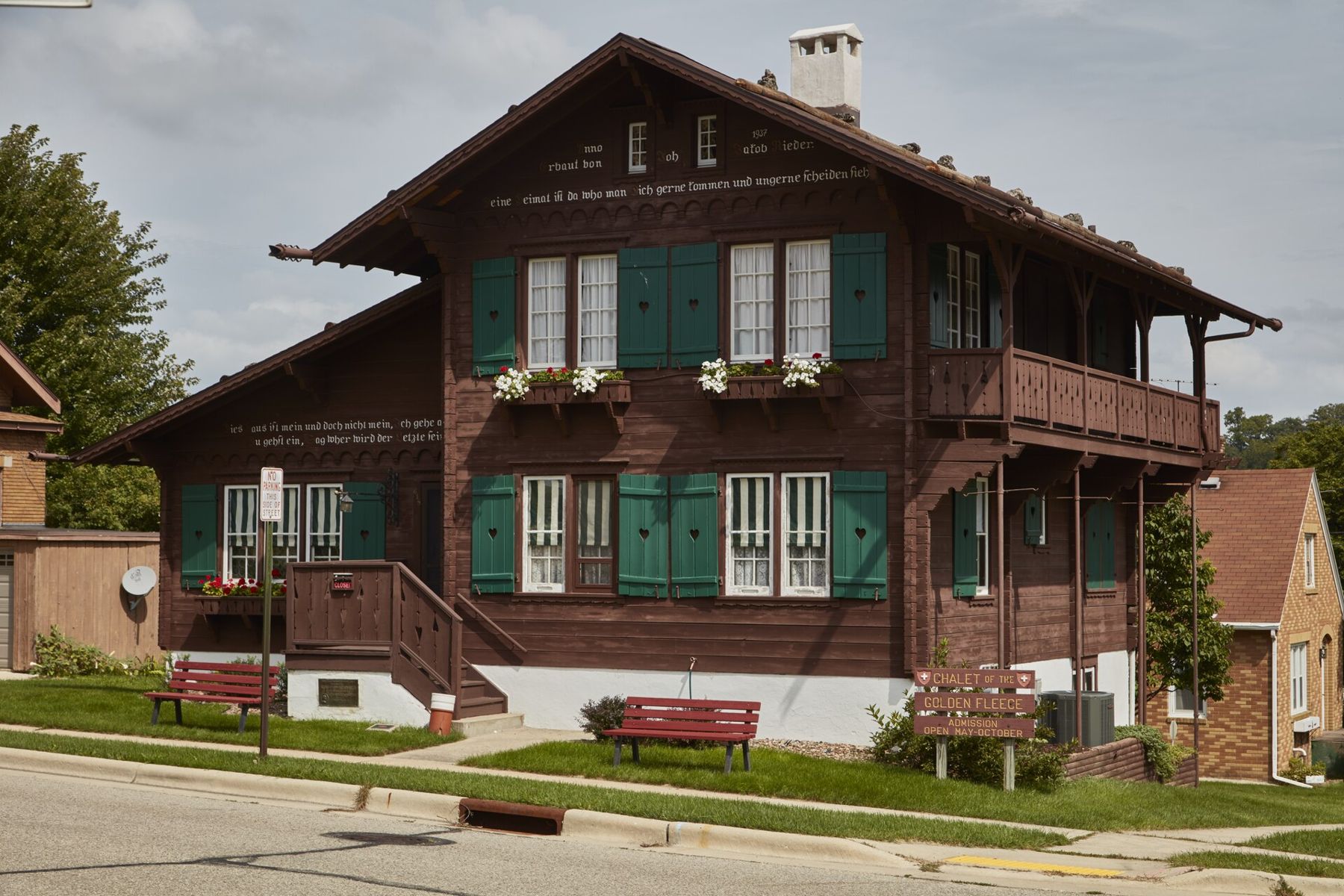
- The Swiss museums The village keeps two museums worth an hour: a historical village of reconstructed and relocated pioneer buildings on the hill, and the Chalet of the Golden Fleece, a Swiss-style house built in the 1930s and filled with folk art and household objects. Both are seasonal; check days and hours before you plan around them.
- The Sugar River trail The Sugar River State Trail starts at the old depot in New Glarus and follows a former rail line southeast toward Brodhead through farm fields, woods and river bottoms. Walk the first mile out and back to stretch your legs, or bring bikes and ride further. Adult bikers need a state trail pass.
- Monroe Drive south to Monroe, the county seat, and park on the square around the Green County Courthouse, a red brick building with a tall clock tower from the 1890s. Monroe calls itself the Swiss cheese capital, and the square has cheese shops, taverns and cafes. Look for Limburger, the famously pungent washed-rind cheese; the only factory in the country still making it is a cooperative just outside Monroe. Taste it on rye with a slice of raw onion, the old way.
- Home by evening Return east by the state highways through Brodhead and Janesville, or north through Madison if you want to connect with a day in Madison. Either way it is about two hours back to Eagle. Put the cooler in the shade of the back seat, not the trunk.
How Swiss cheese came to Green County
The first Glarus settlers were farmers who raised wheat, like most of their neighbors. When wheat farming faltered in southern Wisconsin in the decades after the Civil War, the Swiss turned to what they knew from home: dairy cattle and cheese. Small factories sprang up at crossroads every few miles, each taking milk from the farms within a short wagon haul. Green County became known for Swiss, Limburger and brick cheese, and later for many more styles.
Wisconsin licenses its cheesemakers and runs a Master Cheesemaker program, an advanced certification that takes years to earn. A good share of the state's master cheesemakers work in Green County. When you buy cheese here, ask who made it and where. Counter staff usually know.
What to buy
- Swiss and baby Swiss, the county's signature, in wheels and blocks.
- Limburger, if you are brave, wrapped tightly and kept well away from everything else in the cooler.
- Fresh cheese curds, which squeak against your teeth on the day they are made. Our page on cheese curds explains the squeak and why it fades.
- Aged cheddar and brick, both Wisconsin standards, and newer styles from small creameries.
Buy curds last, on the way out of the county, and eat them on the drive home. They lose their squeak by the next day.
When to go
Late spring through October is the season, when the hills are green, the museums are open and the farm roads are clear. Fall color in the Green County hills usually comes in mid-October, close to the timing of the Kettle Moraine. New Glarus holds a Wilhelm Tell festival on Labor Day weekend and other Swiss celebrations through the summer. Monroe's Cheese Days, with a parade, cheese tents and cheesemaking demonstrations, come around every other September, in even-numbered years.
Festival weekends are busy and parking fills early. On an ordinary weekday in June or September you will have the square in Monroe nearly to yourself.
The longer version
If you have two days, stay overnight in New Glarus or Monroe and add a loop through the smaller villages of the county: Monticello, Albany on the Sugar River and the farm roads between them. Many small cheese factories here sell only from a counter in the plant or not at all, so treat a factory with an open retail door as a bonus rather than a promise. Morning is the best time to visit, when the day's curds are fresh and the make room is busy. Ride a longer stretch of the Sugar River State Trail on the second morning, then drive home by way of Madison or Janesville in the afternoon.
Underfoot and on the road
The county roads in Green County are narrow, hilly and sometimes winding, with blind crests and slow farm equipment, especially at planting and harvest. Drive at farm-country speed, give tractors and manure spreaders room, and pass only where you can see well ahead.
When you get home, unpack the cooler first. Wrap the Swiss in waxed paper rather than plastic, put the Limburger in a sealed jar, and leave one small piece of everything out on a board for the evening.