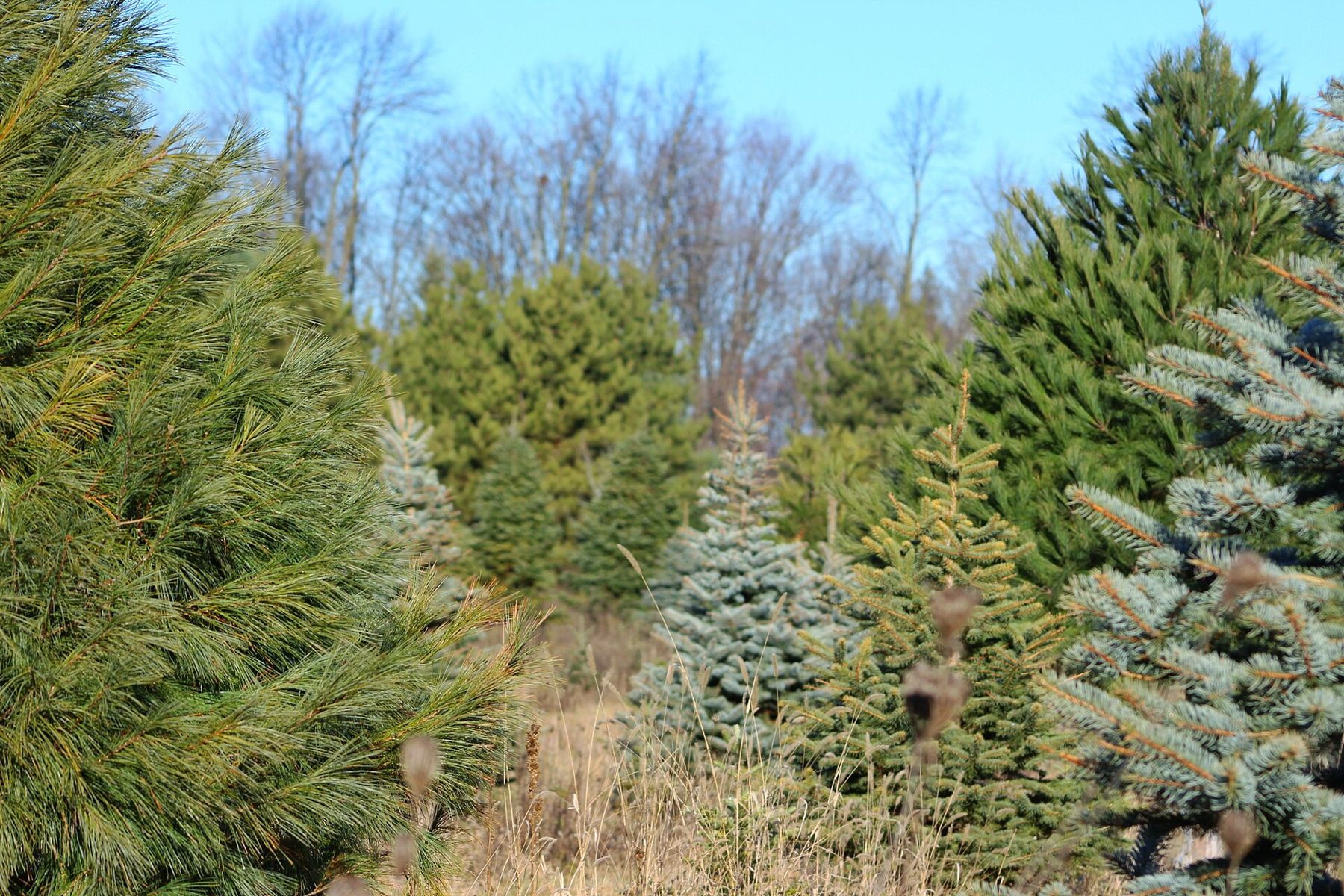
The rows start where the hayfields stop. Drive the county roads around the Kettle Moraine in late November and you will pass hand-painted signs pointing up farm lanes, with cars parked in a stubble field and families dragging trees out on sleds. Wisconsin is one of the leading Christmas tree states, and the farms around Waukesha, Walworth, Jefferson and Washington counties are mostly small family places that let you walk the rows and cut your own.
This page covers how the day works, which trees to look for, and how to get one home and keep it green until the new year.
How a choose-and-cut farm works
You park, find the stand or barn where the farm hands out saws, and walk out into the plantings. Trees are usually grouped by species and size, and many farms price them by height or by colored tags. Pick your tree, cut it and drag it back. Most farms then run it through a mechanical shaker to throw out loose needles and dead growth, and pull it through a baler that wraps it in netting so it travels flat.
Some farms also sell pre-cut trees, wreaths and roping from a shed, with hot drinks by the fire; a few run wagon rides out to the far fields. Others are a field, a cash box and a saw hanging on a nail. Read the farm's own announcements for its days, hours and how it takes payment. Small farms often close for the season once their bigger trees are gone.
Which tree
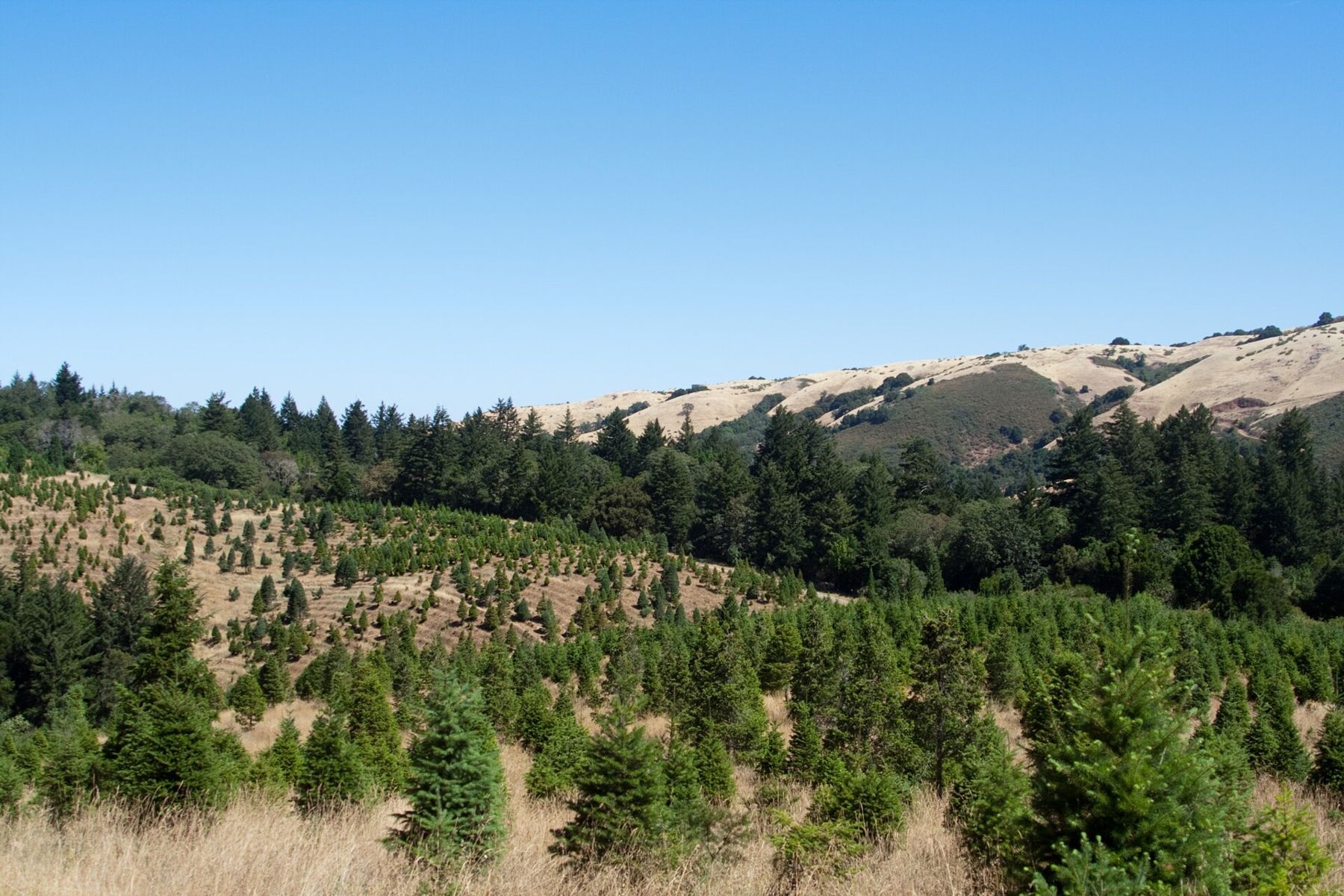
- Balsam fir. The native fir of northern Wisconsin and the classic smell of Christmas. Soft, flat, dark green needles and a slim shape. It holds its needles well if you keep it watered.
- Fraser fir. A fir from the southern Appalachians, grown widely on Midwest farms. Stiffer branches that carry heavy ornaments, needles with silvery undersides, and good needle hold indoors.
- Canaan fir. Close to balsam and Fraser in looks, and more common on farms in the region than it used to be. Treat it like either.
- Concolor fir. Long, soft, blue-green needles with a faint citrus smell when crushed. Less common; ask for it.
- Spruce. White and blue spruce grow into a strong, even cone with sharp needles. Blue spruce looks striking but is prickly to decorate, and spruces tend to drop needles sooner in a warm house.
- Pine. Scotch pine has stiff branches and holds its needles well. White pine has long, soft needles and little scent, and its branches bend under heavy ornaments.
Not every farm grows every species. If you have your heart set on one tree, check what the farm has before you drive out.
When to go
The weekend after Thanksgiving is the busiest of the year. The selection is best then, and so are the crowds. For a quieter walk, go on a weekday morning or the first weekend in December. By mid-December the tallest and best-shaped trees on the smaller farms can be gone.
A tree cut in late November will last through Christmas if you look after it. A fresh-cut tree generally keeps better than one cut weeks earlier and trucked in, which is the main practical reason to cut your own.
Weather decides the day. A dry, cold afternoon is ideal. After a thaw the rows turn to mud, and after a heavy snow a farm may close until it can plow the lot. Check before you leave.
What to bring
- A tape measure, and your ceiling height written down. Allow for the stand and whatever goes on top.
- Work gloves. Sap is sticky and spruce needles are sharp.
- A saw, if the farm asks you to bring your own. Most lend a bow saw; ask.
- A tarp or old blanket, and strong rope or straps for the roof.
- Boots and warm layers. The fields are open, and the wind comes straight across them.
- Cash, in case the card reader in the barn has no signal.
Cutting and carrying
Walk all the way around a tree before you commit. The side facing the lane often looks fuller than the back. Check that the trunk is straight for the bottom foot or so; your stand needs it.
Cut low, a few inches above the ground, unless the farm tells you otherwise. One person holds the tree and tips it gently away from the saw while the other cuts, which stops the blade from binding. Keep children well back from the saw. Drag the tree by the trunk, not the top.
Ask before you bring a dog. Some farms welcome dogs on a leash; others keep them out of the fields.
Keeping it fresh
At home, saw a thin disc off the bottom of the trunk if more than a few hours have passed since cutting, then stand the tree in water straight away. A fresh tree drinks a lot in its first days, so check the stand every morning and keep the water above the cut. Place it away from fireplaces, radiators and heat vents, and use lights in good condition. A dry tree is a fire hazard; when needles fall in handfuls, take it down.
Many towns collect trees in early January or run drop-off sites for chipping. Check your town's schedule.
Making a day of it
Most farms are a short drive from the small towns of the region. Pair a morning in the rows with an afternoon in Elkhorn, which decorates its square heavily in December, or with the holiday evenings at Old World Wisconsin near Eagle if they are running this year. Farm roads are narrow and drift quickly after snow; read winter driving in rural Wisconsin before a stormy weekend.
On the way home, crack a window. The car will smell of fir for a week.