Look down before the trees leaf out. For a few weeks each spring, between the last snow and the day the maple canopy closes, sunlight reaches the forest floor and a whole set of small plants races to flower, set seed and store food. By early June most of them have withered back to their roots. Botanists call them spring ephemerals. You can call them the reason to walk the woods in April.
What blooms, and roughly when
The order is fairly reliable even when the dates are not. A warm March can bring everything forward a week or two; a cold, late spring holds it all back.
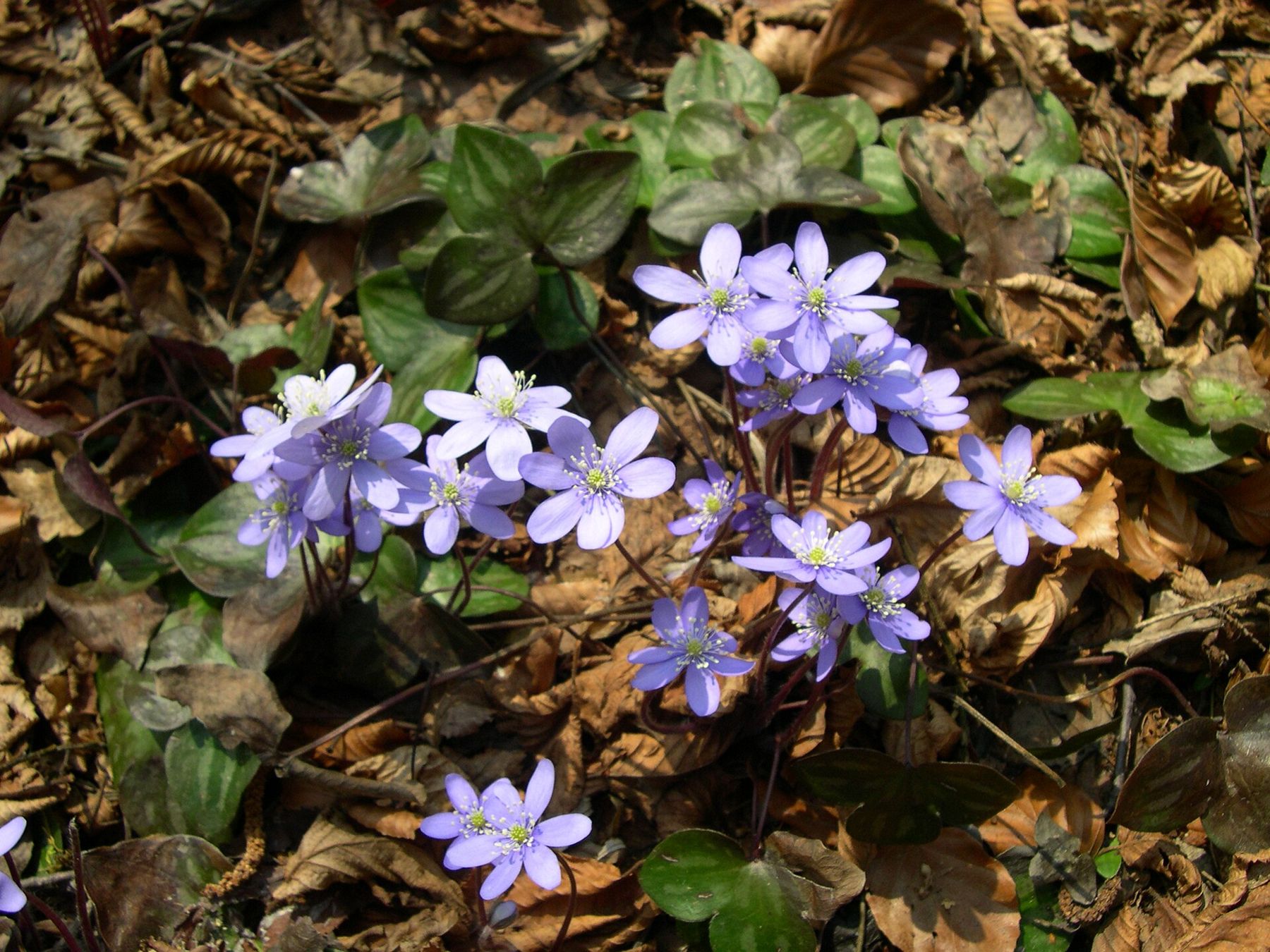
- Hepatica. Usually the first, from late March into April. Small flowers in white, pale blue, lavender or pink on hairy stems, rising from last year's leathery, three-lobed leaves. Look on slopes and around the bases of trees.
- Bloodroot. Usually through April. One bright white flower per plant, wrapped at first in a single scalloped leaf. The petals drop within a day or two, so a patch you see on Monday may be bare on Thursday. The broken root bleeds orange-red sap, which gives it the name.
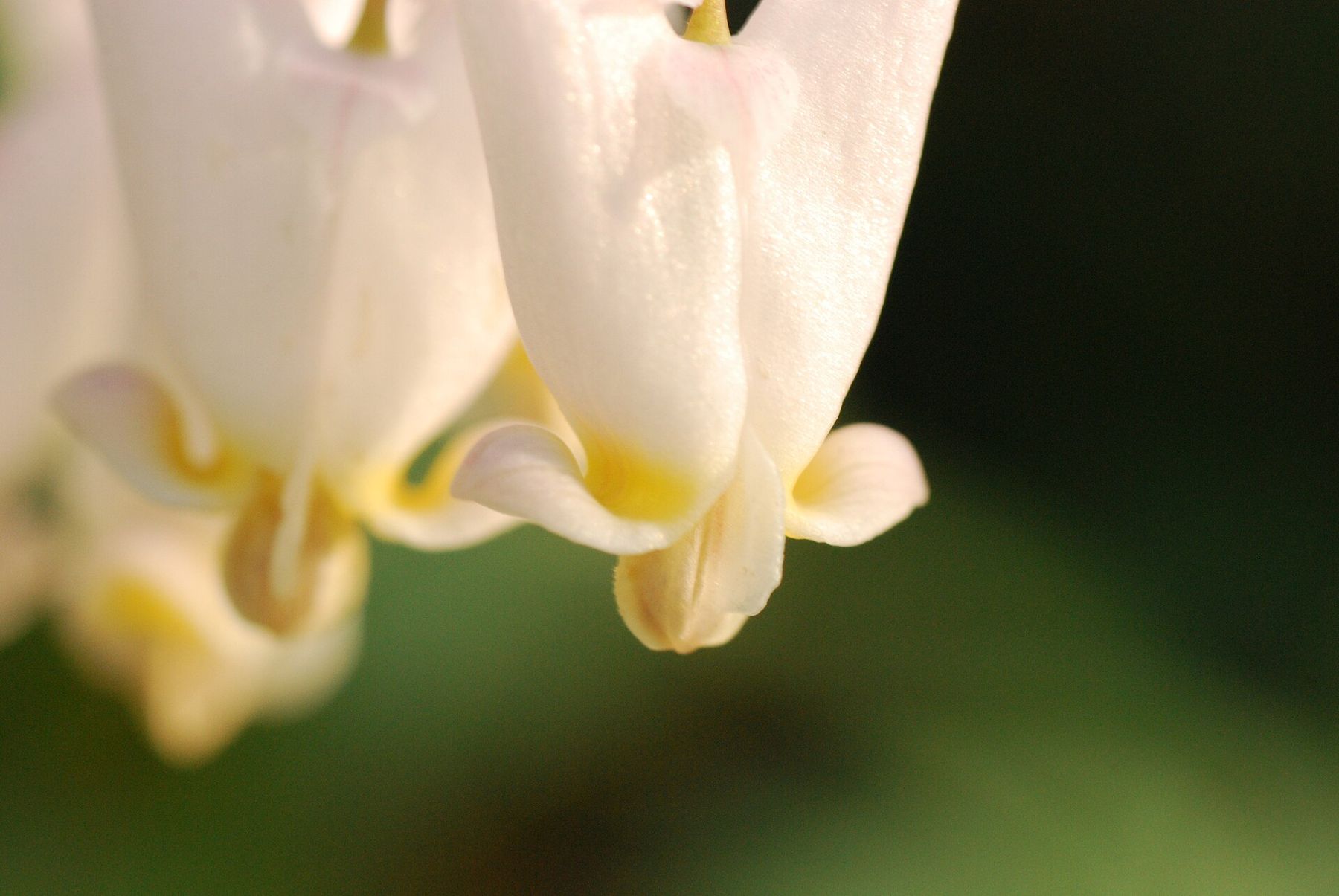
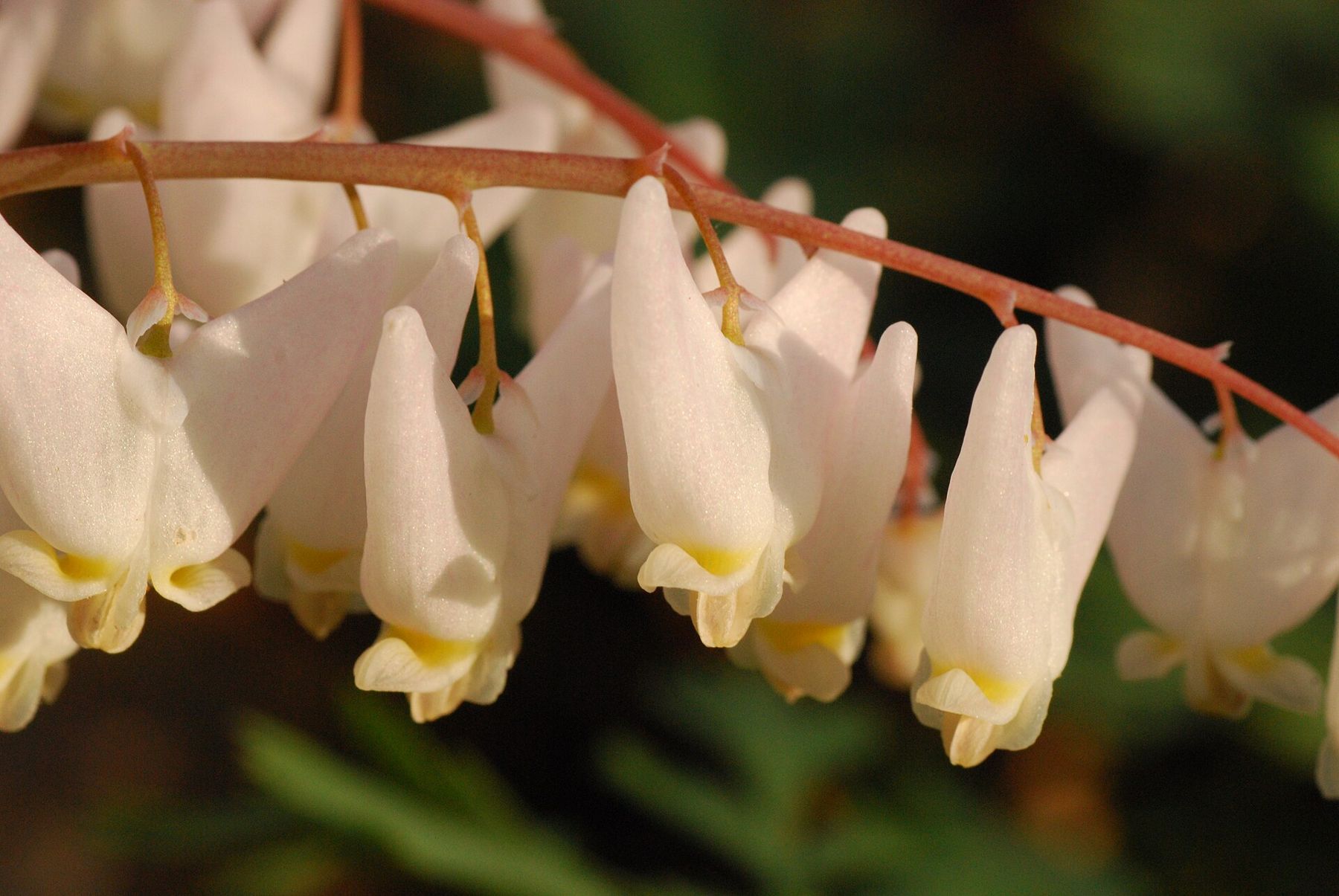
- Dutchman's breeches. Usually mid-April into early May. Ferny gray-green leaves and a row of white flowers shaped like tiny pairs of trousers hung upside down on a line.
- Spring beauty and trout lily. Around the same weeks. Spring beauty is small and pink-striped and grows in carpets; trout lily has mottled leaves and nodding yellow flowers.
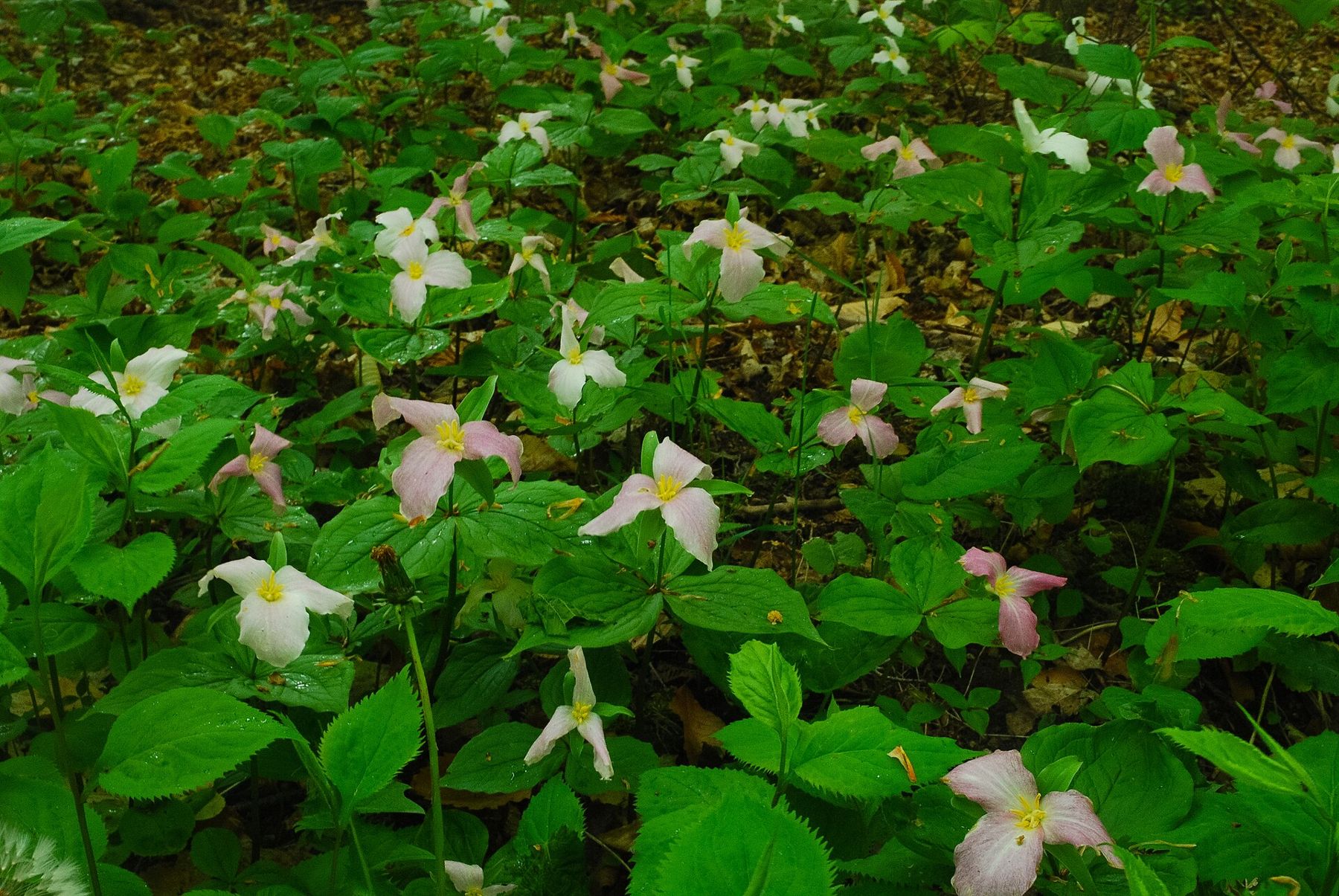
- Large-flowered trillium. Usually late April into mid-May. Three broad leaves, three white petals, and a flower that turns pink as it ages. Where it is happy it covers whole slopes.
- Wild geranium and mayapple. Through May, as the canopy closes and the ephemeral season ends.
Where to look
Ephemerals want rich, moist soil under maple, basswood and red oak. In the Kettle Moraine that means the lower slopes of kettles, the north- and east-facing sides of ridges, and the shaded ground along creeks. The dry gravel tops of the ridges and the sandy oak openings carry far fewer.
Good places to start:
- The hardwood slopes around Lapham Peak. Walk the wooded trails below the tower rather than the open prairie loops.
- The maple hollows along the Ice Age Trail in the Southern Unit. Watch the north-facing kettle sides as the trail drops off a ridge.
- Nature centers. Places such as Retzer Nature Center near Waukesha often run spring wildflower walks, a good way to learn the common species. Check their calendars from March.
Walk slowly. Most of these plants are a few inches tall, and you will find twice as many in an hour of slow walking as in an hour of fast hiking.
The wet ground
Don't skip the low places. In the seeps and spring-fed hollows at the foot of the ridges, skunk cabbage pushes up its mottled purple hoods as early as March, sometimes melting its way through the last snow. A few weeks later the same wet ground turns bright yellow with marsh marigold, its glossy, rounded leaves standing in shallow water. Wear waterproof boots, stay on the boardwalks where they exist, and look from the edge rather than walking into the muck; the soil there is fragile and the plants grow in it shallowly.
Along the forest edges and old fence lines you will also find the shrubs blooming early: the white haze of serviceberry in late April, and wild plum a little later. They make a good landmark from the road when you are hunting for a woods worth walking into.
Leave every flower
Picking or digging plants is not allowed in state parks, forests and natural areas, and it is a poor idea anywhere. Ephemerals live on what their leaves make in a few short weeks. Pick a trillium and you take the leaves with the flower; the plant may survive, but it can take years to bloom again. A trillium grown from seed can take most of a decade to flower for the first time. A patch that looks endless was a very long time in the making.
Wildflowers dug from the woods also rarely survive transplanting. If you want them in your garden, buy nursery-propagated plants from a native plant grower.
Stay on the trail. A slope covered in trillium is also a slope covered in the buds of next week's flowers, and the soil under them is soft in spring. One person stepping off to take a photograph can flatten a dozen plants without noticing.
Timing your walk
Many ephemerals close up in cold, cloudy weather and open again in the sun. Hepatica and bloodroot in particular can look like nothing at all on a gray morning. Aim for a mild, sunny afternoon, ideally after a few warm days in a row.
Bring a hand lens if you have one, and a phone or a small field guide for names. Kneel to look; don't pull a flower toward you.
For photographs, get low and shoot from the trail edge. A flower a few inches tall looks best from its own level, with the light coming through the petals from behind. Bright sun at midday flattens white petals; a thin overcast after the flowers have opened, or the low light of late afternoon, is kinder. Never clear away leaves or twigs to tidy the frame. That litter is the plant's mulch and the reason it grows there.
Keep a note of where and when you found each species. After two or three springs you will know which slope opens first and which hollow holds its trillium a week after everywhere else.
The same weeks bring the spring warbler migration through these woods, so pack binoculars too and see our page on spring bird hikes. And the same leaf litter holds the year's first ticks: read ticks and poison ivy before you go, and check your ankles at the car.
Come back in two weeks. The slope that was white with bloodroot will be white with trillium, and two weeks after that it will be green and shaded and ordinary, waiting for next April.