Hartford sits on the Rubicon River in Washington County, about 35 miles northwest of Milwaukee. Two miles east of town the land rises into a wooded hill, and below it lies a wide, shallow-shored lake. That lake and its hill make up the Pike Lake Unit of the Kettle Moraine State Forest. It is small enough to see in a morning and varied enough to fill a day: a sand beach, a steep climb, a tower, and a stretch of the Ice Age Trail.
The route below starts in Hartford and works east. Walk it all, or drive between the stops and walk only the hill.
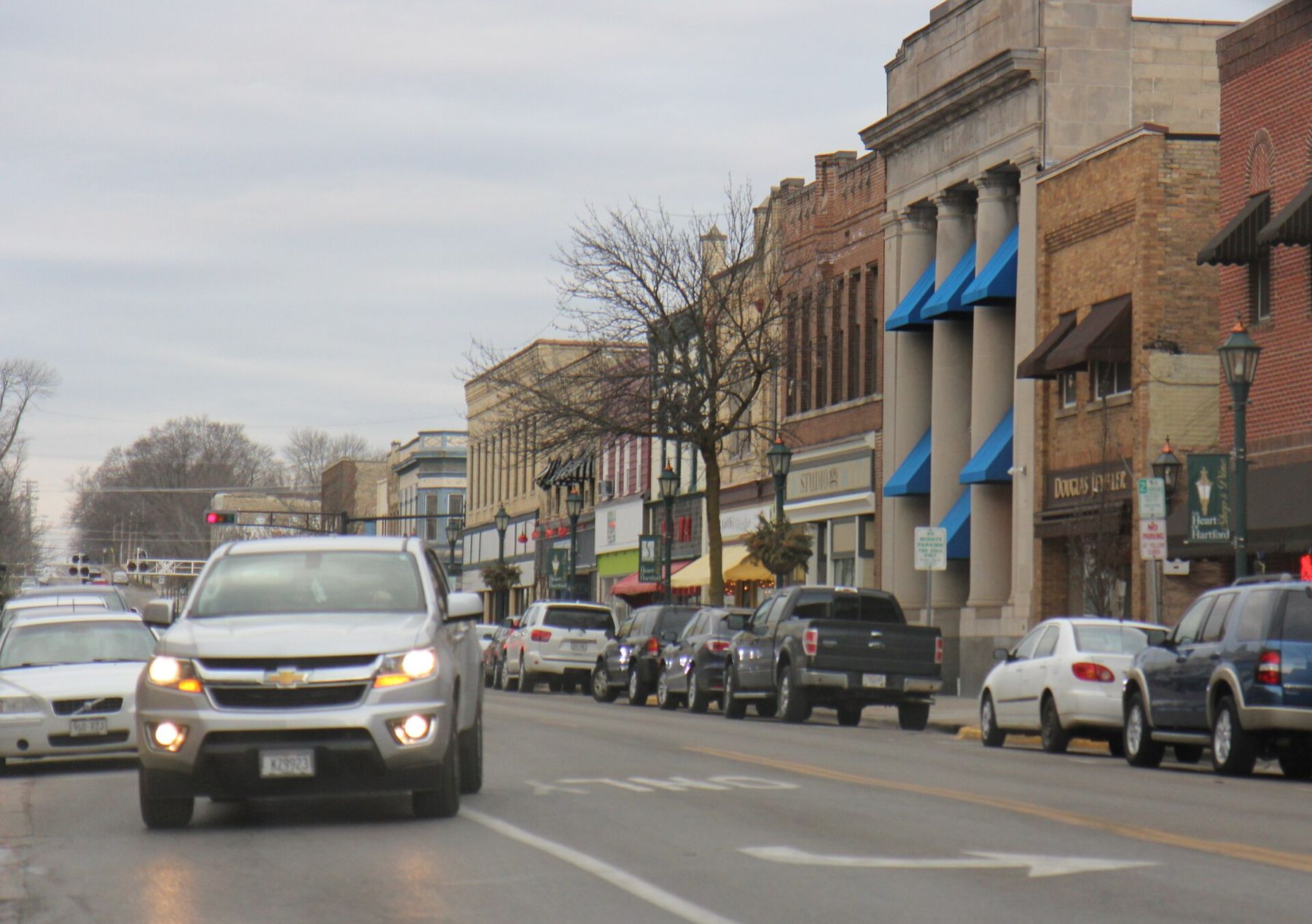
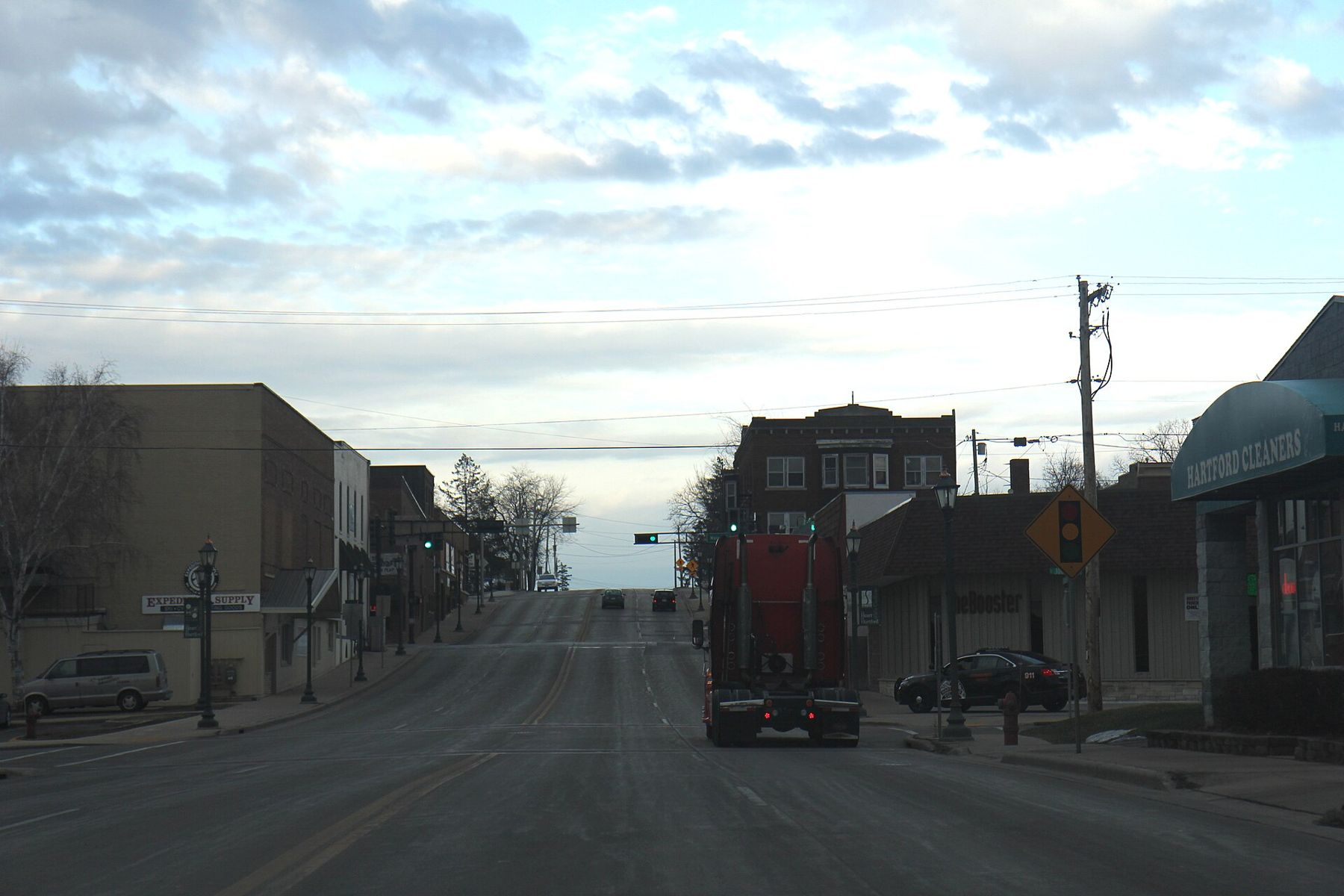
- Downtown Hartford Start on Main Street, where WIS 83 runs north through the business district. Hartford was a manufacturing town, and in the early 20th century it built the Kissel automobile; a museum in town keeps cars made here and elsewhere in Wisconsin. Buy water and lunch before you leave. There is little to buy inside the state forest.
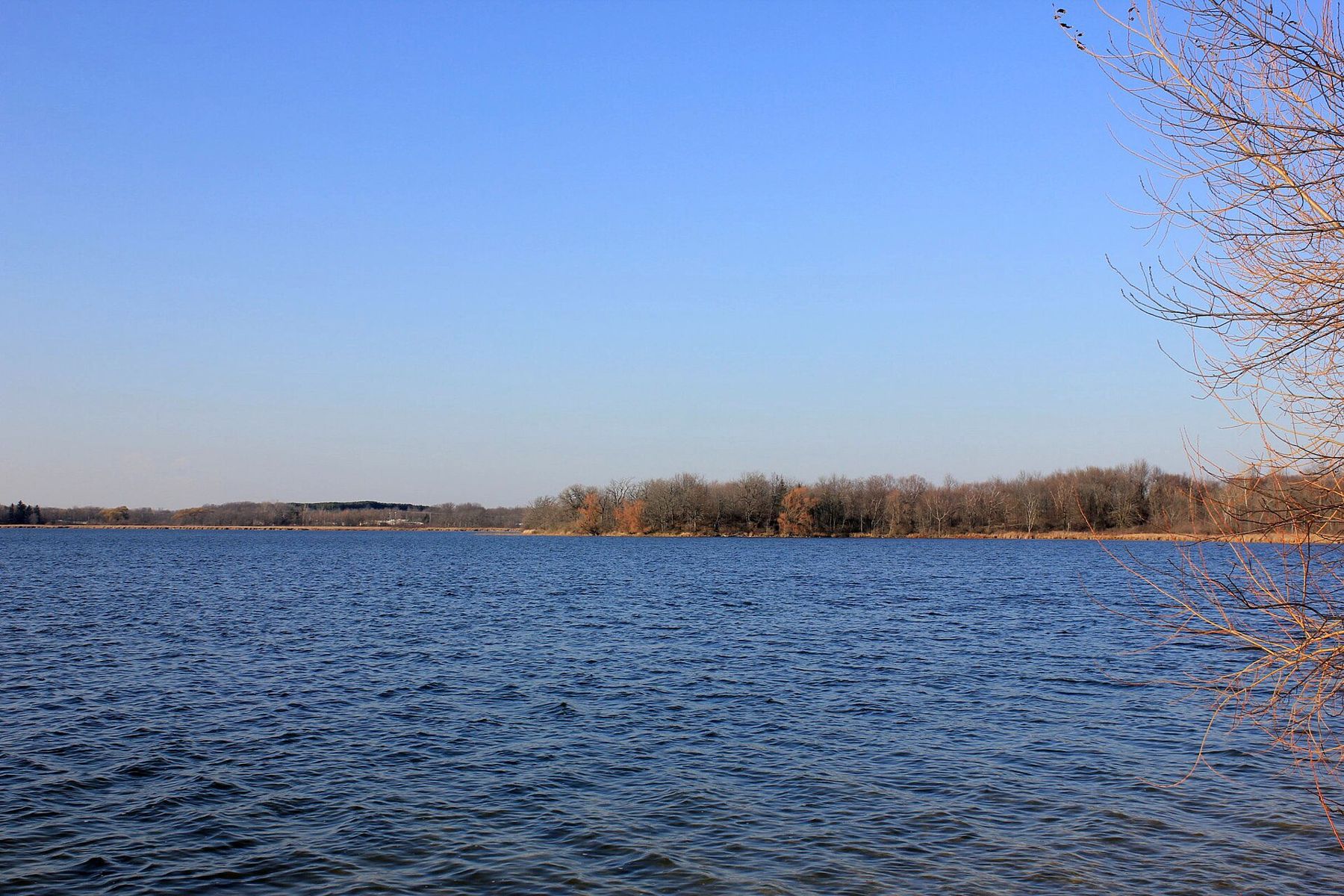
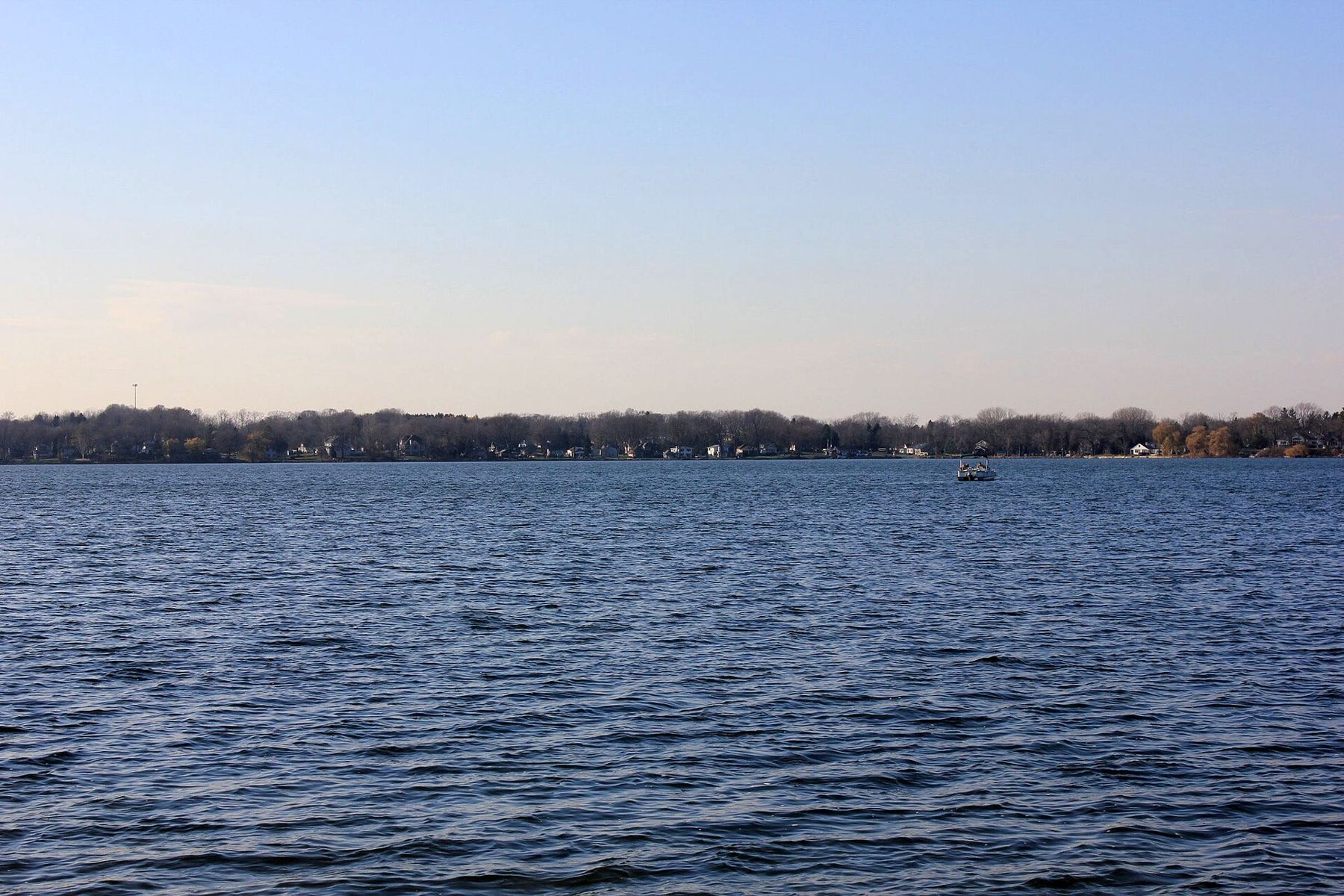
- Pike Lake beach Drive east on WIS 60 and follow the signs to the Pike Lake Unit. The beach has a picnic area and a sand shelf that drops off slowly. Mornings in June and early July are the quiet time to swim. Look west across the water to the low wooded shore and the town beyond.
- Powder Hill From the beach area, follow the marked hiking trail up Powder Hill. The hill is a kame, a cone of sand and gravel left where meltwater poured down through a hole in the glacier. The climb is short but steep, on a soil path that turns slick after rain. At the top, an observation tower lifts you above the trees.
- The view from the tower Climb the stairs and look around slowly. To the south and east you can pick out the spires of Holy Hill on a clear day. North and east, the hills of the moraine run in a long line toward the Northern Unit. Below you lies the lake, and you can see how the glacier left it in a hollow between the ridges.
- The Ice Age Trail Back at the bottom, look for the yellow blazes of the Ice Age Trail, which crosses the unit. Walk a mile or two along it, through hardwoods and over small ridges, then turn back the way you came. Read our page on the Ice Age Trail story if you want to know how the long path came to be.
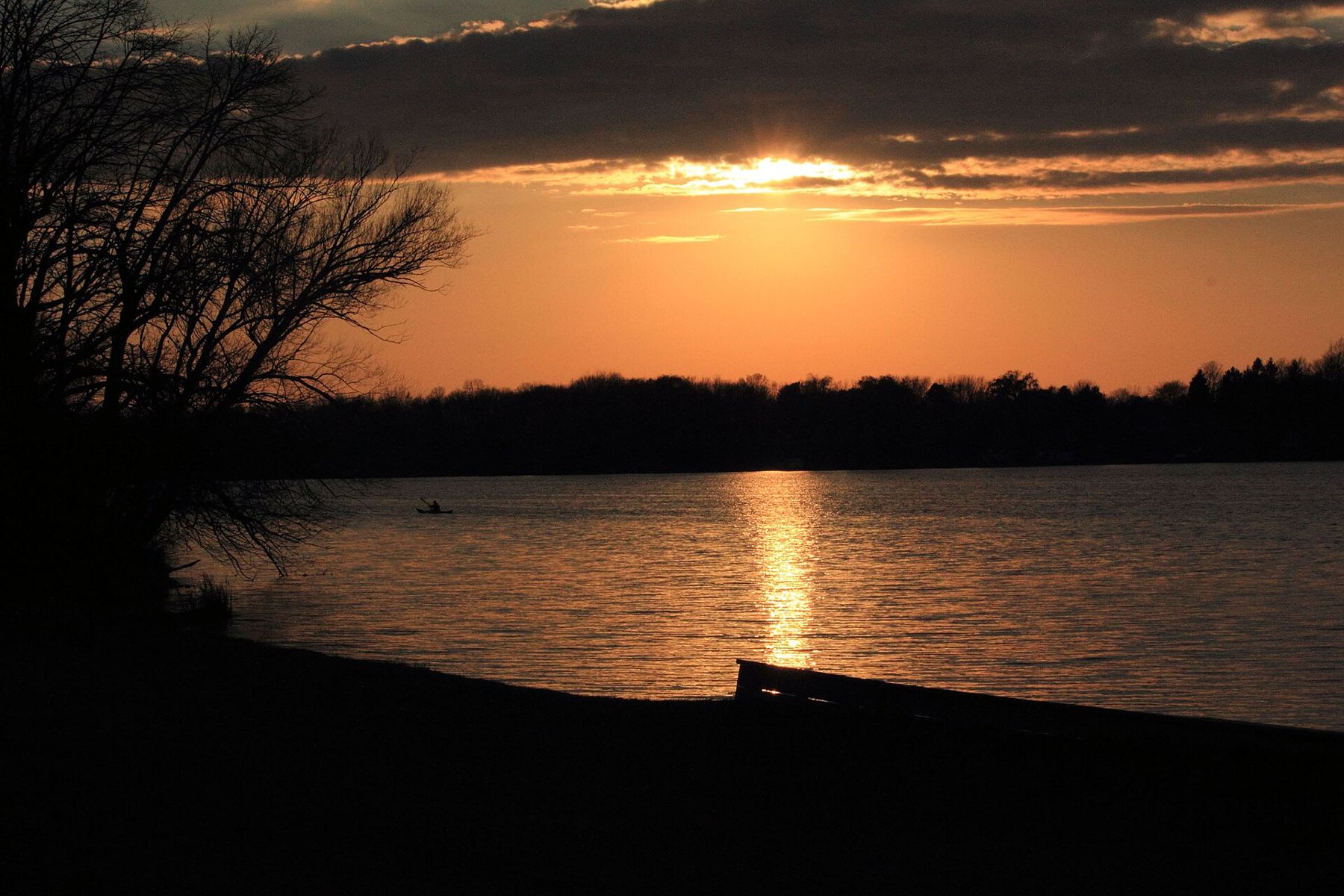
- The lake shore at sunset End where you began, on the shore of Pike Lake. On a clear evening the sun sets over the far bank, and the water turns orange and then grey. Kayakers paddle out on calm nights. Find a spot on the grass and wait for it.
When to go
Summer brings swimmers and campers, and the beach lot can fill on hot weekends. Spring is the quiet season, when the woods on Powder Hill are carpeted with wildflowers before the leaves close in. Autumn color peaks in mid-October, and the view from the tower is at its widest then. In winter the trails are open for hiking and snowshoeing, and some are groomed for skiing; check which ones before you go.
Underfoot
The trails here are mostly packed soil and sand, with roots on the steeper slopes and a few stretches of loose gravel near the top of Powder Hill. Boots or sturdy trail shoes are better than sandals. After heavy rain the low ground near the lake holds water and mud, and the steepest pitches can be slippery. Bring insect repellent from late May through August, and check yourself for ticks when you get back to the car; our page on ticks and poison ivy explains what to look for.
How the hill and the lake were made
Pike Lake and Powder Hill are a matched pair, and seeing them together is the best short lesson in glacial country you will find in Washington County. When the last ice sheet stalled here, two lobes of ice pressed against each other along a line running roughly north and south. Meltwater ran along the seam between them, carrying sand and gravel. Where it poured down through holes and cracks in the ice, it built cones like Powder Hill. Where blocks of ice broke off and were buried in that debris, they later melted and left hollows. The larger hollows filled with water and became lakes.
From the tower you can see the pattern for yourself. The hills stand in a broken line, the lakes sit low between them, and the farmland beyond is flatter and smoother. Our page on how glaciers made the Kettle Moraine explains the words you will see on trail signs: kame, kettle, esker and moraine.
Camping and picnics
The unit has a family campground in the woods near the lake, with sites for tents and trailers and a short walk to the beach. It is smaller and usually quieter than the big campgrounds in the Southern Unit, though summer weekends still fill. Picnic tables and grills stand near the beach. Carry out what you carry in, and keep food in your car at night; raccoons here are bold.
The longer version
If you have a full day, link this walk to the rest of the moraine. Pike Lake sits on the Kettle Moraine Scenic Drive, so you can follow the green route signs south to Holy Hill, or north into the Northern Unit. The Ice Age Trail continues in both directions too, so an experienced walker can arrange a car shuttle and walk a longer one-way section.
Walkers who prefer a loop can stay inside the unit instead. Several marked trails circle the hill and drop to the lake, and together they make a walk of an hour or two. Pick up a paper map at the entrance station when it is staffed, or photograph the map board at the trailhead before you start; junctions in the woods are not all signed.
Before you leave, walk to the end of the beach and look back up at Powder Hill. From the water it looks like what it is: a pile of sand and gravel the ice left behind.