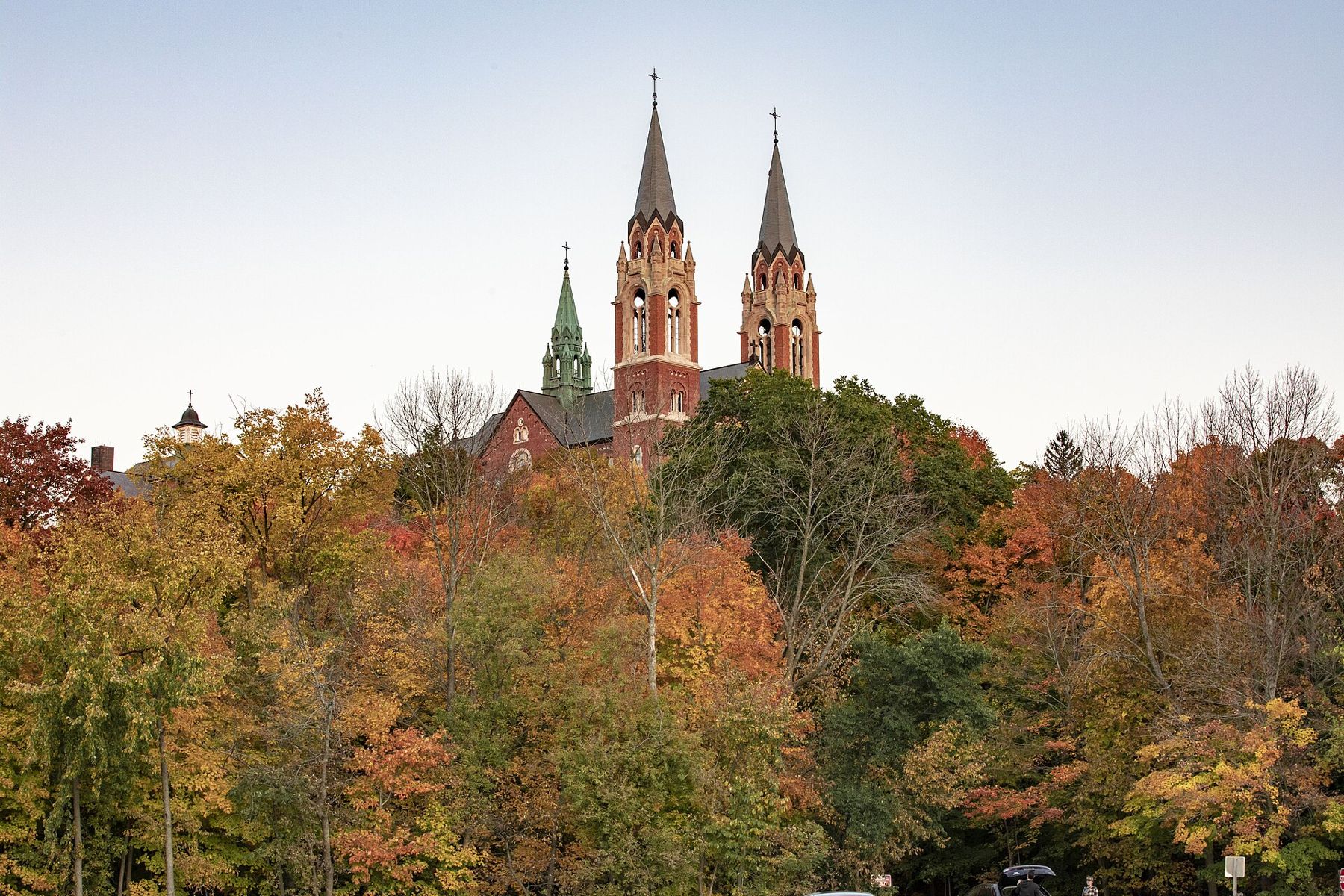
You will see Holy Hill before you reach it: two tall spires on a wooded hill, standing high above the farm country of Washington County. The hill is one of the highest points in southeastern Wisconsin, a knob of glacial sand and gravel left where meltwater poured through the ice. The Ice Age Trail passes below it, then drops south through some of the steepest woods in the region to the Loew Lake Unit of the Kettle Moraine State Forest on the Oconomowoc River.
The walk is hilly and one-way. Plan on half a day, with a car at each end or a walk back the same way.
- Holy Hill shrine grounds Start at the basilica. Walk through the grounds, look at the church, and, if the scenic tower is open, climb its stairs for the view. On a clear day you can see across the moraine for miles. Check the tower's season and hours before you go; it closes in winter and in bad weather.
- The Ice Age Trail near Holy Hill From the shrine area, find the Ice Age Trail and its yellow blazes. The trail runs through hardwood forest on the slopes below the church, with a few sharp climbs and descents. Look back up from the first open spot to see the spires above the trees.
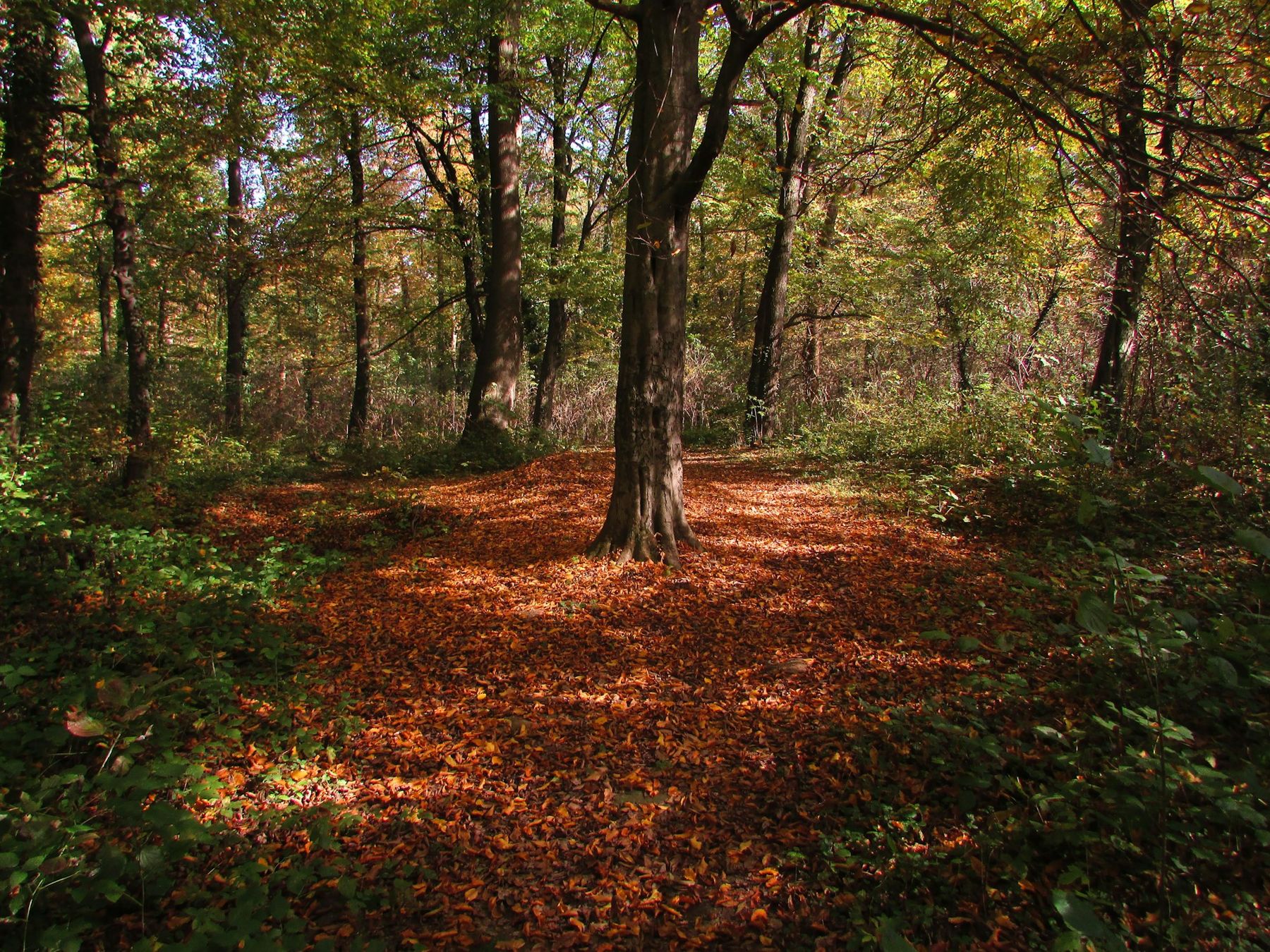
- The steep woods South of Holy Hill the trail follows ridges and drops into kettles, over ground that is sometimes steeper than it looks on the map. Take your time on the descents, where leaves hide loose soil and roots.
- Road crossings The trail crosses a few town and county roads. Cross carefully; traffic comes quickly over the hills. Some crossings have small parking areas where you can end the walk early if you need to.
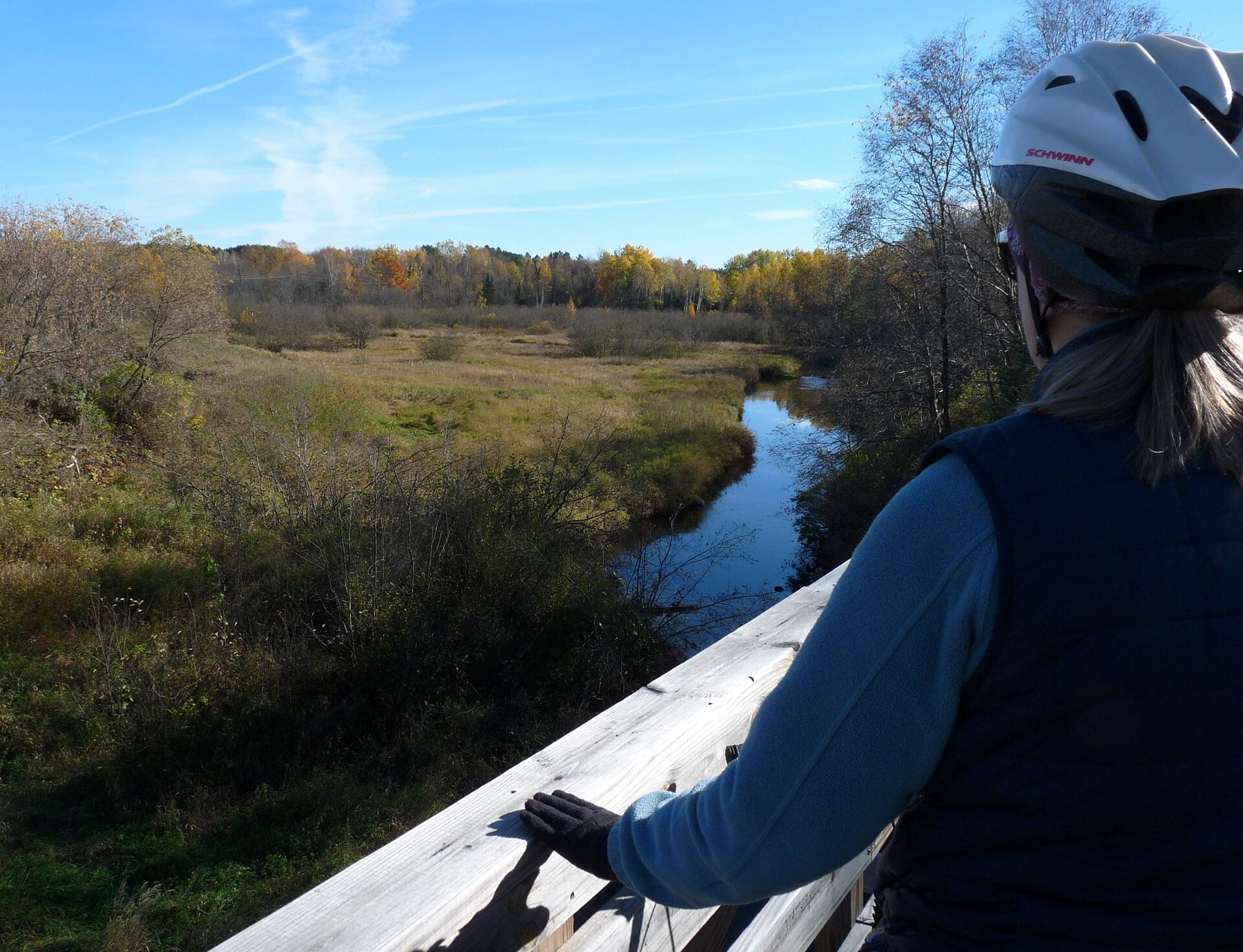
- The Oconomowoc River As you go south, the land opens out toward the river valley. The Oconomowoc River here is small and slow, winding through marsh and lowland woods. Stop on the bank and look for herons and ducks.
- Loew Lake Unit The trail enters the Loew Lake Unit, a quiet piece of the state forest with oak openings, river marsh and the small lake that gives it its name. End your walk at the parking area, or keep going if you have planned a longer day.
When to go
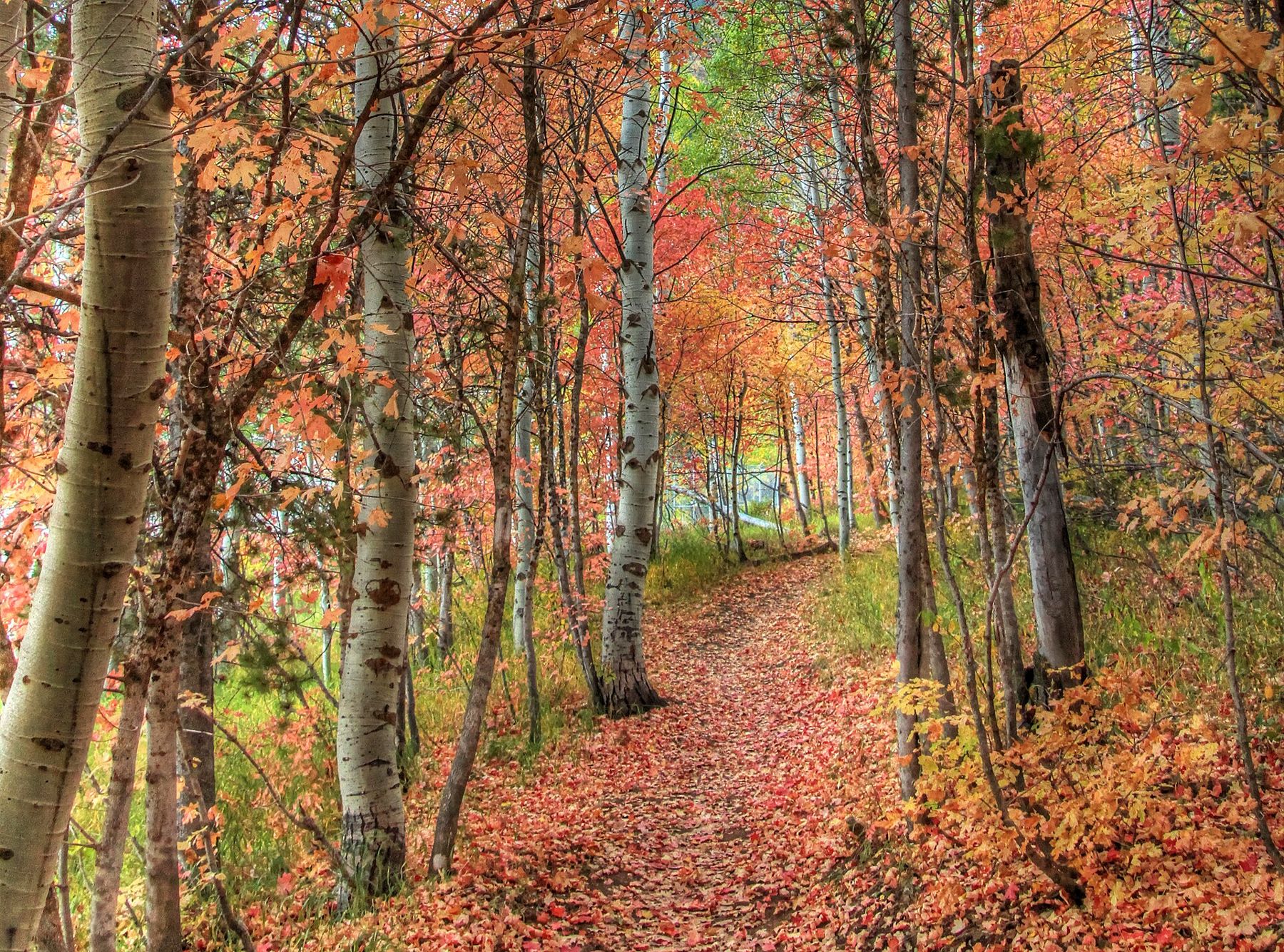
October is the best month, when the maples on the slopes below Holy Hill turn orange and red. May is good for wildflowers and birdsong. In summer the woods are shady, but the insects are thick near the river. In winter the trail is open but icy on the steep pitches; carry traction devices.
Weekends near Holy Hill are busy, especially in autumn. Start early, or walk the route on a weekday.
Before or after: the shrine
Give yourself time at Holy Hill at whichever end of the day suits you. Many walkers prefer to finish there, climbing the last hill toward the spires, but the grounds can be busy in the afternoon. Starting there in the morning means quieter paths and softer light on the church. The grounds have visitor facilities, open on their own schedule, and the paths around the church, including the outdoor stations of the cross, are open to walkers who keep the peace of the place.
Whichever way you walk, stop once on the descent and turn round. From the slopes south of the hill, the church fills the skyline above the trees.
Underfoot
The trail is mostly packed soil with roots and loose gravel on the slopes. Near the river it can be muddy, especially in spring. Wear boots with good grip, and use poles if your knees dislike long descents. Read our page on trail difficulty if you are unsure whether the walk suits you.
Arranging the shuttle
A one-way walk needs a plan for the end. The simplest is two cars: drive both to the Loew Lake end, leave one there, and drive the other back to Holy Hill to start. Write down where you parked before you set off, and keep the key of the far car in your pocket, not in the car you left at the start.
If you have only one car, walk out and back from either end. From Holy Hill, walk south until you reach the first open views toward the river, then turn round. From Loew Lake, walk north into the hills until the spires appear above the trees. Either version gives you the best of the route in a few hours.
Wherever you park, use a marked lot or a legal road shoulder, keep your vehicle pass on display, and leave nothing valuable in sight.
What the ground tells you
The country between Holy Hill and Loew Lake is a good place to see how the moraine was built. Two lobes of the last glacier met along this line. Meltwater ran between them, piling up sand and gravel into hills and ridges, while buried blocks of ice later melted and left steep-sided hollows. Holy Hill itself is one of the largest of those piles. As you walk, notice how the trail climbs a ridge, drops into a bowl, and climbs again. Those bowls are kettles, and some still hold ponds or marshes.
Near the Oconomowoc River the pattern changes. The land flattens, the soil turns darker and wetter, and the trees give way to sedge meadow and willow. This is the lowland the river has worked through since the ice left. Our page on how glaciers made the Kettle Moraine explains the landforms in more detail.
What to carry
- Water and food for half a day. There is nowhere to buy either along the trail.
- A map of the Ice Age Trail section, on paper or downloaded. Phone signal fades in the hollows.
- Insect repellent from late May through August, especially near the river.
- A warm layer in spring and autumn. The low ground by the river stays cool.
The longer version
The Ice Age Trail continues south from Loew Lake and north beyond Holy Hill. A strong walker can link this section with the next one in either direction. Our page on the Ice Age Trail story explains how the long path came together, and Holy Hill Basilica tells the story of the church.
Finish at Loew Lake by sitting on the bank for a few minutes. Listen to the river, then look north for one last glimpse of the spires on the skyline.