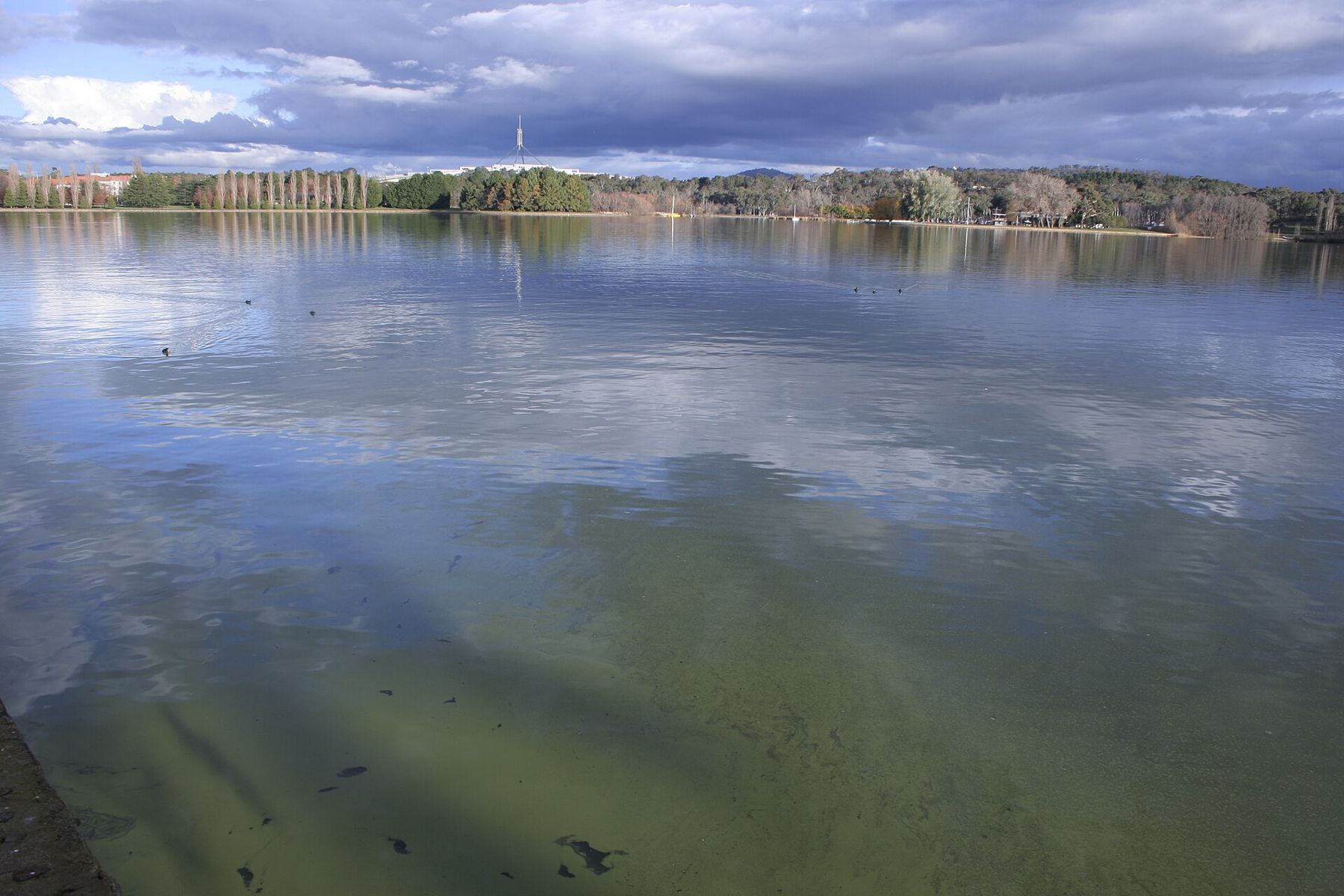
Late summer is when to pay attention. After a run of hot, calm, sunny days in July and August, some Wisconsin lakes turn green almost overnight. Often the cause is harmless algae. Sometimes it is cyanobacteria, often called blue-green algae, which can produce toxins that harm people and can kill dogs. You cannot tell the difference by looking, so learn to recognize a bloom and treat every one with caution.
What a bloom looks like
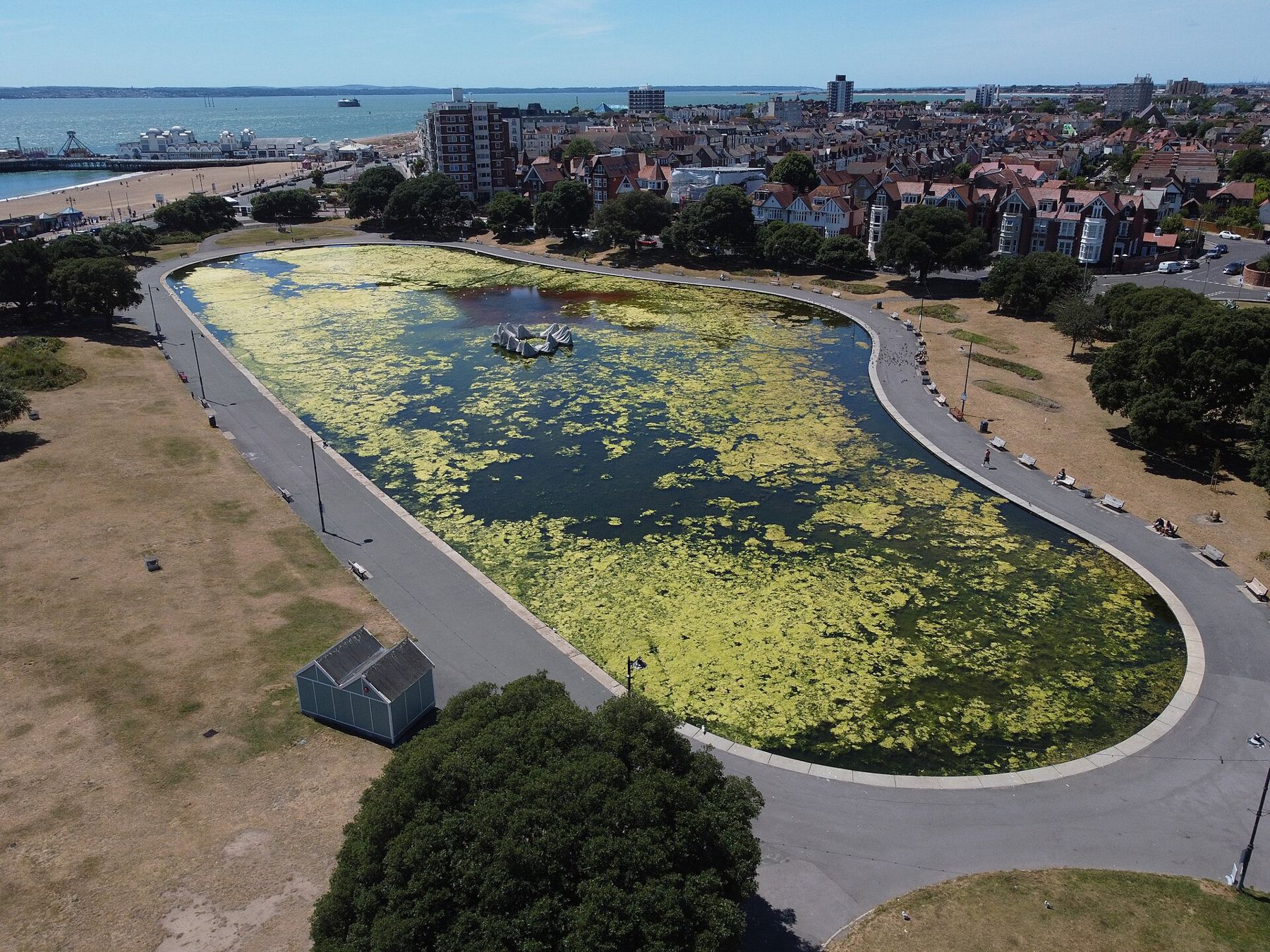
- Water that looks like pea soup or spilled green or blue-green paint, or has a cloudy, greenish tint.
- A scum, film or mat on the surface, often pushed into a bay or along the shore by the wind.
- Streaks or swirls of color, usually green or blue-green, sometimes brown.
- Green clumps or specks floating in a clear glass of lake water.
- A musty, swampy or rotten smell near the shore.
Not every green lake is dangerous. Floating weeds, duckweed and stringy green mats that you can lift on a stick are usually ordinary plants or algae. The trouble is that you cannot be sure without a test, so the safest habit is the same either way.
Blooms move. Wind can pile scum along one shore in the afternoon and clear it by morning, so the beach that looked fine yesterday may not today. Look at the water where you plan to swim, not just at the middle of the lake.
When to stay out
The rule is simple: when in doubt, stay out. Do not swim, wade, water ski or let anyone play in water that shows any of the signs above. Never drink lake water, and do not use it for cooking; boiling does not destroy algae toxins.
Respect posted signs. Beaches that are tested regularly put up advisory or closure notices when bacteria or algae levels are high, often after heavy rain or a long hot spell. Check for current advisories before you leave home and read the sign at the beach entrance when you arrive. Our page on where to swim lists the public beaches in the area.
Children and dogs
Children swallow more water than adults and play in the shallows where scum collects. Keep them out of discolored water and away from the edge where scum piles up. Rinse them off with clean water after any lake swim, and wash their hands before they eat.
Dogs face the greatest danger. They swim through scum, drink lake water and lick their coats afterwards, swallowing toxins. Keep dogs on a leash near any lake that looks green, never let them drink the water, and rinse them right away with clean water if they get in. Bring fresh drinking water for them on every lake walk.
Signs of poisoning in a dog can come on quickly: vomiting, drooling, weakness, staggering, trouble breathing or seizures. Take the dog to a veterinarian at once and say it may have been exposed to blue-green algae.
If someone is exposed
- Get out of the water and rinse off with clean water as soon as possible.
- Watch for symptoms: rash, itching, sore throat, stomach upset, vomiting, diarrhea, headache or breathing trouble.
- If symptoms appear, or if someone has swallowed bloom water, call a doctor or the poison center.
- For a pet, call a veterinarian immediately; do not wait for symptoms.
- Report the bloom and any illness to the local health department so others can be warned.
Other lake hazards
Algae is only one risk. Most lake injuries and drownings come from more familiar dangers.
- Drop-offs. Glacial lakes often shelve gently, then drop sharply into deep water. Keep weak swimmers inside the buoys and within arm's reach.
- Life jackets. Put a properly fitted life jacket on any child or weak swimmer near the water, and on everyone in a small boat.
- Diving. Never dive into water you have not checked for depth and hidden rocks or logs.
- Cold water. In spring and fall the water can be cold enough to disable a strong swimmer in minutes. Dress for the water, not the air.
- Swimmer's itch. An itchy rash from parasites in shallow, weedy water is common in Wisconsin lakes in summer. Towel off briskly right after swimming.
- Storms. At the first thunder, get out of the water and off the beach.
- Boats. Swim only in marked areas or close to shore, away from boat lanes.
Before a winter walk on a frozen lake, read our page on ice fishing basics for how to judge the ice.
Helping the lakes
Blooms feed on nutrients washing into lakes from lawns, farm fields and failing septic systems. You can help by keeping fertilizer and grass clippings out of the street and the water, picking up after your dog and cleaning your boat before you move it to another lake, as described on our page about launching a kayak.
Look before you wade in, keep a jug of clean water in the car for rinsing, and if the water looks wrong, pack up and walk the shore instead.