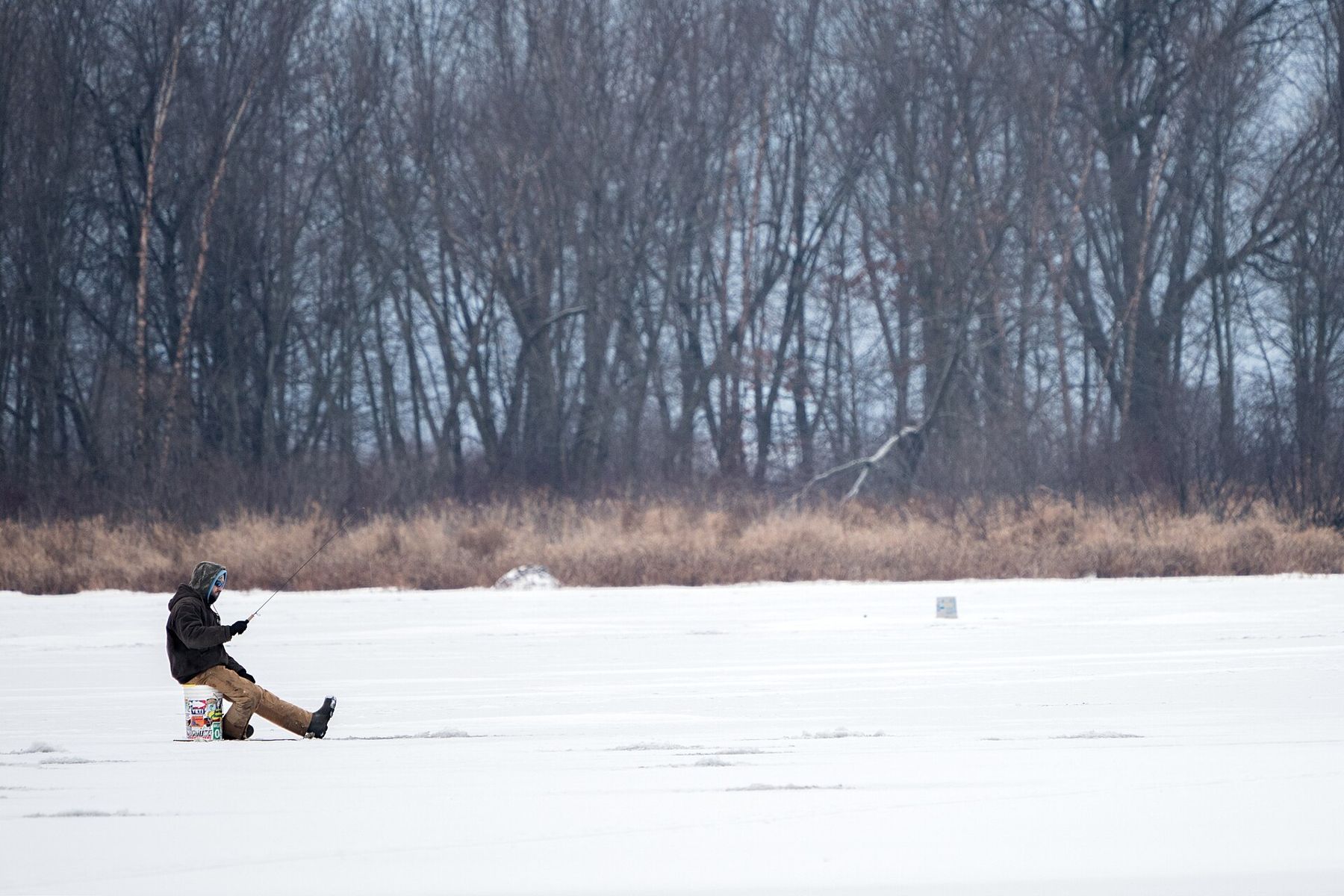
Somewhere around Christmas, if the cold has been steady, the first anglers walk out from the shore of the small lakes with a spud bar in one hand and a bucket in the other. By mid-January the bays of Lake Country are dotted with shelters and tip-up flags, and on a calm, bright Saturday a frozen lake can feel like a small town.
Ice fishing is the cheapest and most social way to fish in a Wisconsin winter. You need little gear, you can start from the shore on foot, and panfish bite all winter. What you cannot skip is learning to read the ice.
Ice first, fish second
No ice is ever completely safe. Thickness varies across a single lake, and nobody measures or certifies ice for you. You are the only one who decides whether to walk out, so make that decision carefully every time.
Many anglers follow a rough rule of thumb: at least four inches of clear, hard ice before walking out on foot, and far more before any snowmobile, ATV or vehicle. Treat those numbers as a floor, not a guarantee. Gray, white, slushy or honeycombed ice is much weaker than clear black ice of the same thickness.
- Check the ice with a spud bar as you walk. If the bar punches through in one or two hard blows, turn back.
- Drill test holes and measure as you go, especially on a lake you do not know.
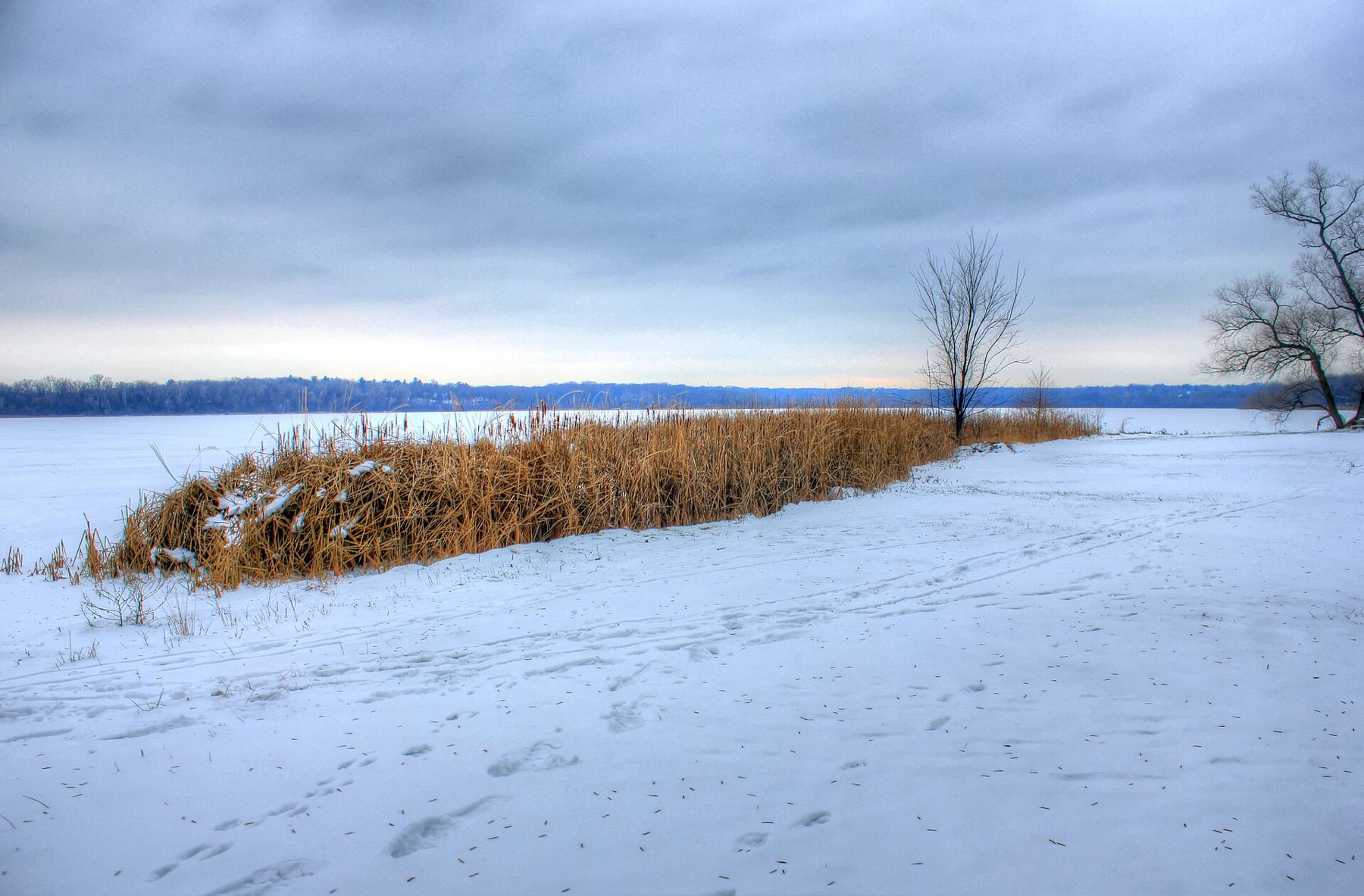
- Stay away from inlets, outlets, springs, bridges, docks, reeds and any dark or open patches: current and springs keep ice thin.
- Be wary after a thaw, a rain or a heavy snow. Snow insulates the ice and can hide soft spots beneath it.
- Early ice in December and late ice in March are the riskiest times of the season.
Never fish alone if you can help it. Tell someone which lake you are on and when you will be back, and carry a phone in a waterproof bag. Wear ice picks and bring a throw rope. Read our page on lake safety for more on cold water.
The gear that matters
Start simple. You can catch fish with a short rod and a hand auger, and add comforts later.
- An auger to cut holes. A hand auger is fine on early ice; a powered auger saves your shoulders in February, when the ice is thick.
- A skimmer to clear slush and ice chips from the hole.
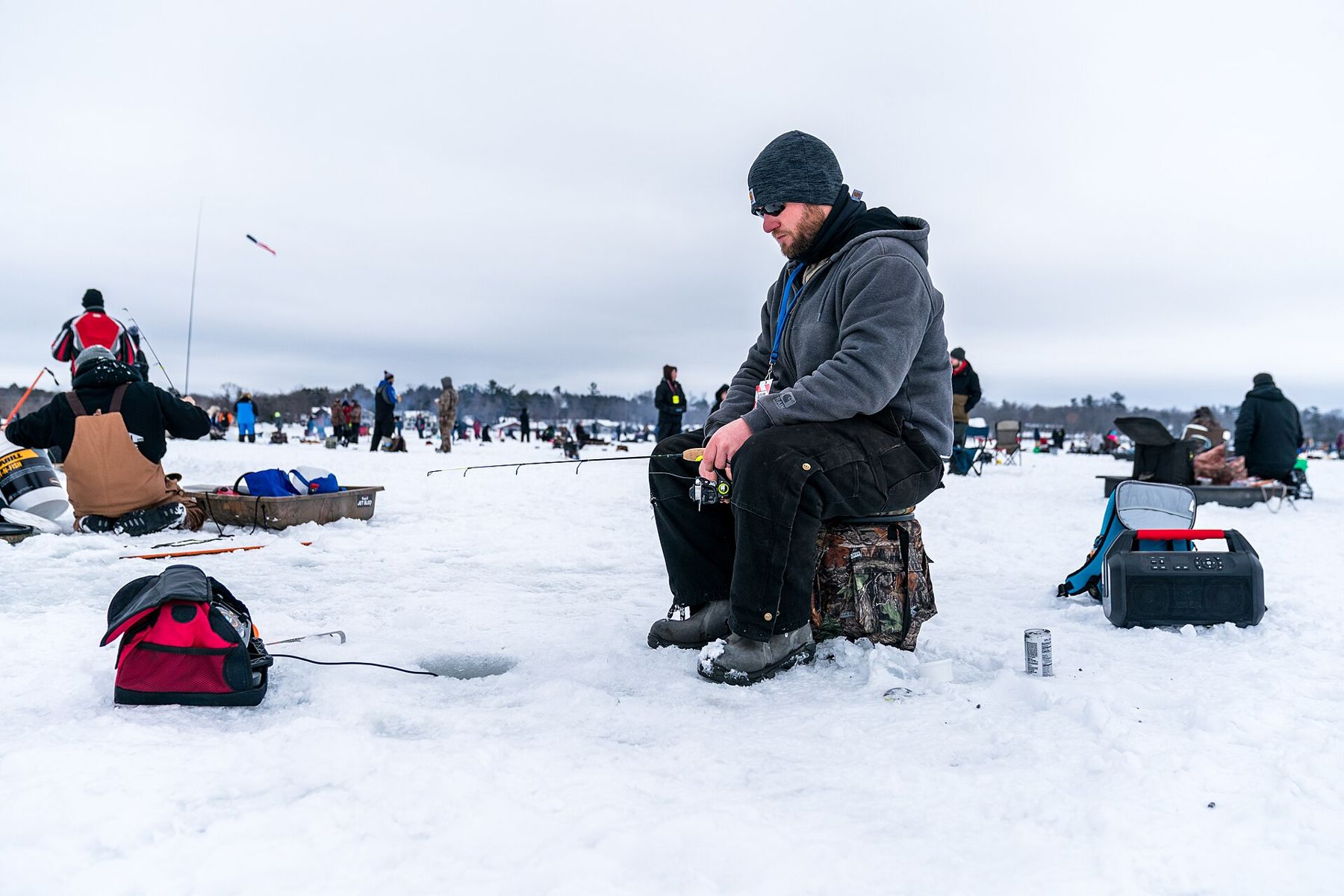
- A short ice rod with light line for panfish, and small jigs tipped with live bait such as waxworms or spikes.
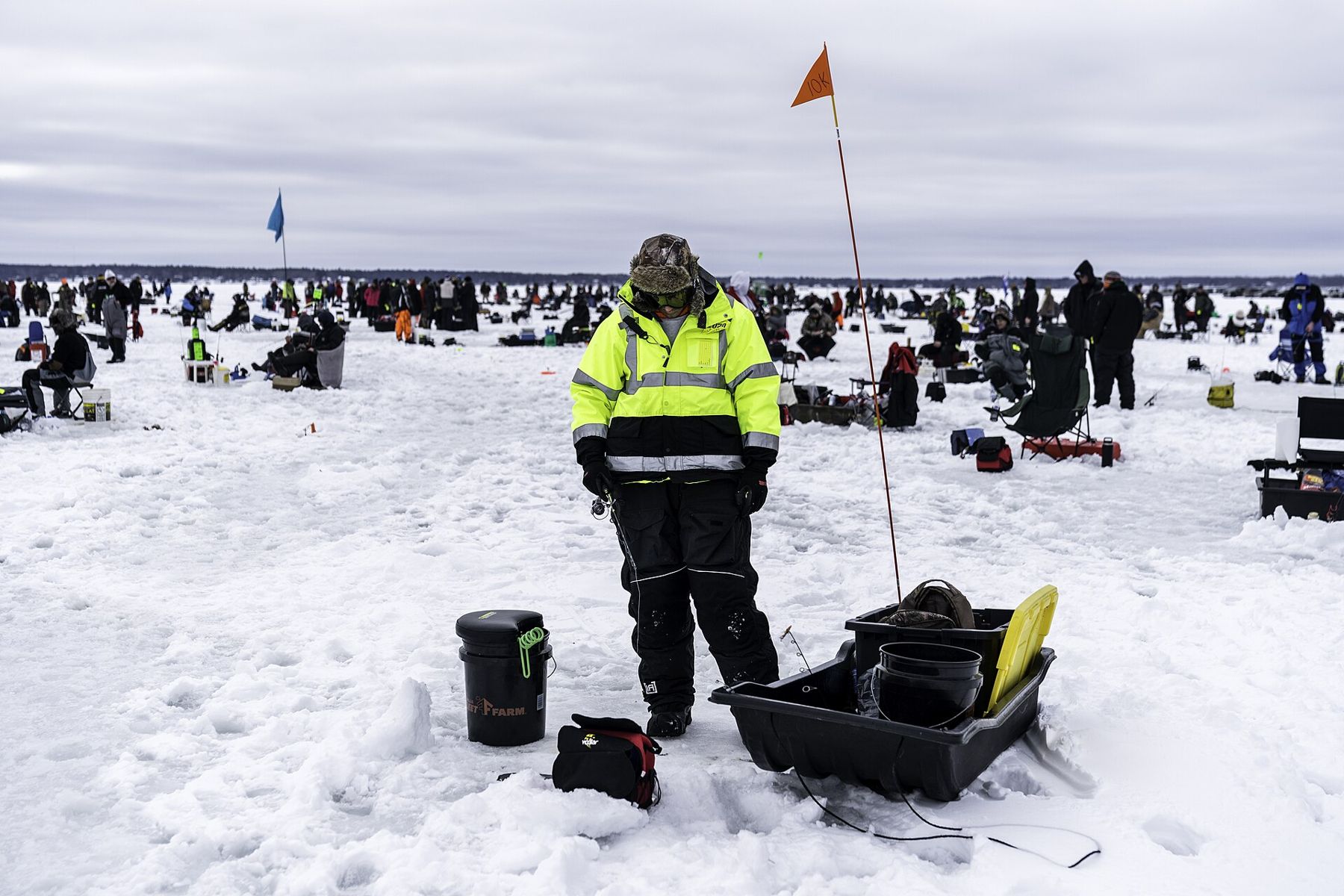
- Tip-ups for pike and walleye: a frame that sits over the hole, with a flag that springs up when a fish takes the bait.
- A bucket to sit on and carry gear, and a sled to drag it all.
- Warm layers, insulated boots and spare gloves. The wind on open ice is colder than anything you feel on shore.
A portable shelter and a small heater make long days comfortable, and an electronic sonar unit shows you fish under the hole. Neither is needed on your first morning out. Use any heater only in a ventilated shelter.
Jigging for panfish
Bluegill, crappie and yellow perch are the bread and butter of winter fishing in the Kettle Moraine lakes. Look for them along weed edges and the drop-offs at the edge of bays, often in water from about eight to twenty feet deep. Crappies tend to suspend above the bottom and bite best at dawn and dusk; bluegills hold lower and bite through the middle of the day.
Drop a small jig to near the bottom, lift it a few inches and jiggle it gently, then hold it still. Most bites come during the pause and feel like a faint tap or a slight lift of the line. If nothing happens in fifteen minutes, move and drill another hole. Moving is the habit that separates full buckets from empty ones.
Tip-ups for pike
Set tip-ups with a live minnow suspended just above the weeds in shallower water near the edges of bays. When a flag pops, walk to it calmly, watch the spool turn, and let the fish run before you set the hook by hand. Stay close enough to your tip-ups to tend them as the rules require, and check the current limit on how many lines each angler may fish.
Northern pike have sharp teeth and a strong head shake near the hole. Bring pliers or a jaw spreader, and handle any fish you plan to release quickly and with wet hands.
Licenses, limits and manners
If you are sixteen or older, you need a Wisconsin fishing license on the ice just as you do in summer. Size and bag limits vary by lake and by species, so check the current rules for the water you fish before you keep anything. Our page on fishing licenses explains the basics.
Give other anglers room. Do not drill next to someone's holes, keep your voice down near shelters and take every scrap of trash, bait container and cigarette butt off the ice with you. Mark or fill your holes on busy lakes so a walker does not step into one.
Shelter rules matter too. Shelters left out overnight need identification, and every shelter must come off the ice by deadlines set each year. Check them early: a shelter frozen into late-season slush is hard to move and can end up on the bottom of the lake.
Where and when to start
Start on a small lake with good public access and plenty of other anglers. The small lakes in the Southern Unit of the state forest, such as the quiet water described on our Ottawa Lake Recreation Area page, freeze earlier than the big lakes, and the bays of larger lakes such as Pewaukee Lake draw crowds once the ice is thick.
January and February are the heart of the season. In a cold year good ice may arrive in late December and last into early March; in a mild year the season can be short and patchy. Check local conditions with a bait shop near the lake every time you go, and turn back when you are unsure.
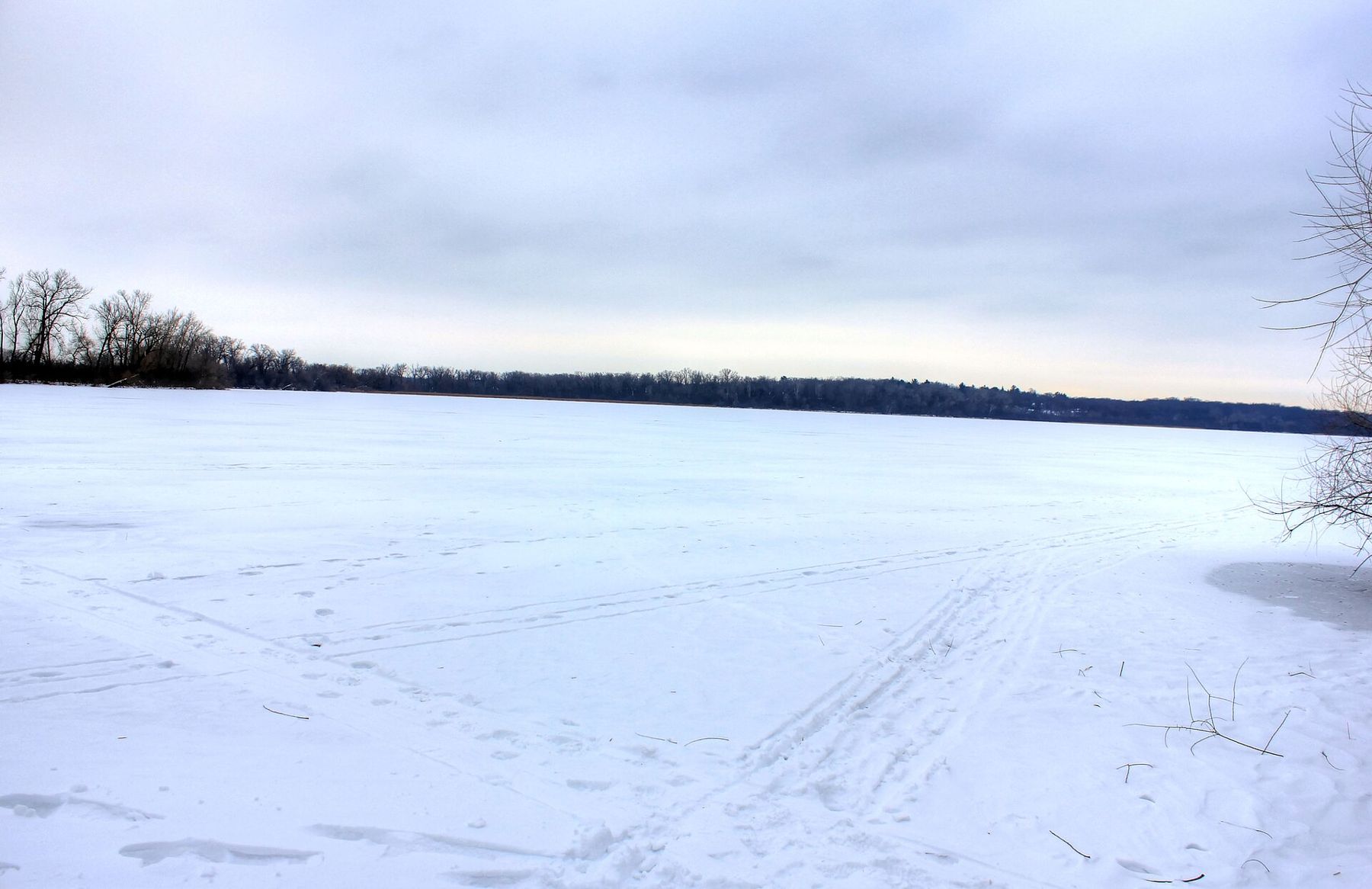
Pick a calm, bright morning after a hard freeze, drill your first hole near a weed edge, and keep your ice picks where you can grab them.