The boat never stops. That is the whole trick. It slides in along a pier at a slow, steady glide, a young mail jumper in a life jacket steps off the side onto the planks, runs to the mailbox at the end of the pier, swaps the mail, turns and leaps back aboard as the boat pulls away. Then the boat swings out toward the next pier, and the passengers on deck clap.
Mail delivery by boat on Geneva Lake is one of the oddest and most cheerful working traditions in Wisconsin. It has carried on for generations, and in summer you can ride along and watch it from the deck.
A lake ringed by summer estates
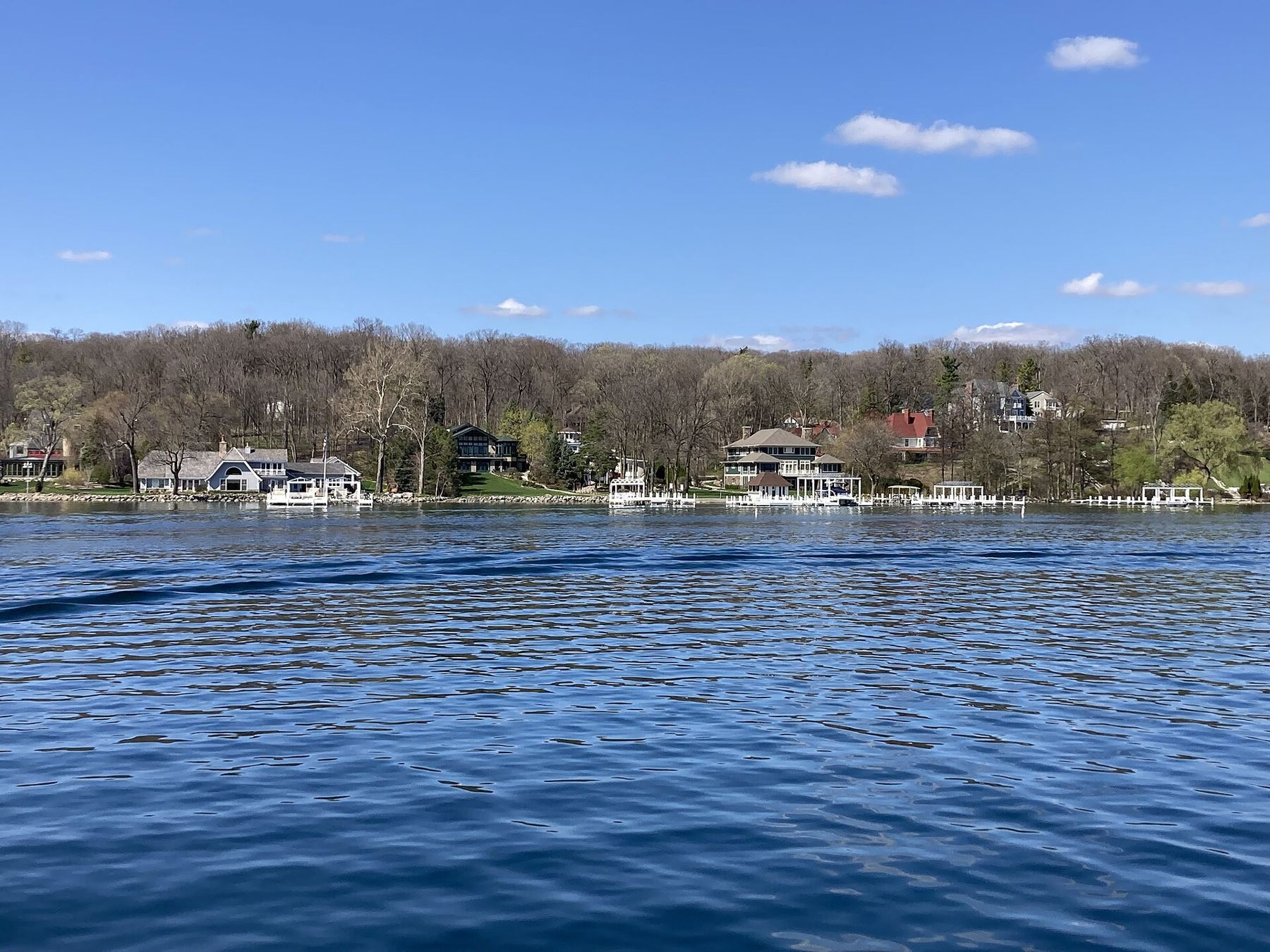
Geneva Lake is a deep, clear, spring-fed lake in Walworth County, more than seven miles long, with the city of Lake Geneva at its east end, Fontana at its west end and Williams Bay on its north shore. Once the railroad reached the lake from Chicago in the late nineteenth century, wealthy Chicago families began building summer houses along its shore. Many of those estates still stand, with lawns rolling down to boathouses and long piers.
In those years the lake itself was the main road. Roads around the shore were rough and slow, and steamers and private steam yachts carried guests, supplies and news from the railroad depots to the estates. The lake was simply the easiest way to reach a house built facing the water, and it made sense to deliver the mail the same way.
Read our page on the mansions of Geneva Lake for more on the families who built along the shore, and the Lake Geneva town page for the city itself.
Mail by boat
Most shoreline homes on Geneva Lake face the water, with their front doors toward the lake and their piers reaching out from the lawn. A mailbox at the end of each pier made sense: the boat could reach it more easily than a carrier on the back roads could reach the house. So the mail went out by water, and the custom held even after roads and cars made other routes possible.
What turned a delivery into a spectacle was the decision not to stop. Docking and tying up at every pier around a lake this size would take all day. Instead, the boat slows and runs alongside the pier, and a jumper handles the exchange on foot. Outgoing letters come back aboard the same way. The route is still a real mail route, and the boat still carries real mail to the boxes on the piers each summer.
A jump, step by step
Each delivery takes only seconds, and it is easy to miss the parts. Watch for them in order:
- The captain brings the boat in parallel to the pier, slowing but keeping it moving.
- The jumper waits at the open side of the boat with the mail for that house in hand, then steps across onto the planks as the boat draws level.
- The jumper runs out to the mailbox at the end of the pier, drops in the letters and takes out any outgoing mail.
- The jumper turns and runs back as the stern comes past, then steps or leaps aboard before the gap opens.
- The boat swings out from the pier and lines up for the next one, often only a short way along the shore.
The whole exchange depends on the boat holding a steady speed and line. A gust of wind, a wake from a passing boat or a pier at an awkward angle all change the timing, and part of the fun of the ride is watching the crew adjust.
The jumpers
The mail jumpers are usually young summer workers, chosen for speed, balance and nerve. They try out before the season and practice the timing until it is second nature: when to step off, how far to run, when to turn back. A good jump looks effortless. A missed one ends in the lake, to loud cheers from the passengers, and the boat circles back to pick up the jumper and the mail, if it stayed dry.
Watch how the jumper reads each pier. Some are long and straight, some short, some angled, some slick with spray. The boat captain and the jumper work as a pair, adjusting the speed and the line for each pier so the jumper has just enough time and no more.
Riding the mail route
The mail boat runs in summer as a public tour from the docks beside the Riviera in downtown Lake Geneva. You ride along on the morning mail route as it works its way around the lake, past the estates and boathouses, with a narration about the houses and the lake's history. The trip takes a good part of the morning; check the current length, schedule and prices before you go, and book ahead for summer weekends.
Between piers, look at the shore itself. Boathouses with living quarters above them, stone walls along the water, wide lawns running up to porches and towers: much of the lakefront was built to be seen from a boat, and the mail route is still the best way to see it.
Bring a camera with a fast shutter, or simply watch. The jump is quickest at the moment the jumper turns at the mailbox, and most photos catch only a blur of a running figure on the planks.
Pick your side. The jumps happen on the shore side of the boat, so sit near the rail facing the piers, ideally on the upper deck where you can see over the crowd. Bring a jacket even on a warm day: the lake wind is cool in the morning, and spray reaches the lower rails.
Midweek sailings are the better bet. The boat is less crowded, the rail seats are easier to find, and the lake is calmer before the weekend powerboats come out. Rain does not usually stop the route, since the mail still has to go, but check the operator's current policy on weather before you buy.
Children love the mail boat, and it makes a good half-day for a family that has walked enough of the shore path. If you come for a weekend from the city, our page on a day trip from Chicago shows how to fit it in.
What remains to see today
The mail boat itself is the living part of the story, and it runs only in summer. Off season, you can still see the world it serves. Walk a stretch of the public path that circles the lake along the shoreline, past the lawns, boathouses and piers, and look for the mailboxes standing at the ends of the piers. Our page on the Lake Geneva Shore Path explains where to start and how far to go.
From the water, other tour boats leave the same downtown docks through much of the year and follow parts of the same shore. Around the lake, Williams Bay and Fontana have their own beaches and piers, and the great dome of Yerkes Observatory stands above the north shore at Williams Bay.
Come on a clear July morning, buy your ticket early, take the rail on the shore side, and watch the first jumper step off the boat before it has even begun to slow.