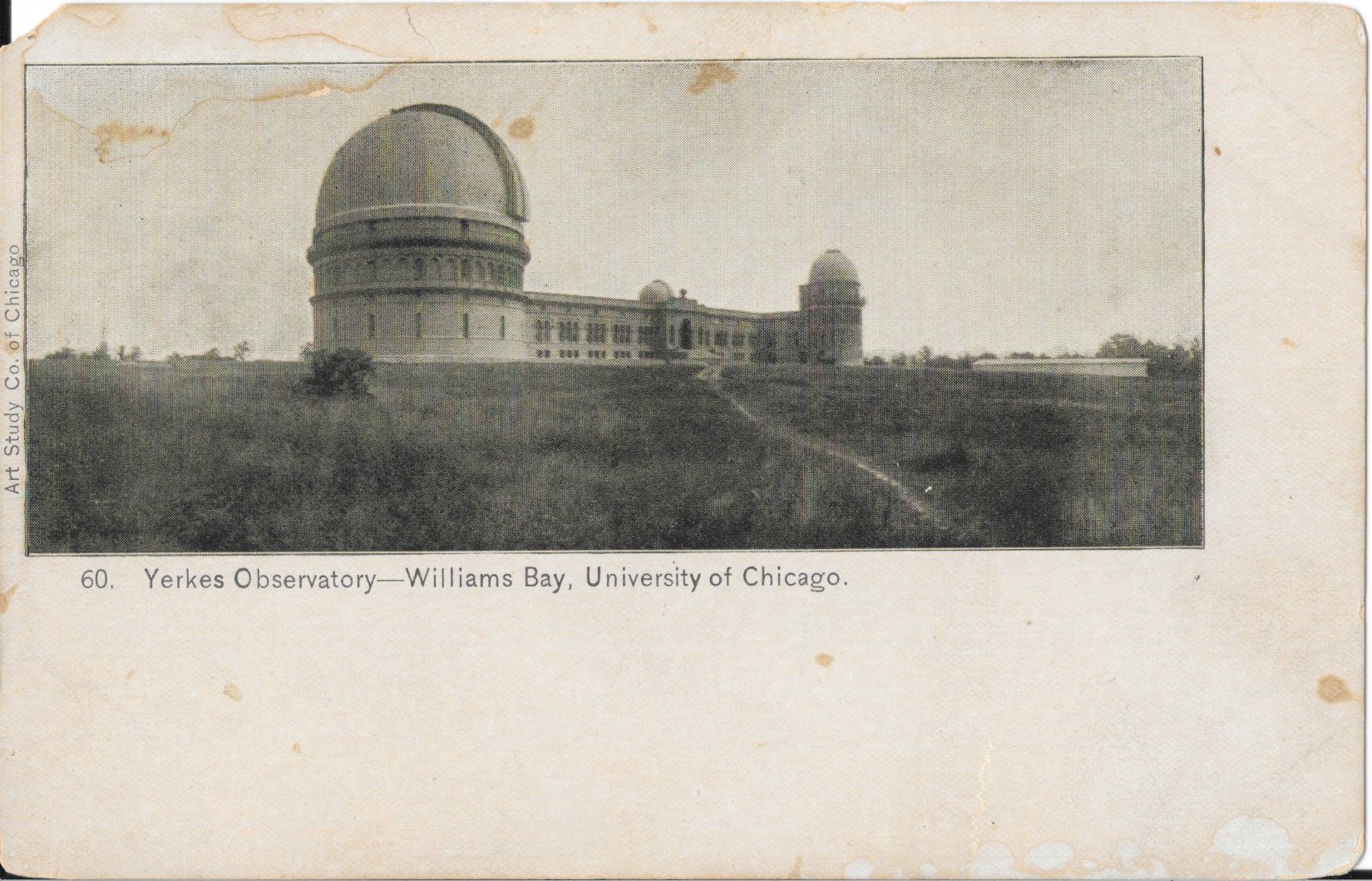
On the north shore of Geneva Lake, just west of Williams Bay, a long building of tan brick and carved stone stands among old trees. Its three domes rise above the lawn, and the largest holds a telescope that has not been beaten at its own game in more than a century. Yerkes Observatory houses the largest refracting telescope ever used for astronomy, a lens forty inches across, and the building around it is one of the founding places of modern astrophysics.
A telescope looking for a home
In the early 1890s, the astronomer George Ellery Hale was building the astronomy program at the young University of Chicago. A pair of large glass lens blanks had been made for a telescope that was never finished, and Hale wanted them. He persuaded Charles Tyson Yerkes, a wealthy Chicago streetcar financier, to pay for a great telescope and an observatory to hold it.
The lenses were ground by Alvan Clark and Sons, the leading American lens makers of the day. The telescope tube and mounting were shown at the World's Columbian Exposition in Chicago in 1893. What remained was a site. Chicago's smoke and lights were poor for astronomy, so the university looked for open, dark ground within reach of the city and chose a rise above Geneva Lake, donated for the purpose.
Building the observatory
The observatory was dedicated in 1897. Its building is laid out in the shape of a cross, with the great dome at one end and two smaller domes elsewhere on the plan. The exterior is covered in carved ornament: figures, faces, animals, plants and astronomical symbols worked into the stone and terracotta. The grounds were designed by the Olmsted firm, the landscape architects best known for city parks across the country.
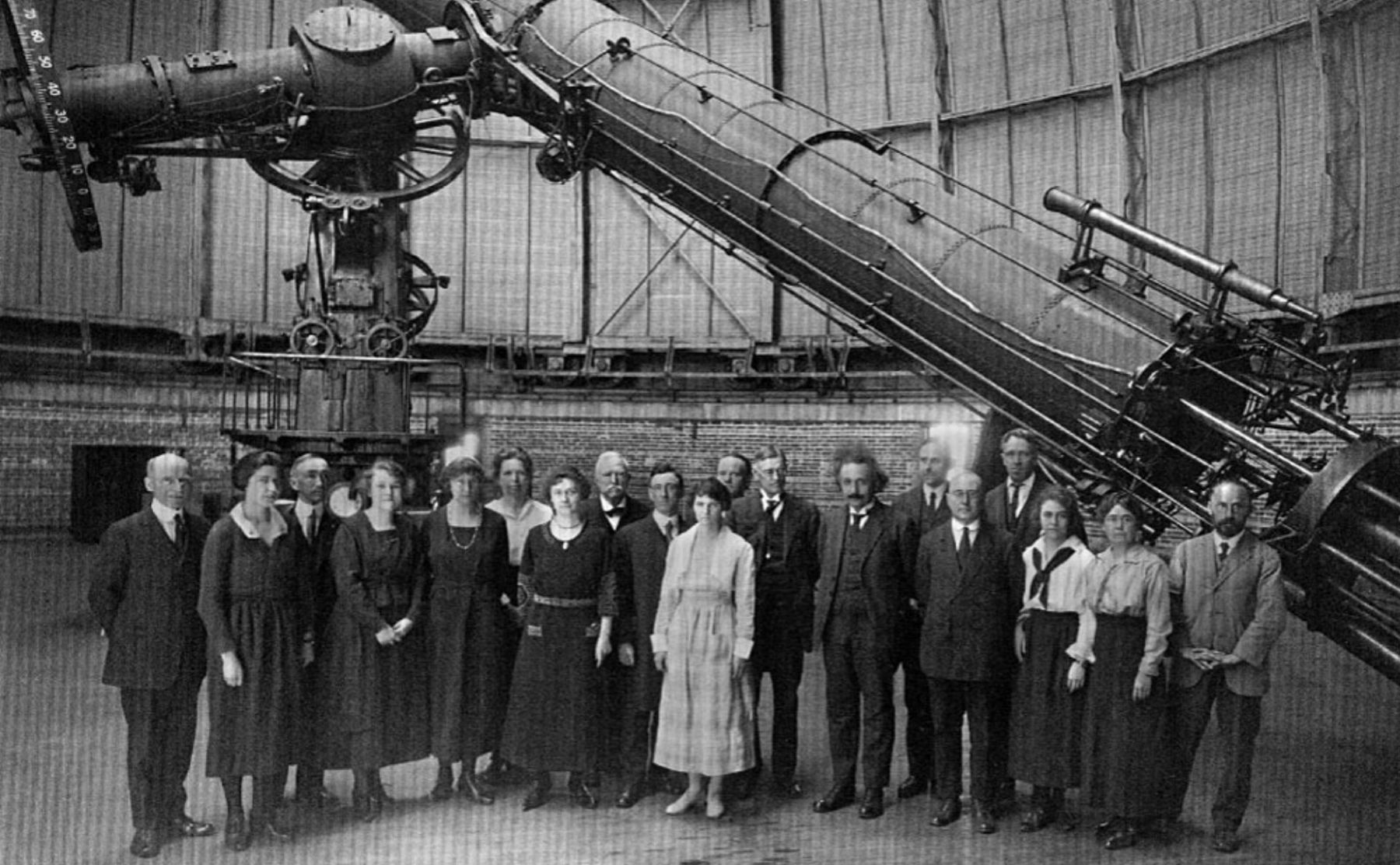
Inside the great dome, the floor itself moves. It rises and falls like an elevator so that observers can reach the eyepiece at the end of the long tube wherever it points. The dome turns on a track, and its slit opens to the sky. All of it was built to make a forty-inch refractor usable at night by astronomers working in the cold.
Refracting telescopes gather light with a lens rather than a mirror. A lens larger than Yerkes' sags under its own weight and loses sharpness, so astronomers turned to mirror telescopes instead. That is why the forty-inch remains the largest refractor ever used for research, and why it is unlikely ever to be surpassed.
Why Williams Bay
The choice of Williams Bay looks odd now, when large observatories sit on remote mountains. In the 1890s it made sense. The site was a train ride from Chicago, so astronomers and students could travel between the city campus and the observatory. The lake country was rural and dark, with clean air and little industry, and the view south over the water was open.
The village grew up partly around the observatory. Astronomers and their families lived in houses near the grounds, and the observatory employed instrument makers, machinists and other workers. Students arrived to study and stayed for years. For much of the twentieth century, Williams Bay was a small lake village with an unusual number of scientists in it.
The building as an instrument
Everything about the building served the telescopes. The great dome was built large enough to clear the full length of the tube as it swung. The telescope piers rest on their own foundations, separate from the floors, so that footsteps and machinery do not shake them. Workshops were built into the observatory so that instruments could be designed, made and repaired on site.
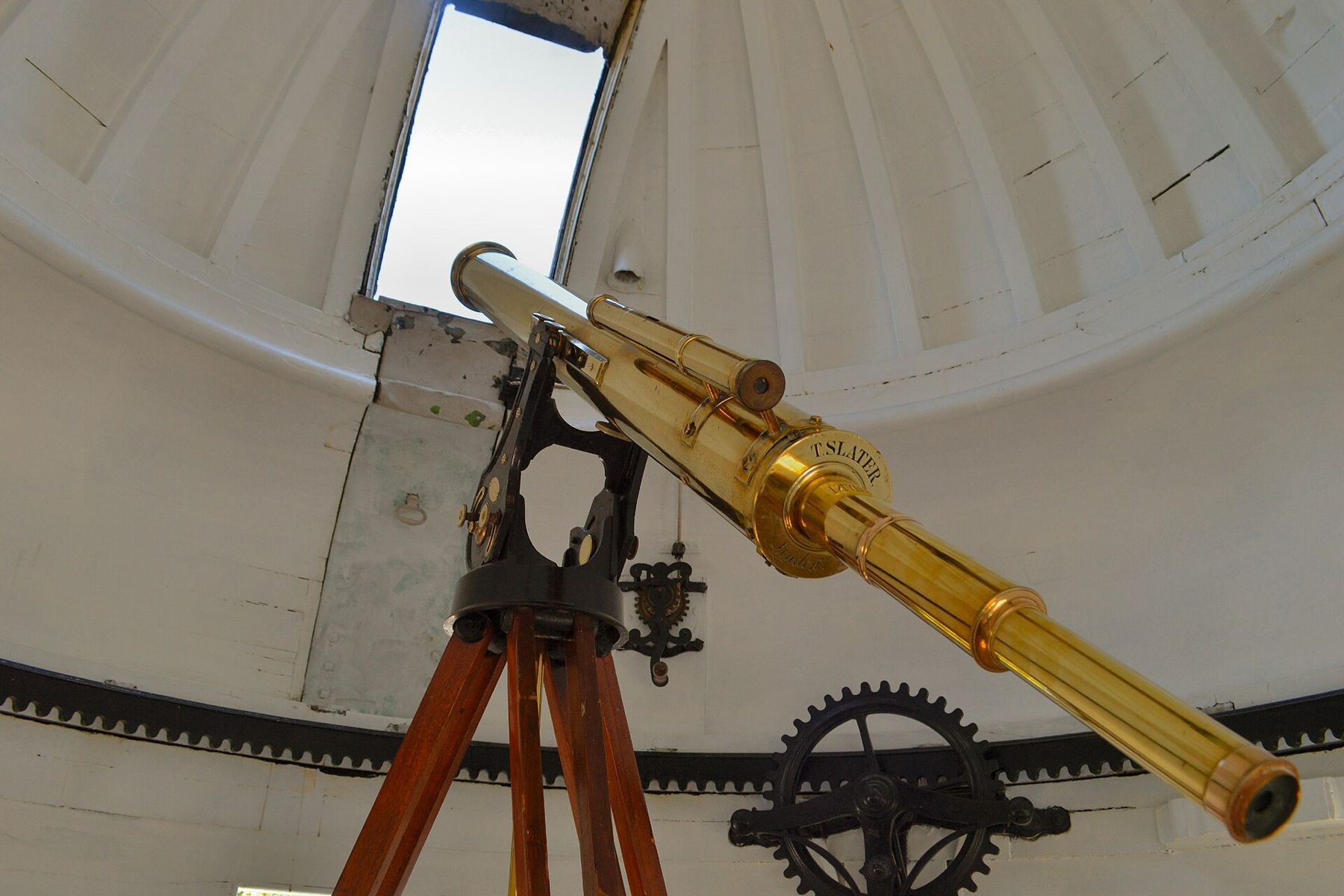
Over the years, the observatory added other telescopes, including reflectors, and built cameras and spectrographs. Its collection of photographic glass plates, gathered over many decades, is an archive astronomers still consult.
A century of discovery
Yerkes became a training ground and workshop for generations of astronomers. Edward Emerson Barnard photographed the Milky Way here. Edwin Hubble did graduate work for the University of Chicago at Yerkes before going on to his work on galaxies. Subrahmanyan Chandrasekhar, later a Nobel laureate, spent years here. Gerard Kuiper studied planets and their moons from Williams Bay. Many of the techniques of measuring stars' motions, distances and compositions were refined in these rooms.
The observatory also trained students who went on to lead observatories and university departments across the country and abroad. For decades, a degree in astronomy from the University of Chicago meant time spent at Williams Bay.
Visitors came too. Albert Einstein toured the observatory in 1921, and a photograph from that visit shows him with the staff in front of the great telescope.
As larger telescopes went up in darker, higher places, research moved away from Williams Bay. The University of Chicago kept Yerkes as a centre for instrument building, education and outreach for decades, then closed it in 2018. A local foundation took over the observatory and grounds in 2020, restored the building and reopened it to the public in 2022.
Seeing what remains today
Drive into Williams Bay on Highway 67 and follow the lake road west to the observatory entrance. If you are coming from Eagle, Highway 67 runs straight south through Elkhorn to the lake; allow about forty minutes.
See it on a tour. Tours run by reservation, usually several days a week, and some include evening programs or viewing through telescopes. Times, prices and programs change, so check before you go and book ahead for weekends in summer.
Stand under the great dome and look up at the length of the tube. Then look down at the floor, which lifts as a single piece. Ask your guide how long it takes to raise.
Come early in the day if you can. Morning tours are usually quieter, and the light on the carved stone of the south front is at its best before noon. Afterward, the lawns and old trees make a good place to sit before you head to the lake.
Walk the outside slowly afterward. The carved stonework around the entrances repays close looking; you will find moons, stars and odd creatures among the leaves.
Ask about the photographic plate collection and the instrument shops. Not every tour goes into every room, but guides can tell you what was made and discovered in each part of the building.
Look also at the smaller domes, which housed telescopes used for teaching and particular kinds of observation, and at the long hallways lined with offices where astronomers once worked through the day on what they had recorded at night.
Bring a light jacket even in summer. The great dome is unheated and holds the cool of the night well into the day, and evening programs can be chilly by the water.
Then walk down to the lake. The public Geneva Lake shore path runs below the grounds, and you can follow it east into Williams Bay for lunch or west toward the mansions on the far shore. On a clear night, drive away from the lights and read our guide to stargazing and dark skies before you set up your own telescope in a field.