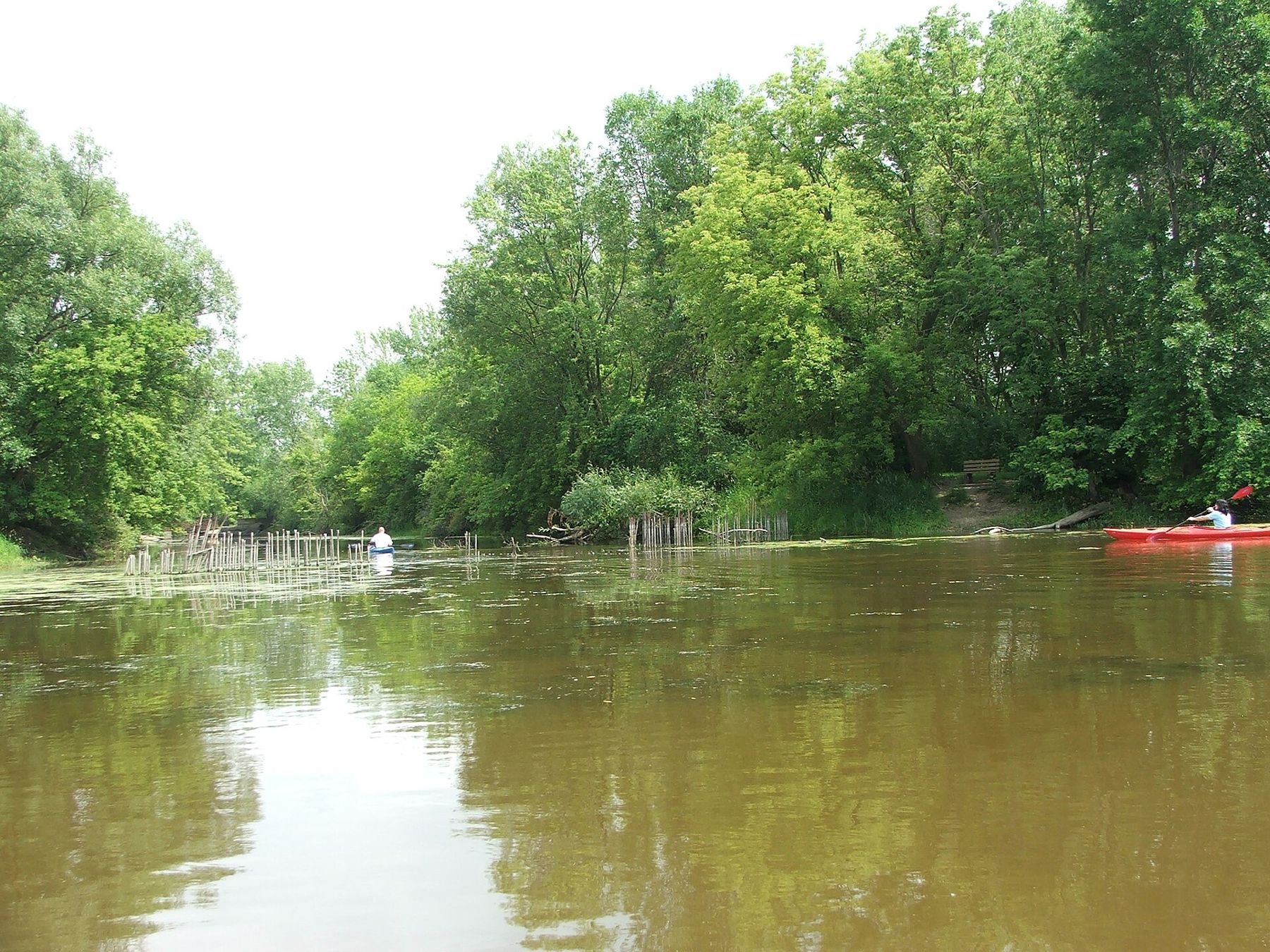
The Rock River comes down out of the Horicon Marsh country to the north, slow and brown and wide, and passes right through the middle of Fort Atkinson. The town grew up along both banks. A few blocks from the main street the Bark River joins it from the east, and a few miles downstream the Rock spreads out into Lake Koshkonong, one of the largest inland lakes in southern Wisconsin.
This is a river you use rather than admire from a distance. Walk along it downtown, put a kayak in at a city landing, fish it from shore or follow it down to the big shallow lake. It is the westernmost corner of the country this site covers, a half hour from the Kettle Moraine but very different in feel: flat farmland, wide water and big sky.
The riverwalk downtown
Fort Atkinson has built a riverwalk along the banks of the Rock through the heart of town. Start at the main street bridge and follow the path along the water in either direction. You pass parks, benches, the backs of old brick commercial buildings, and good places to stop and watch the current and the gulls.
The walk is flat and paved, easy for strollers and wheelchairs, and short enough for an evening stroll after dinner. Watch the water as you go: in spring the river runs high and fast and carries whole trees, while by late summer it slows and drops, and wading birds work the shallows along the banks. Combine it with a visit to the Hoard Historical Museum, a few blocks from the water, and a meal downtown. Our Fort Atkinson page covers the town in more detail.
Paddling the Rock and the Bark
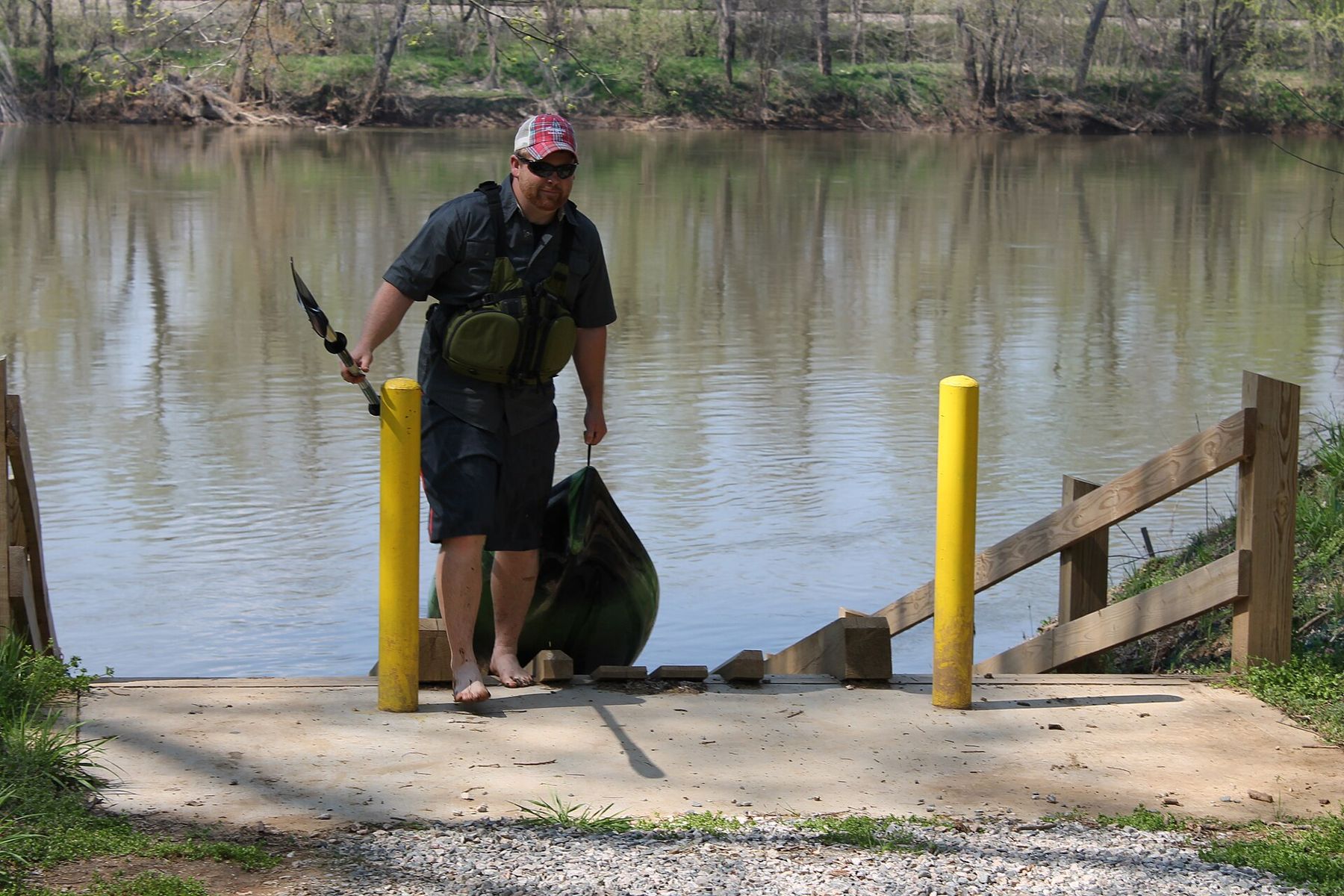
Around Fort Atkinson the Rock is broad and slow, with little current in normal water. It is easy paddling for beginners in calm weather, and the city's landings make it simple to launch and return. Paddle upstream first, while you are fresh, and drift back.
The Bark River, which enters the Rock in town, offers a narrower, more intimate paddle upstream from its mouth, through shaded banks and past backyards. It is the lower end of the same river that starts in Lake Country; our page on paddling the Bark River covers its upper reaches near Dousman.
A good short paddle runs from a downtown landing up the Bark River as far as the current allows and back, then out onto the Rock for a loop under the town bridges. It takes a couple of hours, and you are never far from a car. Avoid the river on windy days, when gusts funnel along the open water.
Wear a life jacket on either river. The Rock is wide and its water is murky, so a swimmer is hard to spot. Watch for floating logs after high water, and stay well clear of any dam or bridge piers where the current speeds up.
Lake Koshkonong
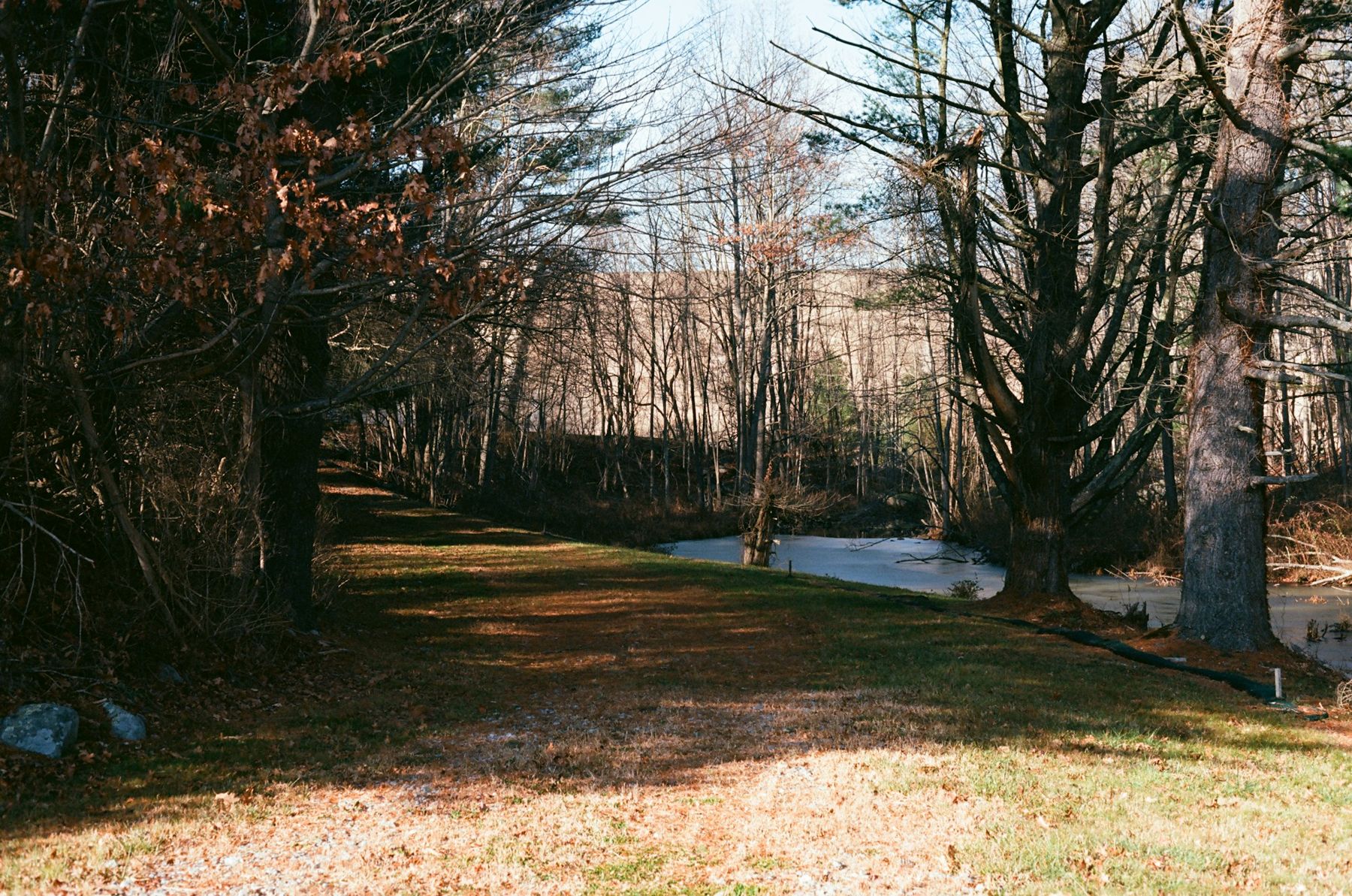
Downstream of Fort Atkinson, the Rock opens into Lake Koshkonong, a lake of more than ten thousand acres that straddles Jefferson, Rock and Dane counties. It is remarkably shallow for its size, only a few feet deep across much of its area, so it warms quickly in summer and turns rough fast when the wind picks up. A moderate breeze builds short, steep waves that can swamp a kayak or a small boat.
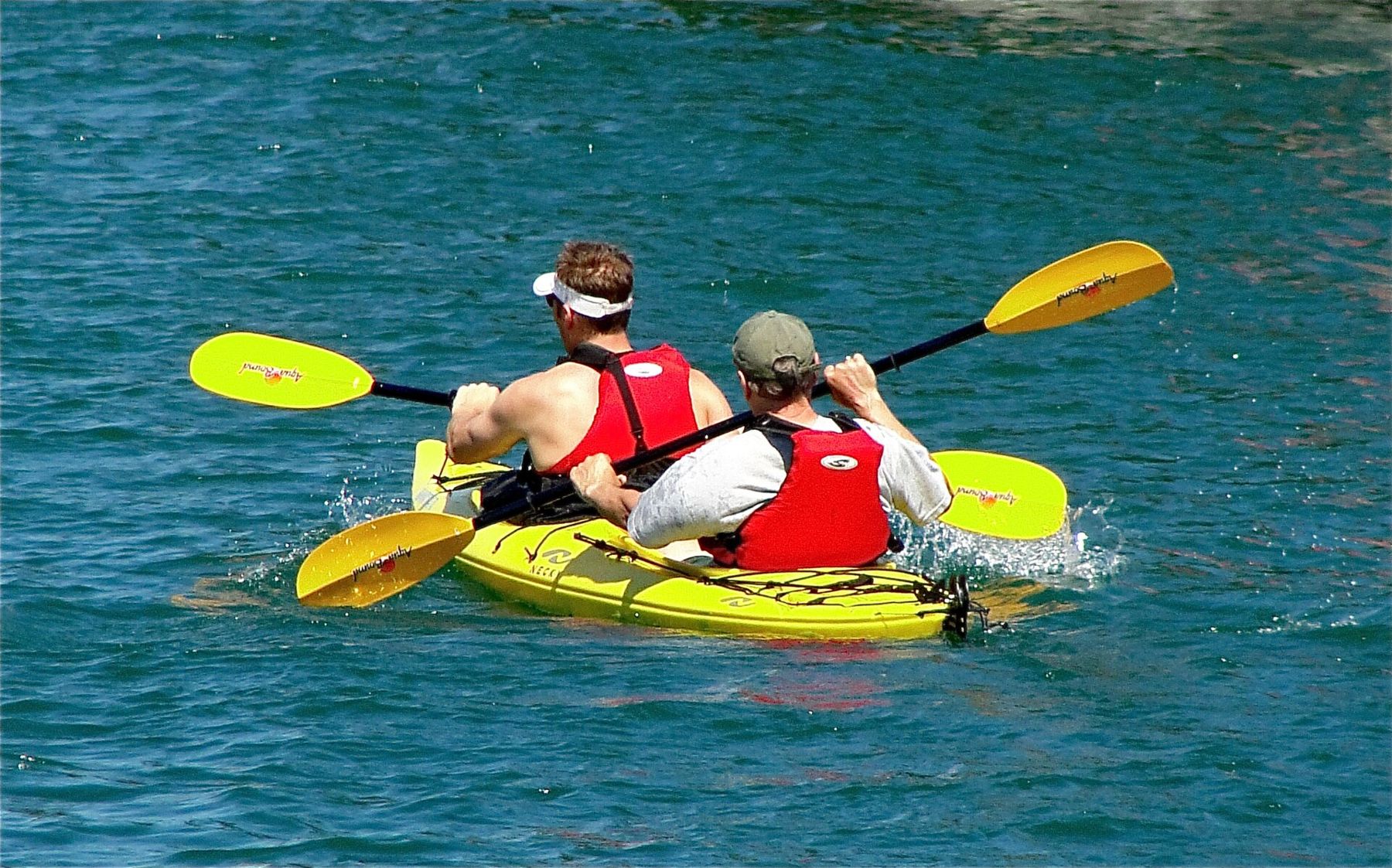
Pontoon boats, fishing boats and sailboats use the lake in summer. The shoreline is a mix of cottages, homes, marsh and public land, and the lake is known for its waterfowl. Marshes around the lake draw ducks, geese, pelicans, herons and egrets, especially during the spring and fall migrations.
Shallow water also means boat props can find the bottom in places, especially when water levels are low. Learn the lake from someone who knows it, or move slowly and watch the depth finder.
Like other shallow fertile lakes, Koshkonong can develop algae blooms in hot weather. If the water looks like pea soup, stay out and keep dogs out. Read our page on lake safety and algae before you swim.
Fishing
The Rock and Lake Koshkonong hold walleye, northern pike, catfish, white bass, crappie and other panfish. Spring brings walleye and white bass runs up the river, and anglers line the banks below dams and at the mouths of tributaries. Catfish are a summer evening target along the deeper bends.
Shore anglers have plenty of room along the riverwalk and in the town parks, especially early on weekday mornings. Bring a stout rod and heavier line than you would use on a small lake: the current carries snags, and a big catfish or a pike pulls hard.
A Wisconsin fishing licence is required for anyone sixteen or older, and size and bag limits apply. Regulations for the Rock River and Koshkonong can differ from those for inland lakes, so check them before you go.
How to arrive
Fort Atkinson lies in Jefferson County, about forty miles west of Milwaukee and thirty-five miles east of Madison. From Milwaukee, take Interstate 94 west to Highway 26 and follow it south into town, or take US 12 west through Whitewater. From Madison, US 12 runs southeast directly into Fort Atkinson.
From the Kettle Moraine, follow the county roads west from Palmyra or take US 12 through Whitewater; either way it is about half an hour from Eagle. Park downtown for the riverwalk, or head to a public landing if you are bringing a boat. Lake Koshkonong landings are a short drive south and west of town.
If you want a longer day, add Aztalan State Park upstream near Lake Mills, where the earthworks of an ancient town stand on the bank of the Crawfish River, a tributary of the Rock.
In spring, check river levels before you go. The Rock floods regularly, and high water can close low parts of the riverwalk and some landings for days at a time.
When to go
April and May bring spring migration on the marshes around Koshkonong and the early fishing runs. June to August are the months for paddling and boating; go early to beat the wind and the afternoon heat. September and October are quieter and cooler, with ducks and geese gathering on the lake by the thousand.
End the day back on the riverwalk downtown, watching the slow brown water of the Rock slide under the bridge as the streetlights come on along the banks.